









In the ever-evolving world of artificial intelligence (AI) and deep learning, we often look toward complex algorithms and intricate neural networks to solve problems. However, a surprising contender for problem-solving might not come from the world of silicon and code, but from the damp, mysterious world of slime molds. These seemingly simple organisms, which exist in the damp undergrowth of forests and on decaying logs, have been turning heads in the scientific community due to their remarkable ability to solve complex problems—sometimes even outperforming AI in unexpected ways.
This article delves into the intriguing intersection of biology and artificial intelligence, exploring how slime molds, with no central nervous system or brain, manage to “outsmart” deep learning algorithms in certain contexts. Let’s journey through the fascinating world of slime molds, understand their surprising problem-solving abilities, and examine how this ancient organism challenges our modern technological paradigms.
What Exactly Is Slime Mold?
Slime molds are a unique group of organisms that, despite their name, are neither true molds nor fungi. They belong to the kingdom Protista and are classified into two major types: plasmodial slime molds and cellular slime molds. The plasmodial slime mold, Physarum polycephalum, is particularly famous for its impressive problem-solving capabilities.
When observed, slime molds may appear as a yellow or white, gelatinous blob. However, these organisms are far more complex than they appear. Slime molds are unicellular yet exhibit fascinating behaviors that seem to defy their simplicity. They do not have brains or nervous systems but can sense their environment, move, and adapt based on external stimuli. What’s more, they can solve mazes, optimize networks, and even make decisions—tasks that are typically reserved for advanced algorithms and intelligent systems.
Deep Learning: The AI Giants
Deep learning, a subset of machine learning, is the backbone of many modern AI systems. It involves training large artificial neural networks to recognize patterns, make predictions, or classify information. Deep learning algorithms, when given vast amounts of data, are capable of performing a wide range of tasks, from image recognition to language processing.
These algorithms are based on artificial neurons that loosely mimic the behavior of biological neurons. They are layered to create deep networks that can solve increasingly complex problems. In the past few decades, deep learning has achieved remarkable results in fields such as autonomous driving, natural language processing, and medical diagnostics.
However, as effective as deep learning algorithms are, they are not infallible. They can sometimes struggle with efficiency, adaptability, and generalization—issues that slime molds appear to handle with ease.
Slime Molds and Problem-Solving: A Biological Marvel

Slime molds are capable of solving problems that require navigation and optimization, tasks that are central to many deep learning applications. One of the most well-known experiments with slime molds involved creating a maze. Researchers placed a slime mold at the entrance of the maze, and it was tasked with finding the quickest path to the food source. Remarkably, the slime mold solved the maze in a very efficient manner, using its unique method of exploring the environment.
The key to its strategy lies in its ability to explore all possible paths in a methodical way, branching out from its starting point and retracting from less favorable paths. Over time, it establishes an optimal route, much like an efficient network algorithm. This process, which is remarkably similar to how deep learning algorithms operate, shows that slime molds have an intrinsic ability to optimize solutions without needing complex computational power.
In one fascinating experiment, slime molds were asked to create a path between two points. The slime mold not only found the shortest path but also demonstrated an ability to optimize the layout of a transportation network. In essence, it had built a biologically-inspired transport system—something that modern deep learning algorithms can sometimes struggle with in terms of real-world efficiency.
Slime Molds vs. Deep Learning: The Key Differences
1. No Central Processing Unit
One of the most striking differences between slime molds and deep learning systems is the lack of a central brain or processing unit in slime molds. While deep learning relies on a central processor to compute vast amounts of data, slime molds rely on decentralized, cellular mechanisms. Each cell in the slime mold acts as a computational unit that responds to environmental stimuli, resulting in the organism’s overall intelligent behavior. This decentralized computation is one of the reasons why slime molds can solve problems in an adaptable and resilient manner.
2. Efficiency in Real-World Environments
Slime molds excel in real-world environments, particularly in navigating the physical world and solving problems that require spatial reasoning. Deep learning algorithms, while powerful in simulations and controlled environments, often require massive computational resources and data to perform effectively. In contrast, slime molds can solve complex spatial problems with minimal resources, relying only on environmental cues and their innate ability to adapt.
For example, researchers have used slime molds to model optimal transportation routes, mimicking the design of railway and road networks. In some instances, the slime mold’s designs have been shown to be more efficient than the human-designed alternatives. This ability to optimize and adapt in a dynamic environment is something that deep learning algorithms—despite their complexity—struggle to match.
3. Simplicity vs. Complexity
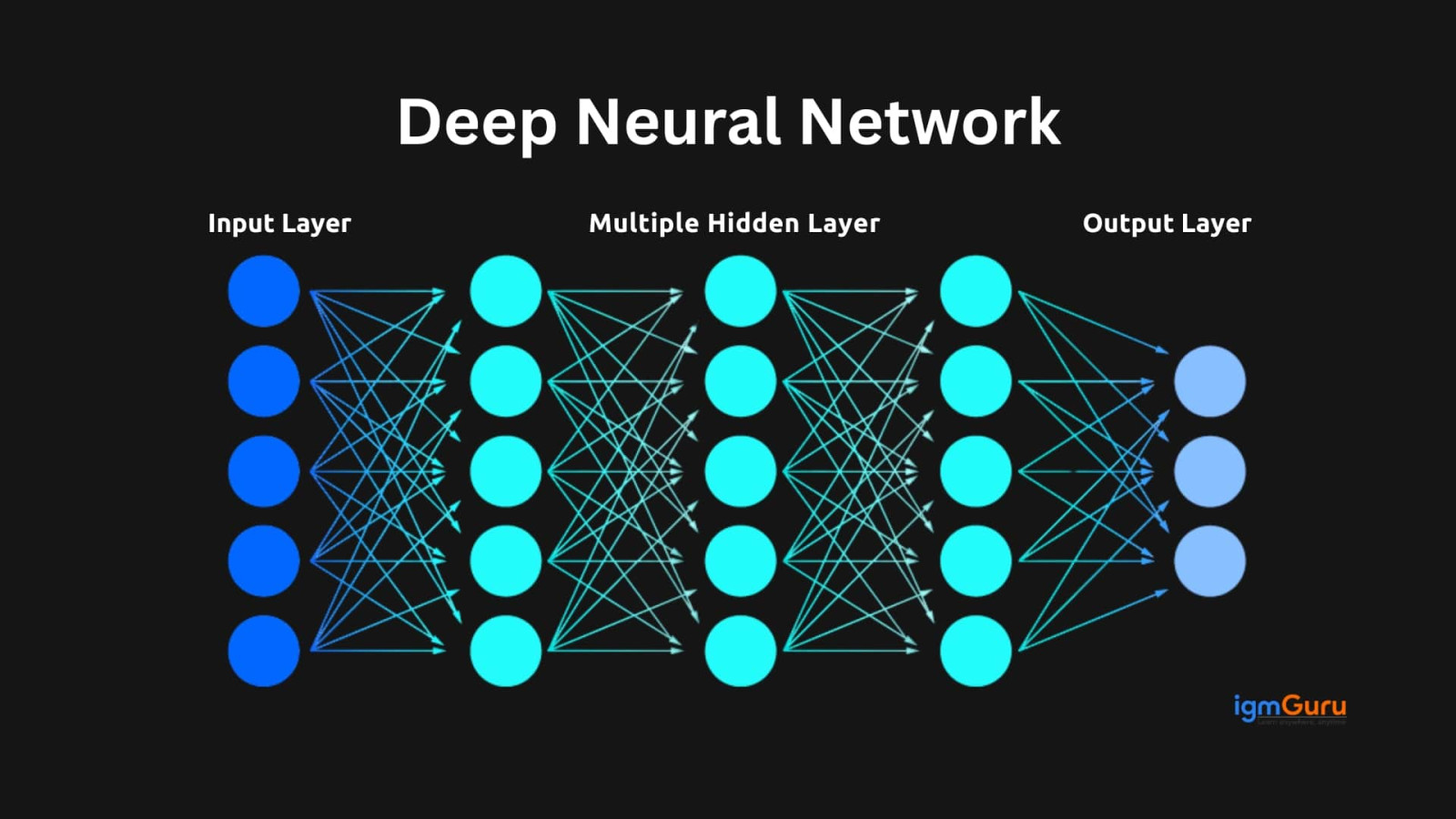
Slime molds operate on a far simpler level than deep learning algorithms, yet their ability to find solutions to complex problems challenges the conventional notion that intelligence requires high-level complexity. Deep learning algorithms, while based on sophisticated networks of artificial neurons, can sometimes be inefficient or unable to generalize effectively to new, unseen environments.
In contrast, slime molds operate with a much simpler biological structure and can adapt quickly to new challenges. Their “intelligence” is based on a very different principle: decentralized, adaptive behavior, rather than the rigid, rule-based logic often found in machine learning.
4. Energy Efficiency
Another advantage that slime molds hold over deep learning algorithms is energy efficiency. Slime molds do not require vast amounts of computational power, data storage, or energy to perform complex tasks. On the other hand, deep learning models, especially in fields like natural language processing and image recognition, require massive datasets and significant computational resources. The energy consumption of large-scale AI systems is a growing concern, as data centers and computational facilities consume enormous amounts of electricity.
Slime molds, on the other hand, achieve their results with an elegant simplicity that minimizes energy consumption. This makes them particularly intriguing when considering their potential applications in bio-inspired computing and energy-efficient problem-solving.
Slime Molds and the Future of AI
While slime molds are unlikely to replace deep learning in complex computational tasks such as training large neural networks, they do offer valuable lessons in efficiency, adaptability, and decentralized intelligence. In fact, researchers are beginning to explore ways in which the biological principles exhibited by slime molds could inform new computational models and architectures.
For example, slime molds’ ability to solve optimization problems has inspired bio-inspired algorithms in machine learning. Researchers are working on developing decentralized learning systems, inspired by the slime mold’s way of “thinking” through decentralized cells, that could make AI systems more efficient and scalable.
Furthermore, the study of slime molds could help to enhance the way AI systems interact with the real world. By mimicking the slime mold’s ability to adapt to complex, dynamic environments, AI systems could become more robust, flexible, and capable of solving real-world problems in a manner that closely aligns with natural systems.
Can Slime Mold Outsmart Deep Learning?
So, can slime mold outsmart deep learning? In certain contexts, yes. While deep learning is a powerful tool for solving structured, data-rich problems, slime molds excel at tasks that require real-world problem-solving, environmental adaptability, and energy efficiency. Their ability to solve optimization problems and find efficient paths in real-time environments challenges traditional notions of intelligence and provides a fresh perspective on the future of artificial intelligence.
By studying these fascinating organisms, we can gain new insights into decentralized computation, adaptive systems, and bio-inspired problem-solving techniques that could revolutionize the future of AI. As technology advances, the boundaries between biology and artificial intelligence may become increasingly blurred, leading to more efficient, sustainable, and intelligent systems that integrate the best of both worlds.