








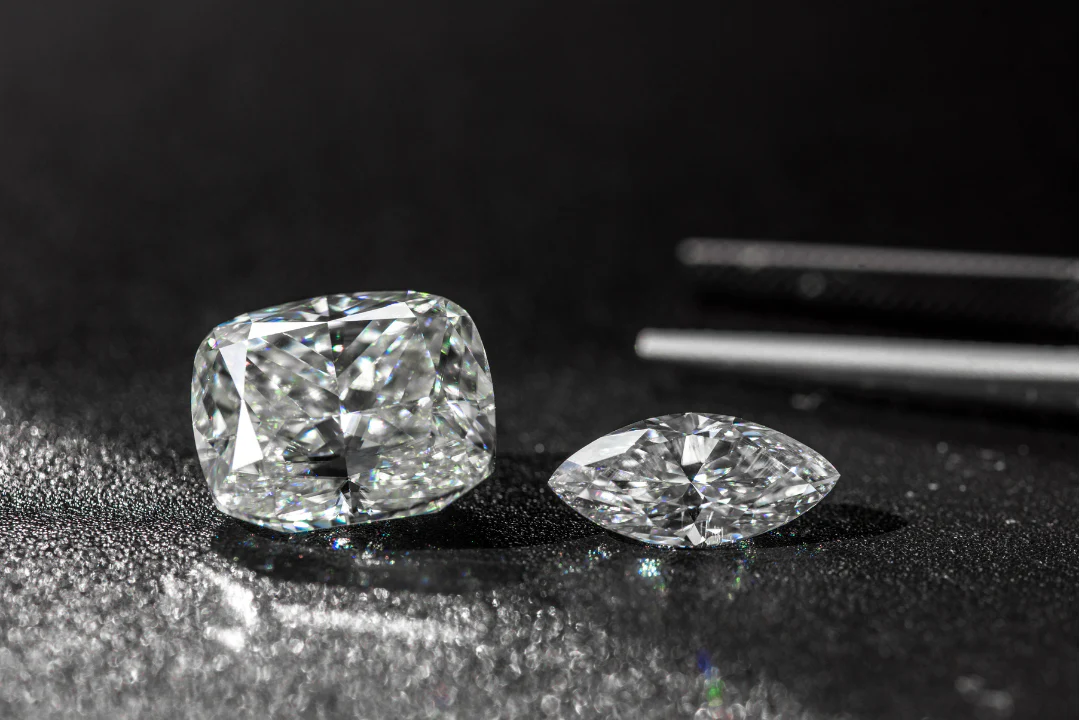

Diamonds have long been prized as symbols of love, luxury, and exclusivity. But in the past decade, a new contender has challenged tradition: lab‑grown diamonds. Although the phrase “smarter than mined ones” sounds playful, there’s a real, substantive question behind it — are lab‑grown diamonds better in any meaningful way? In this deep‑dive article, we explore the science, economics, ethics, and cultural impact of lab‑grown versus mined diamonds. Spoiler alert: “smarter” depends on what you value most — from physics to philosophy, economics to environmental impact.
What Is a Diamond, Really?
At its core, a diamond is simply a crystalline form of carbon. Whether forged deep within the Earth or grown in a high‑tech laboratory, diamonds share the same chemical composition and crystal structure. Both scored a perfect 10 on the Mohs hardness scale, and both sparkle with the same fire and brilliance that make diamonds so irresistible to consumers and scientists alike.
This equivalence leads to the first important point: lab‑grown diamonds are real diamonds. They are not simulants like cubic zirconia or moissanite, which have different physical and optical properties. Lab‑grown diamonds meet the same scientific standards as mined ones — chemically, physically, and optically.
How Diamonds Form: Earth vs. Lab
Mined Diamonds: Ancient Masterpieces
Natural diamonds are formed over millions to billions of years under immense heat and pressure in the Earth’s mantle. Geological forces push them toward the surface in volcanic eruptions, where they eventually get mined by humans. This slow march of time is what has imbued natural diamonds with their mystique and historical value.
Lab‑Grown Diamonds: Technological Marvels
In contrast, lab‑grown diamonds only take weeks to create. Two main methods dominate:
- High Pressure High Temperature (HPHT) — mimics Earth’s natural pressure and heat conditions.
- Chemical Vapor Deposition (CVD) — builds diamonds atom by atom from a carbon‑rich gas.
The result? Diamonds that are chemically and physically indistinguishable from natural ones — yet created quickly and in controlled conditions.
Physical and Optical Properties: Identical Twins?
One of the most striking revelations from scientific and industry studies is this: there is no meaningful difference in the core physical and optical properties between lab‑grown and mined diamonds.
Both:
- Are composed of crystallized carbon
- Share identical hardness and refractive index
- Are graded using the same “4Cs” — cut, color, clarity, and carat
- Can only be differentiated by specialized laboratory equipment in most cases

This means that to the naked eye — even under a jeweler’s loupe — a lab‑grown diamond and a natural diamond of the same cut and clarity will look equally dazzling.
However, because lab conditions allow more control over impurities, lab diamonds can sometimes exhibit fewer inclusions and imperfections, potentially making them more homogenous in certain quality metrics.
Price: Same Sparkle, Different Bill
Perhaps the most practical difference between lab‑grown and mined diamonds is price. Lab‑grown diamonds are significantly more affordable — typically costing 20 – 90 % less than natural diamonds of comparable quality.
Why the big discount?
- No mining overhead
- Streamlined manufacturing
- Fewer middlemen
- Greater supply scalability
This price advantage has reshaped the diamond market, making larger and higher‑quality stones more accessible to average consumers.
Environmental and Ethical Considerations
This is where the conversation about “smarter” gets ethical and environmental.
Natural Diamond Mining
Mining can have serious ecological and social consequences:
- Deforestation and habitat destruction
- Soil erosion and water disruption
- Displacement of local communities
- Association with conflict or “blood diamonds” in some regions
While initiatives like the Kimberley Process aim to reduce conflict diamond trade, ethical concerns remain for many buyers.
Lab‑Grown Diamonds
Lab‑grown diamonds offer a more sustainable and ethical alternative. They:
- Require far less land disturbance
- Typically emit fewer greenhouse gases
- Avoid most mining labor issues
- Can be powered by renewable energy (especially in modern facilities)

However, it’s important to note that not all lab growth plants are powered by renewables — some still rely on fossil fuel energy grids. Environmental benefits therefore depend on production practices.
Investment and Resale Value: The Price of Rarity
From an investment standpoint, mined diamonds have traditionally held greater resale value due to their scarcity and cultural prestige. Lab‑grown diamonds, while often more affordable to purchase, tend to depreciate more quickly, primarily because supply can be increased through technology.
This isn’t inherently a quality issue — but it’s a reality for buyers thinking about long‑term value.
Emotional and Cultural Dimensions
For many, the allure of mined diamonds isn’t just about sparkle — it’s about story and symbolism. The idea of a stone formed over billions of years deep within the Earth can feel romantically profound — and traditional marketing has reinforced that narrative for generations.
Lab‑grown diamonds don’t have the same ancient origin story, but that doesn’t diminish their emotional significance. For many modern buyers, particularly younger generations, ethical and environmental values are equally — if not more — important than geological age.
Industrial and Technological Uses: Beyond Jewelry
Here’s a fascinating twist: diamonds aren’t just pretty gemstones — they’re valuable for cutting tools, electronics, quantum devices, and even advanced scientific research. High‑quality lab‑grown diamonds have proven useful in:
- Cutting and drilling applications due to hardness
- Heat spreaders in electronics
- Advanced physics experiments that exploit diamond’s quantum properties
In some high‑tech applications, lab‑grown diamonds are preferred precisely because they can be engineered with fewer defects, making them ideal for precision work.
So Are Lab‑Grown Diamonds Smarter?
If “smarter” means better engineered for modern use, more affordable, and ethically sound for today’s values, then yes — lab‑grown diamonds outshine mined ones in several meaningful ways.
But if “smarter” means carrying historical mystique, traditional investment value, and enduring cultural weight, mined diamonds still have their place.
In reality, the choice isn’t binary. Many consumers now choose based on a blend of factors: sustainability, budget, tradition, and personal meaning. The diamond market of the future may well be a dual spectrum — where both lab‑grown and mined diamonds flourish for different reasons.
Final Thoughts
Lab‑grown diamonds have disrupted a centuries‑old industry not by replacing tradition but by expanding choice. They offer scientifically identical quality with ethical and economic benefits. And as technology continues advancing, their role will only grow more significant — not just as jewelry but as materials for innovation.
In short, lab‑grown diamonds may not be “smarter” in a human sense, but they are smarter choices for many of today’s buyers and applications.