








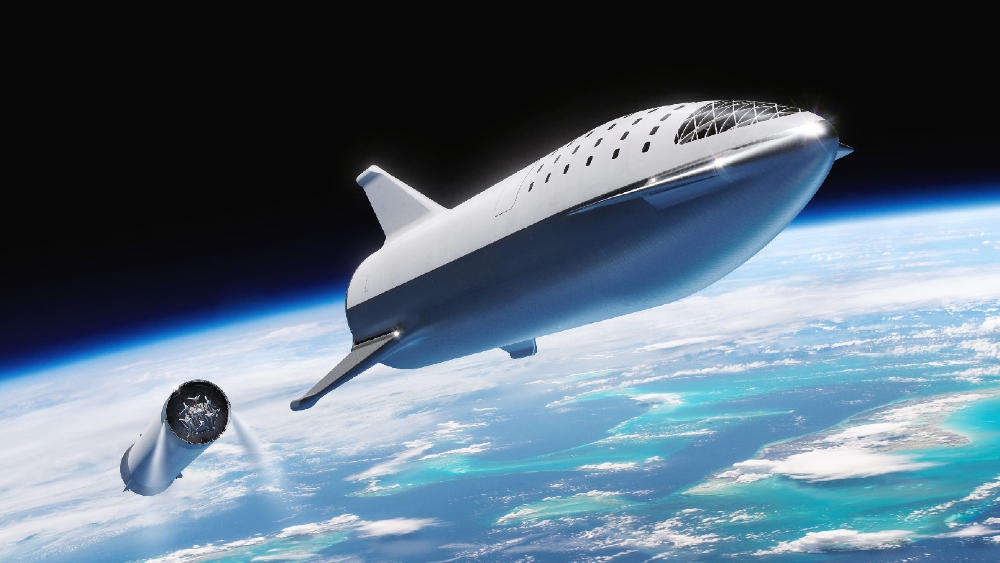

The notion of space stations as bustling commercial hubs might have sounded like science fiction only a decade ago. But now it’s rapidly evolving into a seriously debated — and increasingly plausible — future for human economic activity in Low Earth Orbit (LEO) and beyond. With the International Space Station (ISS) nearing retirement and a new generation of commercial platforms emerging, the idea of orbit as a marketplace, hotel zone, research hub, and factory floor is no longer purely speculative. This article explores how space stations could transform into commercial hubs, what business models might thrive there, the technology and infrastructure required, and the economic, ethical, and regulatory challenges that come with it.
From Government Laboratory to Commercial Marketplace
For decades, space stations like the ISS were government-run laboratories focused on scientific research and international cooperation. The ISS has been instrumental in advancing our knowledge of microgravity effects, materials science, life sciences, and more. But it operates on funding from national space agencies and does not function as a commercial entity.
That is now beginning to change.
NASA and other space agencies are actively transitioning support toward privately owned and operated commercial space stations. Under NASA’s Commercial Low Earth Orbit Development (CLD) program, companies are designing and building stations that NASA and other customers can purchase services from, stimulating the growth of a microgravity marketplace in low Earth orbit.
This shift represents a fundamental change in how humanity approaches space infrastructure — from a public-exploration model to a public-private ecosystem where private companies may eventually operate independent hubs in space.
The Commercial Space Station Landscape
Several commercial space station projects are already in development, each with different visions for the role these outposts could play:
- Axiom Space Station – Building from ISS experience, Axiom Space plans to start with modules attached to the ISS and eventually form a standalone commercial station supporting research, manufacturing, and private astronaut missions.
- Orbital Reef – A joint project by Blue Origin and Sierra Space, envisioned as a “mixed-use business park” in space, integrating tourism, research, manufacturing, and logistics operations.
- Haven-1 by Vast – Set to be one of the first commercially developed and operated stations, offering research, microgravity manufacturing, and short-duration stays for crewed missions.
- Starlab and other concepts – Other commercial-centric stations, supported by both private funding and public partnerships, are targeting various niches like scientific research and tourism.
Each of these platforms could serve as a node in a broader space economy — much like airports, trade hubs, and conference centers on Earth.

What Makes a Commercial Hub in Space?
To become true commercial hubs, space stations must support value creation that extends beyond government-sponsored science. Several key potential business models could make this happen:
1. Space Tourism and Hospitality
One of the most talked-about revenue streams is space tourism. With companies already flying private astronauts to the ISS and private orbital missions underway, there’s growing demand for short-duration stays, spacewalk experiences, and even luxury orbital hotels. Concepts like ring-shaped habitats with artificial gravity are envisioned to host hundreds of guests in residential and recreational spaces.
Commercial tourism could transform parts of space stations into hotel-like environments, complete with amenities, panoramic Earth views, and curated experiences — effectively turning orbit into a global tourist destination.
2. Microgravity Research and Development
Microgravity environments offer unique conditions for research that can’t be replicated on Earth. Pharmaceutical companies, material scientists, and tech firms are interested in studying processes like protein crystallization, fluid dynamics, and additive manufacturing in space.
Commercial stations could lease lab space and specialized equipment to private and academic researchers. If microgravity research leads to breakthroughs in medicine or materials, the economic value of these discoveries could be significant.
For companies looking to explore these opportunities, acquiring dedicated facilities on commercial stations might become as commonplace as booking a lab on Earth.
3. Manufacturing in Space
Certain manufacturing processes — for example, fiber optic production, advanced semiconductors, and unique alloys — can benefit from microgravity. Space stations could host manufacturing facilities that leverage these conditions to create products of exceptional quality.
Companies such as Varda Space Industries are already pursuing in-space manufacturing partnerships, signaling that orbital factories may become a viable industry segment.
4. Orbital Logistics and Refueling
As humanity’s footprint expands in orbit, logistics services become increasingly important. Space stations could serve as logistics hubs, supporting spacecraft refueling, maintenance, and cargo transfer services.
Innovations in satellite servicing and orbital refueling could position stations as critical infrastructure nodes, enabling a thriving support ecosystem for other orbital activities.
Enabling Technologies: From Rockets to Robotics
For space stations to function as effective commercial hubs, several technological pillars must evolve together:
• Affordable and Reusable Launch Systems
The dramatic reduction in launch costs, driven by reusable rockets, has made cargo and crew transport to space cheaper and more predictable. Lower transportation costs are essential for regular passenger visits, cargo turnover, and station resupply — all critical for commercial viability.
• Modular, Scalable Station Architecture
Modularity allows space stations to grow, adapt, and serve multiple functions over time. By deploying modules that can be added or rearranged, operators can tailor habitat layouts for specific commercial needs — e.g., tourism modules, lab arrays, or manufacturing bays.
• Advanced Life Support and Sustainability
Growing commercial activity in space depends on reliable and cost-effective life support systems, radiation shielding, and waste management technologies. These ensure the safety and comfort of residents and researchers during extended stays.
• Autonomous Operations and Robotics
Robotics for assembly, maintenance, and cargo handling help reduce dependency on human labor, lower operational risk, and cut costs. Such systems will be vital for station upkeep and mission flexibility.

Market Growth: An Emerging Multi‑Trillion Dollar Frontier
The space economy is expanding rapidly. Forecasts suggest that space-related markets could grow tremendously over the coming decade as commercial activity scales. Investment in space stations, orbital research, tourism, and manufacturing fits into this broader trend.
With the ISS scheduled for retirement around 2030, new commercial platforms have a window of opportunity to fill the gap. The potential economic activity around these hubs — from private astronaut missions to leased research facilities, manufactured products, and orbital services — could generate substantial revenue pools.
Crucially, commercial space stations may not simply replace the ISS but expand beyond it, creating a network of hubs serving diverse industry niches.
Challenges on the Road to Commercialization
Despite the growing momentum, realizing this vision of commercial hubs in space is neither simple nor assured. There are several formidable hurdles:
1. High Up‑Front Costs and Investment Risk
Building and operating space stations demands significant capital and technological sophistication. Investors need long-term confidence in return on investment, which can be difficult given the high uncertainty.
2. Regulatory and Legal Frameworks
Current space law — largely governed by treaties like the Outer Space Treaty — was drafted in an era dominated by national programs. Commercial operations raise complex questions about property rights, liability, safety standards, and resource utilization.
Establishing clear regulatory frameworks that balance innovation with safety will be essential for sustainable commercial activity in orbit.
3. Safety and Human Factors
Ensuring the safety of passengers and crew in space remains a top priority. Life support systems, radiation protection, and emergency response protocols must meet strict standards to protect lives and business reputations.
4. Space Traffic and Debris Management
As more vehicles and stations populate LEO, managing orbital traffic and mitigating the risk of collisions with space debris becomes increasingly critical.
Cultural and Ethical Dimensions
The commercialization of space stations raises broader questions beyond economics:
- Who gets access to orbital resources and opportunities?
- How do we ensure that space tourism does not become an exclusive luxury for the ultra‑wealthy?
- What ethical standards govern research and manufacturing conducted off Earth?
Balancing commercial interests with equitable access and responsible stewardship will be an ongoing conversation.
Conclusion: A New Chapter for Space
Space stations poised to become commercial hubs represent a paradigm shift in how humanity uses and inhabits orbit. With government agencies, private companies, and scientific institutions increasingly collaborating, the foundation for a thriving space economy is being laid.
These stations may serve as tourism destinations, research labs, manufacturing sites, and logistics centers of the future — a multifaceted network of orbital nodes that form the backbone of an expanding space ecosystem.
It’s an exciting, ambitious vision — one that moves us beyond the era of government‑only space infrastructure and into a future where space itself becomes a marketplace of ideas, innovation, and opportunity.