










The silent sky above us is far from empty. It’s crowded. Not just with stars and satellites, but with millions of pieces of human-made space debris whizzing around Earth at breathtaking speeds. While outer space might feel like an infinite, boundless void, the near-Earth environment — particularly Low Earth Orbit (LEO) — is becoming a dangerously congested junkyard.
This debris ranges from defunct satellites and discarded rocket stages to tiny flecks of paint from spacecraft. What may seem like harmless fragments can be deadly: even a grain of paint moving at orbital velocity can punch a hole in a functioning spacecraft. This chaotic cloud of orbital refuse is known casually as “space junk,” and its uncontrolled proliferation presents one of the most serious challenges to the sustainability of space activities in the 21st century.
So the question arises: Do we need a space junk cleanup crew? The short answer is yes. But to understand why, we must unpack not just the scale of the problem, but the physics that make space junk so hazardous, the emerging technologies vying to solve it, and the economic, political, and ethical implications of cleaning up the cosmos.
Why Space Junk Is a Big Deal
Space may feel vast, but the corridors we use for most satellites and human spaceflight are limited. Earth’s gravity creates orbital “shells” where spacecraft reside — and these are now teeming with junk.
A Growing Cloud of Debris
According to space agencies and debris experts, Earth’s orbit contains vast quantities of artificial objects. These include both large items — like retired satellites and rocket bodies — and countless small fragments that are almost invisible to the naked eye. Many are traveling at velocities up to 18,000 miles per hour, making even tiny bits capable of catastrophic damage.
This increasing population of debris has two cascading effects:
- Collision Risk: A collision between two objects — even small ones — creates many more fragments. This cascading effect, known as Kessler Syndrome, can exponentially increase the density of dangerous debris in orbit.
- Operational Hazards: Functional satellites, space stations, and crewed spacecraft are at real risk from even millimeter-sized fragments. Recent near-misses and damage reports underline how tenuous orbital safety really is.
In other words, the danger is not hypothetical — it’s measurable, ongoing, and accelerating.
The Science Behind the Danger
Kinetic Energy and Orbital Velocity
To understand why tiny space junk is so dangerous, consider the physics. Orbital debris is traveling extremely fast — around seven times faster than a bullet. At that speed, even a speck of metal can transfer enough kinetic energy to pummel spacecraft surfaces, puncture sensitive equipment, or cause structural failure. This is governed by basic physical laws: kinetic energy increases with the square of velocity, meaning speed amplifies destructive potential.
Every satellite launch, rocket stage jettisoned, and explosion in orbit leaves behind more fragments, contributing to this kinetic hazard.
Why Prevention Isn’t Enough
You might think the easiest solution is simply not to create more debris. While space agencies and private operators have adopted best practices — like requiring satellites to deorbit within five years of end-of-life — stopping new debris is only part of the solution.
The existing population of space junk has already crossed a threshold where collisions are statistically more likely. As long as large debris remains in orbit, we risk triggering further fragmentation. In short, prevention alone can’t reverse what’s already out there.
Emerging Cleanup Technologies
Science fiction no longer. A new era of technologies is emerging that could make space debris removal practical — and even routine.
1. Robotic Capture Satellites
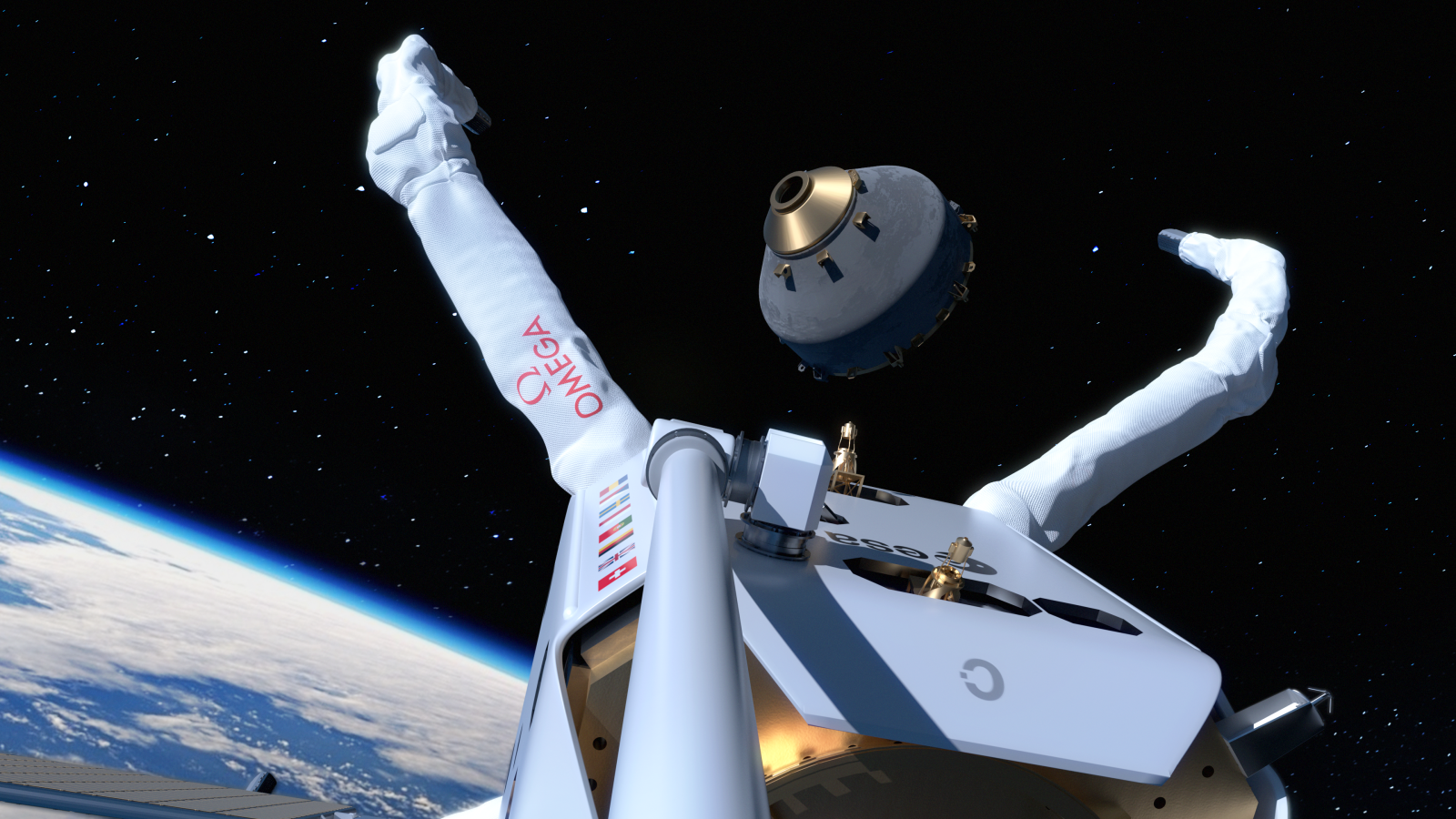
One of the most promising approaches is the use of dedicated cleanup satellites that rendezvous with debris and bring it down in a controlled manner.
- ELSA-d: A Japan-based demonstration mission by Astroscale uses a servicer satellite equipped with a magnetic docking system to capture a client debris surrogate.
- ClearSpace-1: Led by the European Space Agency and Swiss startup ClearSpace SA, this mission aims to capture a defunct satellite and deorbit both spacecraft by reentry.
These systems combine precise navigation, active rendezvous, and mechanical capture mechanisms — all without requiring human presence.
2. Net and Harpoon Systems
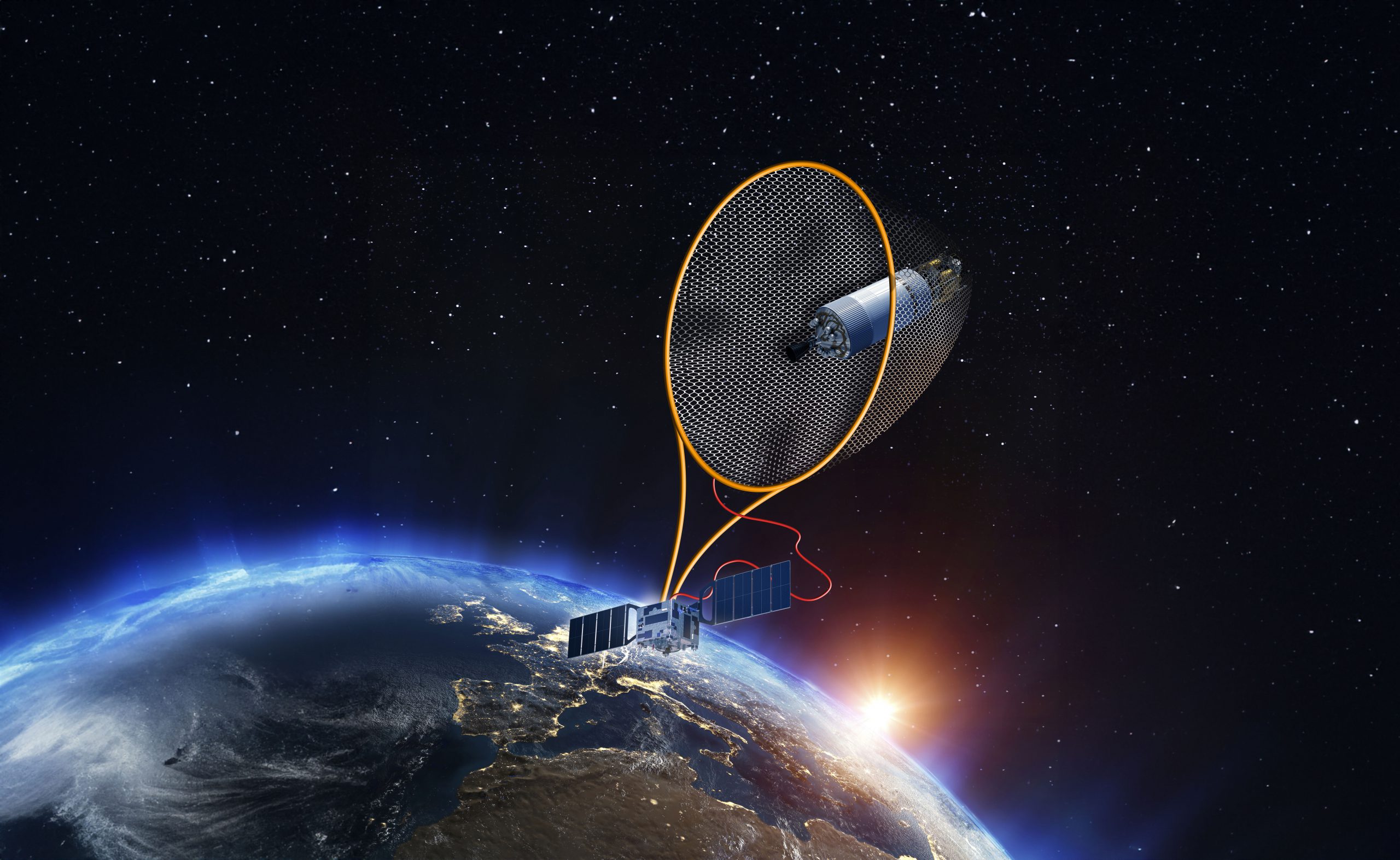
Inspired by fishing techniques, some debris removal satellites deploy nets or harpoons to snag debris. Once captured, the target object can be retargeted toward Earth’s atmosphere, where it burns up on reentry.
3. Ground-Based Laser Brooms
An unconventional but intriguing idea is the laser broom — a ground-based laser system that heats debris surfaces to alter their orbits, causing them to descend sooner and burn up.
4. Future Laser Constellations
Cutting-edge research proposes constellations of coordinated space-based lasers that could systematically target and deorbit debris clusters, using advanced scheduling algorithms to maximize effectiveness.
Each of these technologies comes with its own cost, technical challenges, and strategic implications — none are silver bullets, but all are steps toward a cleaner orbital environment.
Economic and Policy Variables
One reason space junk cleanup hasn’t advanced faster is cost. There’s no direct revenue in removing debris, making it hard to attract investment. Unlike communications satellites or launch services, debris cleanup doesn’t sell products.
Moreover, the problem doesn’t belong to any one country. Outer space is a global commons — no single nation has jurisdiction. This complicates regulation and enforcement. Bodies like the United Nations Committee on the Peaceful Uses of Outer Space (COPUOS) have drafted non-binding guidelines, but binding international agreements are still lacking.
The Ethical Dimension
Beyond economics and engineering lies a deeper ethical question: Who is responsible for the orbital environment?
Space exploration and exploitation have been dominated by a handful of powerful nations and corporations. Yet the impacts of space debris — loss of scientific capability, increased risk for future missions, and environmental concerns — affect all of humanity.
Do wealthier spacefaring entities owe a moral duty to clean up after themselves? And how should smaller or emerging space nations participate in responsibility and governance?
These are pressing questions not just for engineers and policymakers, but for ethicists and global citizens alike.
A Call to Action
The orbital environment is already dangerously cluttered, and the risks are only increasing. Leaving the problem unaddressed invites more collisions, more debris, and a future where certain orbital corridors become so hazardous that access is severely restricted.
A space junk cleanup crew — whether realized as robotic satellites, laser systems, or coordinated international missions — isn’t just desirable. It’s becoming essential to safeguard the future of space exploration and the technologies that daily life on Earth relies upon.
As innovations continue and global cooperation takes shape, the question isn’t if we need a cleanup crew — it’s how soon we can build one.