










The promise of artificial intelligence has always oscillated between science‑fiction wonder and real‑world utility. In recent years, the question has shifted from “Can AI think?” to “Can AI do things humans care about — things that matter in the messy, unpredictable real world?” One of the boldest answers to that question emerging today is the idea that beta AI bots — experimental autonomous agents and systems in early release or private testing — can actually find real‑world flaws: in software, security infrastructure, logic, process design, human systems, and more.
This article is a deep dive into that claim. We will explore:
- how beta AI bots are being used to find real issues,
- what kinds of flaws they can uncover,
- technical limitations and risks,
- real examples from cutting‑edge deployments,
- ethical and human‑integration considerations,
- a glimpse into how this capability may evolve.
Along the way, we’ll dissect whether this is real progress, hype, or somewhere in between — and what that means for the future of innovation, security, and human‑AI collaboration.
Beta‑Stage AI Is More Than Experiments — It’s Security Research
When most people hear “beta,” they think early, buggy versions of apps. But in today’s AI ecosystem, beta AI bots are increasingly sophisticated engines for active problem discovery.
A notable case is Aardvark, an AI system developed by OpenAI and released in a private beta that acts like a security researcher. Instead of simply suggesting code completions, Aardvark continuously analyzes codebases to find actual vulnerabilities, logical flaws, and privacy gaps — and even proposes patches. It reads source code, models threat landscapes, runs tests, and validates its findings before reporting them for human review.
Critically, this is not theoretical: in internal and partner testing, Aardvark has surfaced meaningful vulnerabilities that would otherwise have been missed. Its reported performance on benchmark repositories shows high recall — meaning it tends to identify most known issues — though human validation remains essential.
What “Finding Flaws” Really Means in Practice
When you hear that AI bots are uncovering flaws, it helps to break down what kinds of issues we’re talking about — and where the boundaries lie.
1. Software Security Vulnerabilities
Autonomous AI agents can scan code and identify weak spots that could be exploited. For example, Anthropic deployed agents that uncovered $4.6 million worth of vulnerabilities in live blockchain smart contracts — code that controls real financial assets. These weren’t synthetic or toy bugs; they were real, exploitable weaknesses discovered at scale.
This suggests that, at least in structured domains like code analysis, AI bots can outperform many manual audits — especially for routine or pattern‑based risks.

2. Beyond Static Scanning: Logic and Integrations
Traditional techniques like fuzzing — automatically feeding random inputs to software to see if it breaks — have long been used to expose bugs deep inside programs.
AI bots, by contrast, can reason about intent, design logic, and higher‑order interactions among system components. They synthesize knowledge rather than brute‑force test cases alone, giving them an edge in uncovering deeper, contextual flaws.
3. Human‑AI Error Discovery Loops
Some research explores how AI systems can work with human feedback loops to discover errors that aren’t obvious to either party alone. For example, crowdsourced failure reports — where real users describe how a system failed — can be processed by AI for systematic pattern detection and root‑cause identification.
This kind of hybrid approach suggests future systems won’t just find flaws directly, but will help humans discover patterns of failure that matter in the real world.
Hard Truths: Where AI Struggles to Detect Real‑World Flaws
Despite flashes of brilliance, there are important limitations to the “AI finds flaws” narrative.
1. High False Positives and Context Gaps
Empirical studies of AI‑powered vulnerability detection have found that while the tools alert on potential issues, many are false positives — nothing that would actually break or harm working code — or contextually irrelevant. In a study integrating AI assistants into real developer workflows, participants generated dozens of alerts but only a smaller set turned out to be actionable.
That tells us AI is good at noticing anomalies, but less reliable at judging real‑world impact without human context.
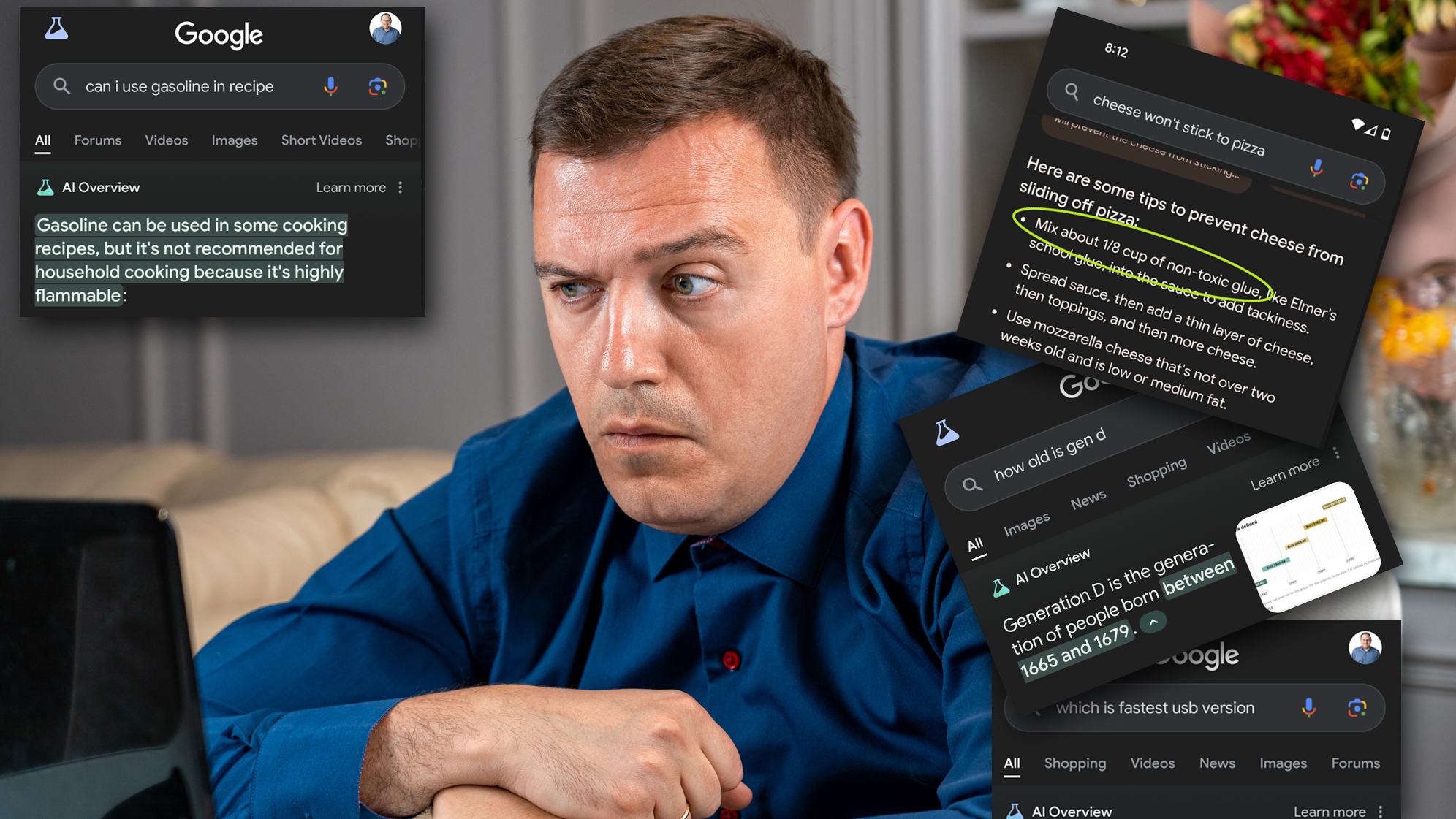
2. Hallucinations and Misinterpretations
AI models — especially large language models — can generate outputs that seem plausible but are simply false or misaligned with reality. This phenomenon, known as “hallucination,” is a well‑documented limitation of natural language AI and persists across use cases.
In flaw‑detection contexts, hallucination can manifest as confidently flagged vulnerabilities that are incorrect, or oversights in reasoning about how a system actually operates.
3. Real‑World Complexity and Interactions
Unlike isolated algorithms or code repositories, the real world is messy: complex workflows, human decision chains, layered legacy systems, and unpredictable external inputs. AI bots excel in structured domains where rules are clear; they struggle when context is ambiguous or ill‑defined — the territory of many real‑world systems.
In security, for instance, the tests and benchmarks used to evaluate AI models are themselves flawed according to experts, meaning we may think the AI is strong when the evaluation doesn’t mirror real operational conditions.
Ethical, Practical, and Procedural Challenges
Finding flaws isn’t only a technical exercise — it’s entangled with human systems, incentives, and responsibilities.
Ownership of Findings
If a beta AI bot uncovers a security flaw in a critical infrastructure system, who is responsible for acting on it? The organization that deployed the AI? The vendors involved? The AI developers who trained the model? Human teams still must step in to interpret, validate, and mitigate.
Risk of Misuse
Ironically, the same capabilities that help AI find defensive weaknesses can also be used offensively. Researchers have shown that advanced models can write scripts to exploit real vulnerabilities if provided enough context, raising concerns over dual‑use capabilities.
This is part of the broader “alignment problem” in AI safety: ensuring that AI does what we intend, not just what it can technically accomplish.
Integration into Human Workflows
AI flaw discovery isn’t a plug‑and‑play replacement for human expertise. Teams need to integrate these tools thoughtfully: establishing validation protocols, understanding when to trust AI insights, and ensuring that human judgment remains integral.
Beta Bots Today, Autonomous Quality Assurance Tomorrow?
The idea that beta AI bots can find real‑world flaws is not a fantasy — it’s happening right now, and in some domains with measurable impact.
- In cybersecurity, autonomous agents are exposing vulnerabilities in live systems that matter for financial and operational risk.
- In software engineering, AI assists not just in spotting anomalies, but in contextualizing potential risks within larger codebases.
- In human feedback loops, AI helps scale the discovery of error patterns that are too subtle or distributed for humans alone to detect.
That said, these bots are not yet infallible truth machines. They do uncover meaningful issues, but they also generate noise, misinterpret nuance, and require human oversight to ensure reliability and ethical use. In other words: AI is an extraordinary tool, not an independent arbiter of reality.
Looking Ahead: What Comes After Beta?
AI will continue to get better at finding flaws — but the real breakthroughs will come from how humans and AI work together, not from AI alone.
Expect to see:
- Tighter human‑AI feedback loops where humans correct and teach the AI in context‑rich ways.
- Benchmarking improvements that reflect real application conditions more accurately.
- Sophisticated autonomous agents that can collaborate with human experts rather than simply reporting alerts.
The future of flaw detection will be hybrid — AI amplifies human expertise, and humans contextualize AI insights. The result? Faster, deeper, and more trustworthy quality assurance across domains.