








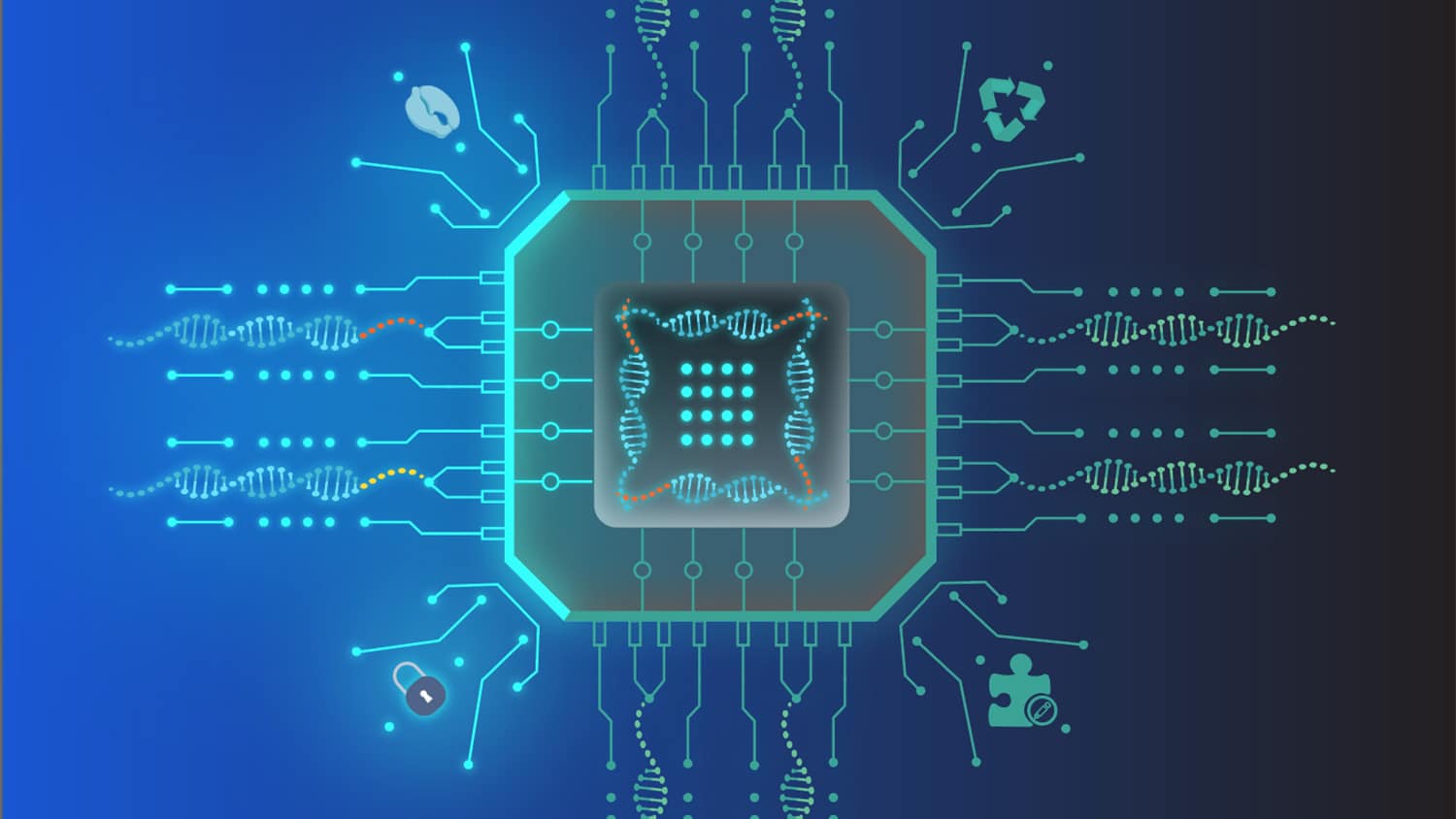

In the rapidly evolving landscape of digital technology, data storage stands at a crossroads. Traditional hard drives, solid‑state drives (SSDs), and magnetic tape have powered our digital age for decades—but are they enough for the tsunami of information humanity continues to generate? Enter an unexpected contender: DNA storage, a technology that harnesses the very molecule of life to archive digital information. This article unpacks the science, potential, limitations, and future of DNA‑based data storage, comparing it with conventional storage systems in depth and exploring whether DNA could indeed surpass traditional hard drives.
The Data Explosion: Why We Need a New Storage Paradigm
The world’s appetite for data is insatiable. From streaming, social media, and AI model training to scientific simulations and blockchain, the amount of data created each year has skyrocketed. Global information production has been reported to reach exabytes and zettabytes within a few years—a growth that traditional storage technologies may struggle to match.
Conventional storage media—magnetic hard drives, SSDs, optical disks, and magnetic tape—have inherent physical and engineering limits. Their materials degrade over time, they require power and cooling, and their data density is limited by the physics of silicon and magnetic materials. In contrast, DNA’s natural data‑encoding system has been refined by billions of years of evolution to store enormous amounts of genetic information in tiny molecules—a hint that biology may hold a key to future storage needs.
What Is DNA Data Storage?
DNA data storage involves encoding binary digital data—zeros and ones—into sequences of DNA’s four bases: adenine (A), cytosine (C), guanine (G), and thymine (T). This is achieved through a process of synthesis (writing) and later reading via sequencing. Just as digital computers translate electrical signals into bits, DNA‑based storage systems translate bits into nucleotide sequences and back again.
At its core, DNA storage is a form of molecular encoding: binary codes map to DNA bases, synthesized into strands, and later decoded by sequencing machines. The physical storage medium is DNA itself—either in solution, embedded in protective matrices, or stored in specialized capsules designed for long‑term stability.
The Promise: Capacity, Density, and Longevity
Unmatched Data Density
One of the most compelling advantages of DNA storage is its extraordinary data density. DNA can theoretically store up to 10^18 bytes per cubic millimeter, which is millions of times higher than current magnetic storage densities. This means that a gram of DNA could potentially hold more information than all the data stored in the largest data centers today.
This sheer capacity has led to visionary projects demonstrating DNA data storage prototypes that dwarf traditional devices. For example, recent innovations like DNA “cassette tapes” and storage systems have shown capacities equivalent to hundreds of thousands of terabytes in compact physical formats—far beyond what conventional hard drives or even ultrascale SSD arrays can offer.
Incredible Longevity
Unlike traditional media that must be refreshed or replaced every few years due to degradation, DNA can remain stable for thousands of years under proper conditions. DNA extracted from ancient fossils—tens to hundreds of thousands of years old—can still be sequenced today, a testament to its durability.
In contrast, magnetic tapes, hard drives, and SSDs usually retain data reliably for decades and often need active environmental control and periodic copying to prevent loss. DNA storage can, in theory, preserve data without electricity, refrigeration, or frequent maintenance, making it ideal for cold data—data that must be kept for posterity but accessed infrequently.
The Challenges: Why DNA Isn’t a Drop‑In Replacement—Yet
High Costs and Slow Speed
Despite its promise, DNA storage faces formidable practical obstacles, chief among them cost and speed. Synthesizing DNA strands with custom sequences is currently expensive—orders of magnitude more costly per byte than traditional storage. While sequencing technologies have become far cheaper and faster over time, writing data (DNA synthesis) remains slow and costly, limiting the feasibility for mainstream applications.
Reading and writing digital data from DNA is also far slower than from magnetic or flash storage. Traditional storage devices allow random reads and writes in milliseconds or less, while DNA synthesis and sequencing can take hours or days—making DNA impractical for hot data that requires frequent and rapid access.
Error Rates and Standardization
Encoding digital information into DNA and retrieving it accurately is a biochemical process, and like any biological system, it is susceptible to errors—errors that must be corrected using sophisticated algorithms. This adds computational overhead and complexity that traditional systems don’t require. There’s also no universal standard yet for DNA data storage encoding, making interoperability and scalability challenging.
Environmental Stability and Protection
While DNA itself can be stable for millennia in optimal conditions, everyday environmental factors—moisture, heat, UV exposure—can degrade DNA rapidly. Therefore, DNA storage systems must include protective layers or encapsulation techniques to ensure long‑term viability, which adds engineering complexity.
Comparing DNA Storage vs Traditional Hard Drives
| Feature | DNA Storage | Traditional Hard Drives & SSDs |
|---|---|---|
| Data Density | Extremely high, up to 10^18 bytes/mm^3 | Limited by physical medium (~10^3 GB/mm^3) |
| Longevity | Thousands to millions of years | Decades (typically 5–30 years) |
| Energy Consumption | Near zero (for storage alone) | Continuous power required |
| Cost (current) | Very high (expensive synthesis) | Relatively low and decreasing |
| Read/Write Speed | Slow (hours to days) | Fast (milliseconds) |
| Scalability Today | Experimental, archival focus | Mature and general purpose |
From this table, it’s clear that DNA storage excels at density and longevity but lags in speed and cost. That implies DNA storage is not positioned to replace everyday hard drives today, but it could dramatically transform long‑term and high‑capacity archival storage.
Current Progress: Milestones and Innovations
Terabyte‑Scale DNA Systems
In 2025 and beyond, several biotechnology companies have unveiled advanced DNA storage prototypes. Some systems aim to store terabytes of data in volumes no larger than a drop of water—an astonishing leap in density compared with conventional cartridges.
Another breakthrough demonstrated scalable DNA storage offerings capable of storing petabytes in volumes comparable to a few liters or less, with claims of densities 1,000× greater than magnetic tape—a technology already widely used for archival data in enterprise environments.
These prototypes are not yet consumer products, but they represent critical steps toward commercial viability. They also hint at a future in which DNA storage could become integrated into enterprise data management systems for specific use cases where it makes economic and technical sense.
Practical Applications Today: Where DNA Shines
Given its current strengths and weaknesses, DNA storage is best suited for cold archival storage, meaning data that is archived for long periods and seldom accessed. Examples include:

- Cultural and historical preservation: Digital records of heritage artifacts, manuscripts, and archived media.
- Scientific data archives: Data from particle physics experiments, climate models, and genomic databases (ironically!).
- AI model snapshots: Massive datasets used to train AI models that must be preserved but not accessed frequently.
- Legal and regulatory archives: Compliance records that must be kept untouched for decades.
In all these cases, the priority is longevity and density, not speed or low cost.
The Scalability Question: Can DNA Ever Replace Hard Drives?
A key question remains: Could DNA storage ever replace traditional hard drives for personal or enterprise computing? The short answer today is no—not in the near term. The performance requirements, cost structures, and engineering challenges are still too great to allow DNA technology to displace magnetic and flash storage in general‑purpose computing.
However, DNA storage could surpass traditional hard drives in specific domains:
Archival Supremacy
For ultra‑long‑term storage, DNA is already an unbeatable contender. When the objective is to preserve data for centuries with minimal maintenance and zero energy after writing, DNA outperforms traditional media by orders of magnitude.
Density‑Driven Data Centers
In future “DNA data centers,” vast reserves of human knowledge could be stored in compact, stable molecular media that reduce the physical footprint of archives. A single facility might replace acres of tape libraries while consuming less power.
Hybrid Systems
Hybrid architectures that combine DNA storage for archival layers and traditional storage for active layers could maximize efficiency across the data lifecycle. For instance, active databases and frequently accessed files remain on SSDs or HDDs while DNA archives cold data in molecular form.
This kind of tiered storage model could lead the way to sustainable and scalable data infrastructures for the next century as data volumes continue to expand.
Overcoming Barriers: Tech That Could Change the Game
Several technical innovations may accelerate the adoption of DNA storage:
- Faster, cheaper DNA synthesis: New enzymatic synthesis techniques could reduce the cost of writing DNA dramatically.
- AI‑assisted encoding and decoding: Machine learning can optimize error correction and compression, making the sequencing process more reliable and efficient.
- DNA nanotechnology: Storing data not just in linear sequences but in three‑dimensional DNA structures might enable rewritable and more dense storage formats.
- Standardization: The development of universal encoding standards could streamline adoption across platforms and industries.
These advances, combined with economies of scale as demand and research investment grow, may narrow the performance gap between molecular and electronic storage.
Ethical and Environmental Considerations
While DNA storage uses synthetic DNA unrelated to living organisms, it still raises questions of biosecurity and ethical use. Ensuring that DNA storage systems do not interfere with biological processes or create unintended biohazards is essential. Additionally, the environmental impact of synthesizing and sequencing DNA at scale must be evaluated alongside traditional manufacturing impacts of electronic storage.
From a sustainability perspective, however, DNA storage could reduce the massive energy footprint required by today’s data centers, which demand constant power for cooling and operation.
The Long View: A Storage Revolution?
Given the pace of innovation and sustained research investment, DNA storage is more than just a fascinating scientific curiosity—it may be an essential element of future data architectures. While it is unlikely to replace hard drives in personal laptops or enterprise servers in the immediate future, DNA’s unmatched capacity and longevity make it a powerful complement to existing technologies.
In an era where data is the currency of science, business, culture, and history, DNA storage has the potential to safeguard humanity’s collective memory far beyond the lifespans of today’s media. In specific niches and long‑term archival roles, it may already surpass traditional hard drives—and as costs fall and technologies mature, its influence will only grow.
The future of data storage may well sit at the intersection of biology and computing, where the code of life becomes the code of memory.