








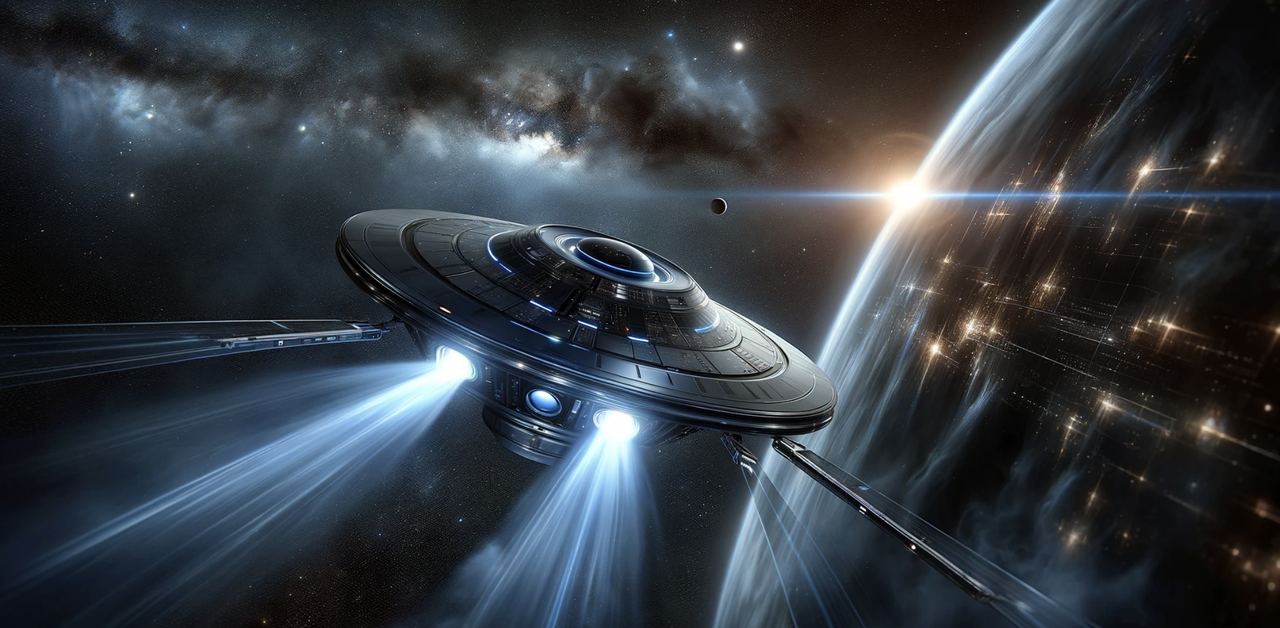

For decades, human imagination has envisioned AI as a starship captain, guiding robotic explorers across distant worlds. Today, that vision is rapidly transforming into reality. From autonomous rovers trundling across the surface of Mars to advanced spacecraft that can adapt, diagnose, and even self‑correct complex systems without human intervention, the question is no longer if AI assists space missions—but whether it might one day lead them on its own. This article examines that possibility with depth, clarity, and a touch of scientific wonder.
Whether you are a space enthusiast or a technology professional, the unfolding story of AI in space is one of the most compelling chapters in human progress.
The New Frontier of Autonomy
Space missions have always pushed technology to its limits. Traditional spacecraft follow pre‑programmed sequences sent from Earth. But as missions venture farther—from the Moon to Mars and beyond—this method increasingly reaches its limits. Communication delays, unpredictable environments, and unforeseen system anomalies can make remote control inefficient, impractical, or even impossible.
The solution? Smarter spacecraft. AI enables mission systems to make decisions locally—without waiting for Earth’s instructions. That capability is already being tested in real missions.
At NASA, AI has helped spacecraft like the Perseverance rover autonomously navigate rugged Martian terrain using its AutoNav system, allowing it to travel kilometers without constant direction from Earth. In fact, around 88 % of its driving has been completed autonomously thanks to onboard AI processing visual data and hazard detection in real time.
Similarly, experimental work aboard the International Space Station has shown how machine learning can enable robotic assistants to plan motion paths much faster than traditional space-certified systems—bringing autonomous robotics inside crewed environments.
These early successes hint at a future where spacecraft and robotic explorers can manage logistics, inspect infrastructure, pursue science targets, and even respond to emergencies independently.
Why Human‑in‑the‑Loop Isn’t Enough
Human mission control is extremely skilled but faces physical limits when operating across vast distances. For missions on Mars, the Moon, or deep space, communication delays can stretch from minutes to hours. When a spacecraft must respond instantly—to avoid a hazard, reposition sensors, or diagnose a thermal issue—waiting for ground control becomes untenable.
That’s where AI autonomy comes in. Modern systems integrate:
- Real‑time perception: Vision, radar, and sensor fusion to understand local surroundings.
- Decision logic: Algorithms capable of prioritizing objectives based on mission goals.
- Fault detection and recovery: Self‑diagnosis and adaptive corrective actions without ground intervention.
Together, these capabilities form the basis of what engineers call autonomous mission execution—a critical step beyond simple automation.
Autonomy in Action: Real Missions and Prototypes
AI’s impact on space missions is already evident in multiple arenas:
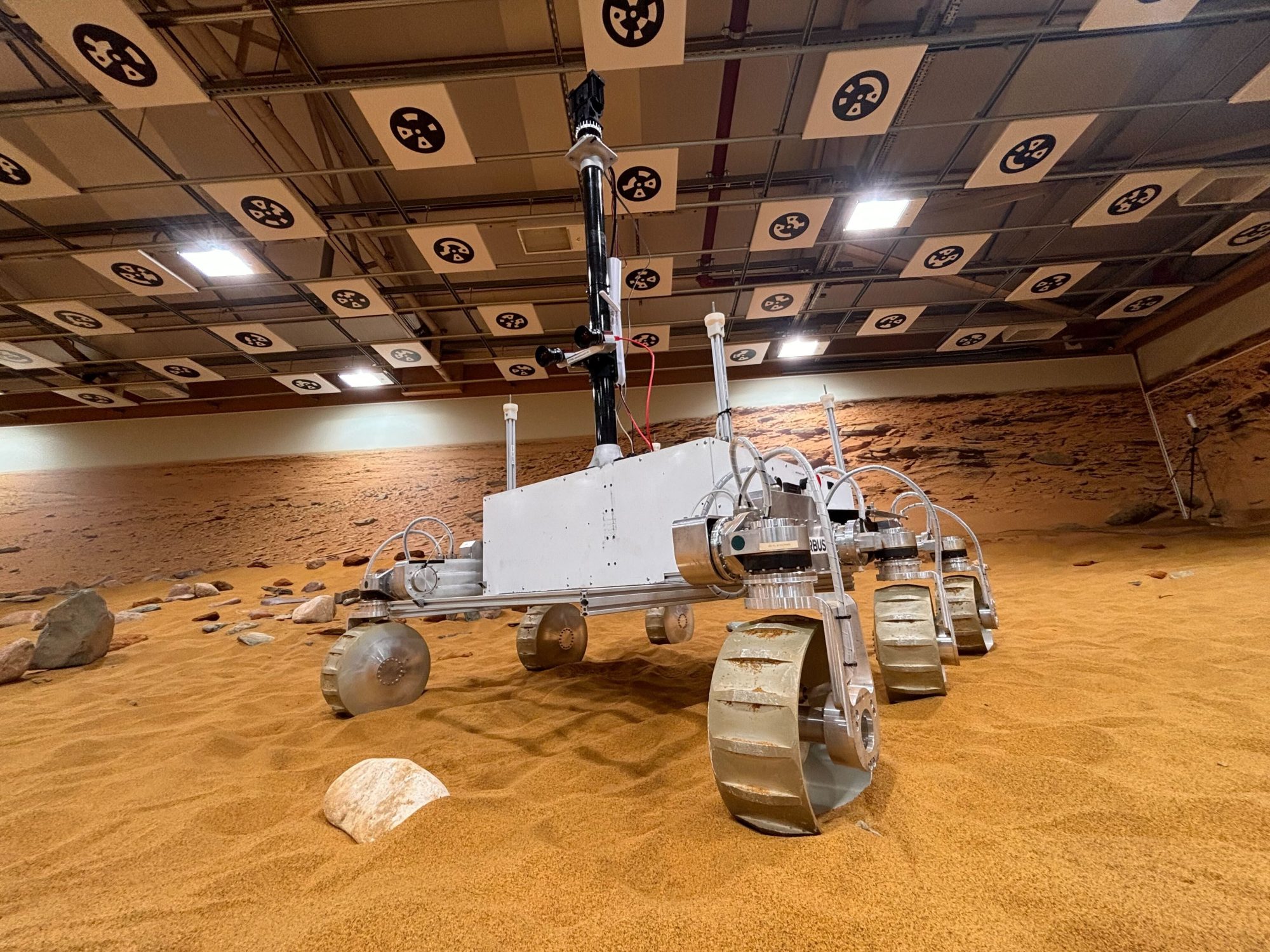
Autonomous Robotics on the ISS
NASA’s Astrobee free‑flying robotic assistants have been used to test onboard motion planning with machine learning. The result? Faster, safer navigation in the ISS’s confined microgravity environment—an encouraging step toward robots managing tasks independently of constant human oversight.
Deep Learning‑Driven Satellite Control
Academic and industry research, such as the LeLaR AI satellite attitude controller, has validated onboard AI systems that use deep reinforcement learning to maintain satellite orientation. These experiments represent crucial validation of autonomous spacecraft operations.
Sample Collection and Decision Autonomy
Projects like NASA’s AI Space Cortex are pushing AI to orchestrate complex mission actions—such as selecting sampling sites, managing instrument operations, and adapting to partial system failures—all without live human oversight.
Past Proofs of Concept
Historical missions like JAXA’s Hayabusa2 employed AI to autonomously navigate and collect samples from an asteroid. These missions may have had human planning support on the ground, but the spacecraft executed key maneuvers independently using embedded intelligence.
Technical Challenges That Still Remain
Despite rapid progress, autonomous AI space leadership remains constrained by significant technical hurdles:
Extreme Environmental Variability
Space environments are harsh and unpredictable. Radiation, micrometeoroids, temperature extremes, and chaotic terrain all pose grave challenges for sensor systems and AI decision routines.
Limited Computing Resources
Unlike Earth‑bound AI systems backed by powerful datacenters, spacecraft computers must be radiation hardened and highly reliable. This generally means lower processing power, making the implementation of complex models difficult.
Safety and Explainability
AI systems must behave reliably under all conditions. This requires transparency of decision processes—especially when human lives or mission assets are at risk. Engineering trusted autonomy with predictable behavior under edge cases is an active research domain.
Human‑AI Teaming
Complete autonomy isn’t just about replacing human control. It’s equally about designing cognitive frameworks where humans oversee, audit, supervise, and intervene in AI systems when needed. The most efficient future missions may well be hybrid systems—where AI handles tactical decisions and humans provide strategic direction.
Ethics, Governance, and the Space AI Paradox
As AI autonomy grows, so do questions of responsibility:
- Who is accountable if an autonomous spacecraft makes a harmful decision?
- How should AI ethics be encoded in systems operating far from real‑time human supervision?
- What governance frameworks must be established to regulate autonomous space systems?
These are not merely philosophical concerns; they are practical and urgent. The risk‑averse nature of space missions means engineers must build autonomy that is not only intelligent, but trustworthy and verifiable.
A Future Mission Commanded by AI?
Could AI fully lead a deep space mission? If leadership is defined as autonomous decision‑making across planning, execution, anomaly recovery, and scientific discovery, then technological trends indicate it’s possible—perhaps sooner than many imagine.
However, the degree of autonomy will vary across mission types. A lunar mapping rover may operate almost entirely independently, while a mission with astronauts onboard will likely continue to rely on human command for strategic decisions.
Additionally, though emerging satellite AI constellations aim to perform data processing and navigation directly in orbit, complete self‑directed leadership free of human guidance remains an aspirational horizon—one advancing steadily with each innovation.
Ultimately, the future of space exploration may see AI not replace human mission leadership, but augment it—allowing humans to explore further, risk less, and achieve more.
Conclusion: AI as a Pathfinder, Co‑Pilot, and Beyond
Artificial intelligence is already reshaping how space missions are conducted. From autonomous rovers navigating alien landscapes to onboard systems making life‑critical adjustments during missions, AI is far beyond mere support software—it’s becoming mission intelligence.
Will AI ever lead space missions entirely on its own? The answer depends not just on technology, but on how we define leadership. If leadership means making critical mission decisions, adapting to the unknown, and ensuring scientific success with minimal human intervention, then yes—AI is on track to take that role, perhaps within this generation of explorers.
What remains essential is that AI leadership in space be bounded by safety, ethics, and robust engineering—so when autonomous explorers venture into the cosmic ocean, they chart courses not only that are bold, but also wise.