









A Deep Dive into the Science, Myth, and Future of Force Fields
What comes to mind when you read force field? For most people it will be the shimmering invisible shield that protects starships in Star Trek, or the personal energy barrier that soldiers carry in Dune. But could any version of that dazzling technology ever become real? In this article, we’ll explore what “force fields” mean in physics, what technologies today come closest to them, the hard limits that current science imposes, and the speculative paths that might someday bring us real protective barriers.
What Do We Mean by “Force Field”?
The phrase force field has multiple meanings depending on context. In science fiction, a force field usually refers to an invisible barrier that stops physical objects, energy blasts, radiation, or sometimes all of the above. In real physics, a force field is a region of space where a physical force (like gravity or electromagnetism) affects the motion of particles. Gravity binds planets to stars, electric fields move charges, and magnetic fields guide plasma — all existing force fields we already understand as part of fundamental physics.
But those everyday force fields don’t block bullets or lasers. They influence particles that feel the force; you can’t hold up a rock with an electric field unless you first heavily charge that rock. That’s where the real challenge begins.
The Four Fundamental Forces and Why They Don’t Make Shields
In the Universe we live in, four fundamental forces shape interactions between particles and objects: gravity, electromagnetism, the strong nuclear force, and the weak nuclear force.
- Gravity: Extremely weak at small scales. It binds galaxies and planets, but it’s far too feeble to stop a bullet or deflect a laser. You’d need a mass bigger than Earth to have a noticeable shielding effect.
- Electromagnetism: Strong and far-reaching compared with gravity, it dominates chemistry and everyday interactions. But it only affects electrically charged particles. To use it as a shield you’d have to charge up incoming objects — which is a massive engineering challenge.
- Strong and Weak Nuclear Forces: These operate only inside atomic nuclei and at femtometer scales — many orders of magnitude smaller than anything you’d want to shield with.
Therefore, none of the four forces gives us a simple path to creating a starship-style barrier that blocks everything.

Electromagnetism: Most Promising Yet Most Limited
Electromagnetism is the heavyweight champ among forces within practical reach. Physicists have speculated about electromagnetic barriers that could, at least in principle, influence the path of incoming particles. For example, you could imagine a cloud of charged particles or positrons that deflects charged projectiles. But there are serious problems:
- Neutral Objects: Most projectiles — bullets, rocks — are electrically neutral. You must first charge them somehow at the last moment before they hit the field. Proposed methods like positron bombardment face enormous energy and safety hurdles.
- Energy Requirements: A useful electromagnetic shield would need unprecedented energy densities and extremely precise control of fields in space.
- Containment: You have to contain the fields themselves; otherwise, they collapse back into free space.
Physicist Jim Al-Khalili points out that an electromagnetic force field strong enough to deflect objects would likely require charging the incoming projectile, which itself is fraught with practical challenges.
Plasma Shields and “Plasma Windows”
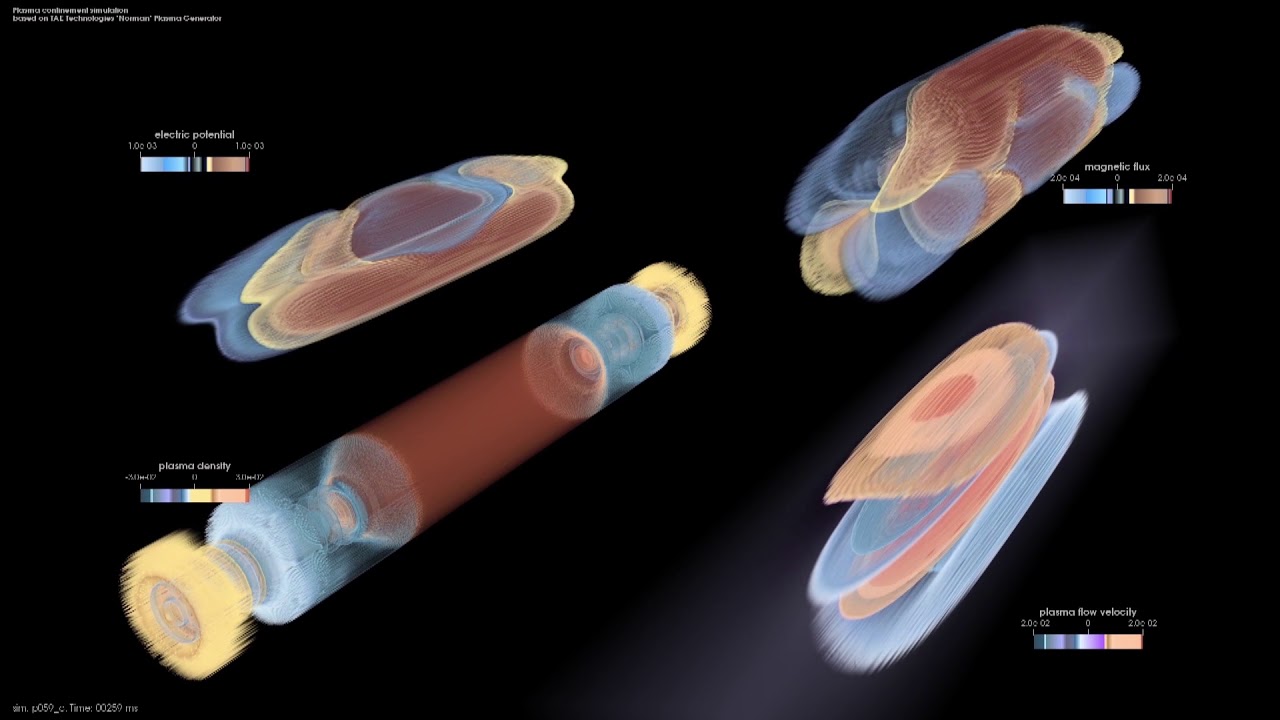
One of the few real technologies that looks a tiny bit like a force field is the plasma window. This is a sheet of hot, ionized gas (plasma) confined by magnetic fields. It has been used to separate high-vacuum environments from atmosphere in experimental setups.
Here’s what plasma windows can and cannot do:
- Can: Block gas flow between vacuum and air, serve as a barrier for certain particles, and act as part of advanced welding systems.
- Cannot: Stop solid objects, projectiles, or high-energy radiation — at least not in any practical sized system.
Some visionary thinkers like Michio Kaku even talk about multilayer shielding — combining hollow plasma layers with lasers or even nanomaterial sheets — but these remain deep theoretical speculations with no experimental demonstration at anything like useful scale.
Patents and Speculative Tech: Boeing and Beyond
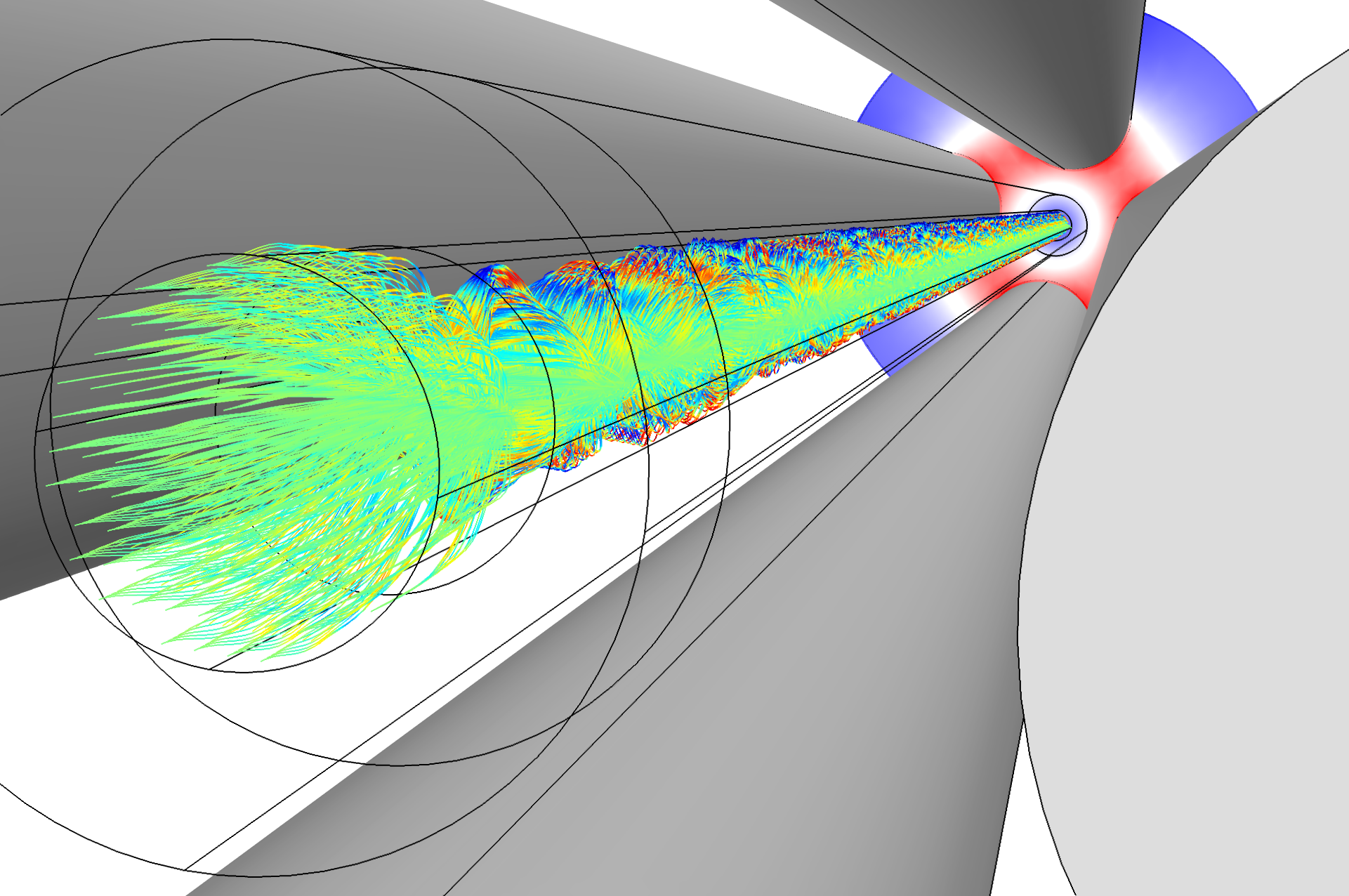
You might have seen headlines claiming that companies like Boeing have patented a “force field.” In reality, these patents typically describe systems designed to mitigate shock waves from explosions using microwaves and lasers to heat air, turning it into a plasma cushion. These are shock attenuators, not magic shields that block bullets.
Similarly, some high-profile patents — such as those claiming electromagnetic shields that block missiles or protect satellites — have been met with strong skepticism from physicists because they lack experimental evidence and rest on unproven theoretical assumptions.
Space Applications: Radiation Shields
One real application where something like a force field might be useful is protecting spacecraft from space radiation. NASA and research institutions have explored the idea of surrounding a spacecraft with a bubble of magnetic or plasma fields that deflects charged solar particles. Some experimental and theoretical work suggests this is not impossible, though extremely hard.
Such shields would not block kinetic impacts like micrometeoroids, but could reduce radiation exposure for astronauts — a major concern for long-duration missions to Mars or deep space.
The Hard Physics Limits
Even in speculative frameworks, several irreducible constraints close the door on true science-fiction force fields:
- Speed of Influence: Any real field must obey the finite speed at which changes in electromagnetic or gravitational fields propagate — the speed of light.
- Neutral Mass: Most macroscopic objects are neutral; they don’t interact strongly with electromagnetic fields unless charged.
- Energy and Stability: Generating enormous fields requires colossal energy, and controlling those fields in 3D space without them collapsing is incredibly hard.
In short, our current understanding of physics — even with quantum field theory and advanced electromagnetism — does not allow for the kind of impenetrable, selective, energy-saving barrier that dominates sci-fi.
Theoretical Speculation and Future Directions
That said, physics is full of surprises. Here are some avenues researchers think could — eventually — lead to defense-like shields:
- Integrated Deflector Shields for Spacecraft: Combining magnetic fields, plasma, and active control systems to form multilayered protection against particles and certain energies. These systems are being modeled and simulated.
- Nanostructured Materials: Graphene and carbon nanotubes could form ultra-light, strong barriers at small scales, perhaps used with active fields to deflect or absorb energy.
- Quantum Field Manipulation: Speculative research into unified field theories and extended electromagnetism might provide entirely new mechanisms — but this is extremely long-term and highly theoretical.
Why Sci-Fi Force Fields Still Matter
Even though we are nowhere near building Star Trek shields, force fields are hugely valuable as conceptual tools. They push scientists and engineers to think about problems like radiation protection, directed energy defense, and advanced materials in new ways. They also accelerate public interest in fundamental physics concepts like electromagnetism, quantum fields, and plasma dynamics.
So while you won’t be popping on an invisible personal shield on your next hike, the quest for force field-like tech continues to expand the horizons of real science.