








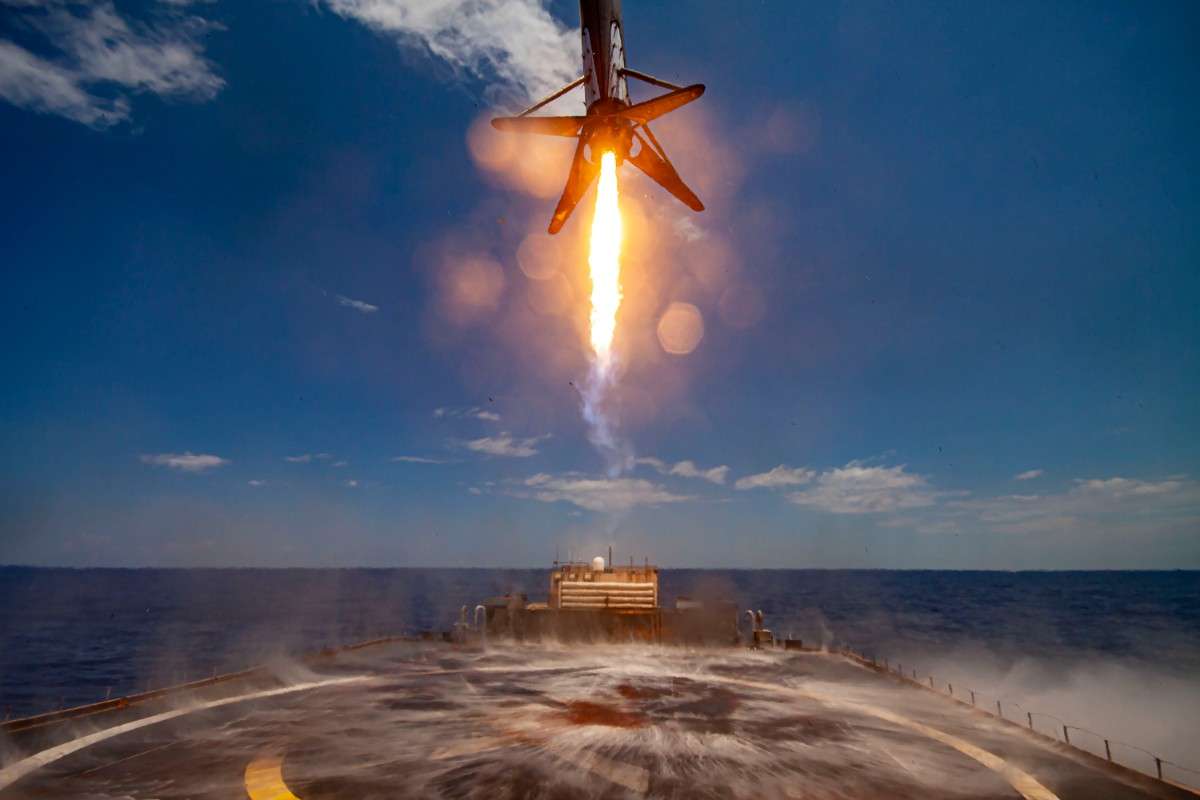

The space age is entering a renaissance that even the pioneers of the Apollo era could scarcely have imagined. Rockets that once were discarded after a single launch — fiery pillars of engineering that vanished into the ocean or burned up in the atmosphere — are now being designed to return, recover, and launch again. Yet as we stand on the cusp of next‑generation launch vehicles, the question that captivates engineers, investors, and space enthusiasts alike is simple but profound:
Will next‑generation rockets be fully reusable?
This article walks through the science, economics, engineering challenges, and breathtaking possibilities behind this bold frontier of spacetech.
Introduction — A New Era in Rocketry
For decades, space launch systems followed a simple model: expendability. Rockets blasted off, pushed their payloads into orbit, and large portions of the launch vehicle were never used again. This strategy was efficient for early space exploration, where reliability mattered more than cost. But expendability carries a massive price tag — literally and figuratively.
Reusable launch vehicles offer the tantalizing promise of dramatically lower launch costs, higher launch frequency, and a step closer to truly accessible space. At the forefront of this movement has been the U.S. company SpaceX, which transformed reusable rocketry from theoretical concept into commercial reality. But does that mean every part of every rocket will someday be reused?
Not quite — at least not yet.
The State of Reusability Today
To understand where next‑gen rockets are headed, we must first survey where they are now.
SpaceX — The Modern Pioneer
SpaceX’s contribution to reusable rocketry cannot be understated. The company’s Falcon 9 rocket routinely lands and reflights its first stage — the massive booster that provides the initial thrust to escape Earth’s gravity. With hundreds of booster landings and reflights completed, this milestone alone has reshaped global expectations for launch costs and cadence.
But even Falcon 9 is not fully reusable. Its second stage — the upper part of the rocket that continues to carry payloads into orbit — is still expendable. SpaceX’s next design, Starship, aims for full reusability, including both booster and upper stage, and Elon Musk has described the end goal as a system that can fly again within hours of landing.
Commercial Rivals and New Contenders
SpaceX isn’t alone. Around the world, several companies and space agencies are also pushing reusability:
- Blue Origin’s New Glenn: Designed with multiple reuse in mind, its first stage is expected to fly up to 25 times.
- Rocket Lab’s Neutron: Focuses on reusable elements, including its innovative fairing, and plans to reuse its main booster.
- Stoke Space Nova: A fully reusable medium‑lift launcher in development.
- Relativity Space’s Terran R: Plans to be a partially reusable heavy‑lift rocket, with revisits planned for the near future.
On top of that, many smaller startups and national space agencies — from China’s LandSpace and Space Pioneer to Japan’s JAXA and India’s Agnikul Cosmos — are innovating toward some form of reusable or recoverable rocket architecture.
But these rockets vary widely in how reusable they truly are.
What Does “Fully Reusable” Really Mean?
In rocket parlance, “fully reusable” usually implies that all major stages of a launch vehicle — first and second stages, and ideally every structural component — can return to Earth intact and be prepared for another flight with minimal refurbishment.
This is distinct from “partially reusable,” where only certain elements like the first stage or fairings are recovered and reused.
Stages of Reusability

- Partial Reusability:
- Only the booster or first stage is reused (e.g., Falcon 9).
- This dramatically cuts costs but still leaves upper stages and some components discarded.
- Full Reusability:
- Every structural stage, from booster to upper stage, reenters and lands safely.
- This is the ultimate goal many next‑gen designs target.
- Rapid Reuse:
- A subset of full reuse that emphasizes turnaround time — how quickly a rocket can be flown again after landing. This shifts rocketry toward airline‑like operations.
Engineering Challenges on the Road to Full Reusability
Achieving full rocket reusability is not simply a matter of having landing legs and heat shields. It requires solving some of the most complex engineering problems in aerospace.
Thermal Stress and Materials Engineering
When rockets reenter the atmosphere, they encounter extreme heat. Protecting every part of the rocket — including fuel tanks, engines, avionics housings, and payload fairings — requires advanced heat‑resistant materials and clever design.
Heat shielding for full reuse often adds mass, which reduces payload capacity and requires more propellant — a catch‑22 that engineers must balance.
Complex Recovery Mechanisms
Recovering the first stage is already achievable via powered landings or ocean platform landings. But retrieving the second stage — which travels faster and higher — involves far greater thermal and mechanical stresses. Techniques like propulsive return, wings, grid fins, and aerodynamic lifting bodies are all under exploration.
Cost vs. Performance Trade‑offs
Reusability systems — landing gear, avionics, actuators, and structural reinforcements — come at a cost in mass and complexity. More complex systems can lower operating costs but require more upfront investment and increased technical risk.
Every kilogram added to reusability hardware is a kilogram not available for payload — a vital consideration in commercial launches.
Economic and Market Forces Driving Reusability

There’s a clear business case for reusability: lower per‑launch costs and higher flight cadence. Multiple market reports project robust growth in reusable launch vehicle markets over the coming decade, driven by satellite constellations, on‑orbit services, and commercial space access.
As costs fall, new markets emerge:
- Megaconstellations: Thousands of satellites needing frequent, low‑cost launches.
- Space Tourism: Safe, reusable launch systems reduce price barriers for suborbital and orbital tourism.
- Interplanetary Missions: Reusability lowers mission costs for Moon bases and Mars settlements.
The economics may even transform how nations plan space budgets — favoring fleets of reusable rockets over single‑use systems.
Global Competition and Policy Influences
The drive for reusable rockets is not solely a commercial arms race. National space agencies see strategic value in affordable access to space:
- The United States continues to fund research and contracts that support reusability, with SpaceX and other companies leading.
- China’s private and public space sectors are aggressively developing reusable launch systems, with early flight tests and recovery attempts already underway.
- Europe’s Ariane Next project aims for partial reusability in the 2030s.
- India and Japan are working on reusable launcher technologies, stimulated by national space policies.
These efforts reflect broader geopolitical competition over space infrastructure and capabilities.
Environmental and Sustainability Considerations
Reusable rockets also promise environmental benefits. A recent study modeling greenhouse gas emissions showed that reusable vehicles can produce significantly lower lifetime emissions compared with expendable launch systems. This is important as frequent launches — especially of satellite constellations — raise environmental concerns.
However, sustainability challenges remain:
- Rocket propellants still produce emissions during launch.
- Reuse requires refurbishment processes with their own environmental footprints.
Future innovations in propellant chemistry and manufacturing may further reduce the environmental impact of launch operations.
Is Full Reusability Inevitable?
While full reusability is technically conceivable, it is not yet the norm. Most next‑generation rockets focus on partial reusability because it offers the best balance between cost savings and technical risk.
Nevertheless:
- Several companies aim for fully reusable systems (e.g., Starship, Nova).
- Market economics favor solutions that push reusability further.
- Technological progress in materials, avionics, and automation continues to break barriers.
Thus, fully reusable rockets are likely achievable, but their widespread adoption will hinge on continued innovation, investment, and real‑world flight success.
Conclusion — The Future of Rocketry
The dream of fully reusable rockets paints a vivid picture: rapid, cost‑effective access to space, operational flexibility rivaling aviation, and a sustainable space economy that supports exploration, commerce, and discovery. Yet this vision is still a work in progress.
Next‑generation rockets point the way forward — from partial reuse now to the tantalizing possibility of vehicles that refly every component, changing the economics of space forever.
Will they be fully reusable? The answer today is: not yet — but increasingly likely as we push technology, markets, and imagination toward the stars.