









Deep space communication has long fascinated scientists, engineers, science fiction writers, and people who just love the idea of talking across the cosmos. But when we talk about speed — especially compared to terrestrial fiber networks — it can quickly become a blend of physics, technology, and imagination. In this article, we’ll peel the layers back and explore what “speed” really means for deep space networks, fiber‑optic communication on Earth, and the future frontier of interplanetary data highways.
What makes this question especially interesting is that there are multiple meanings of speed in communications: speed of light propagation in the medium, data throughput (bandwidth), and latency (the time it takes for a bit of information to travel end‑to‑end). Each of these plays a role in determining how “fast” a network feels, how much data it can carry, and how useful it actually is — whether you’re streaming a movie or commanding a rover on Mars.
The Fundamentals: Speed of Light vs. The Real World
At the heart of any discussion about communication speed is the immutable constant of physics — the speed of light. In a vacuum, light travels at approximately 299,792 kilometres per second. That’s fast. Really fast. But this is crucial: that speed, while fixed, is a limit — not a performance metric networks can exceed. Even in fiber optics, light doesn’t quite travel at that full speed. Because the signal refracts through glass, it slows down to around 200,000 km/s (roughly two‑thirds of its vacuum speed), although advanced hollow‑core designs can push it closer to vacuum speeds.
So in a straight physical sense, an optical signal from Earth to Mars still cannot exceed light’s vacuum speed. But when comparing deep space networks and fiber, the relevant observations go beyond just propagation speed. It’s about how data gets encoded, transmitted, and received over enormous distances versus along cables in cities and under oceans.
Fiber Optics: The Terrestrial Gold Standard
Fiber‑optic networks are the backbone of the modern internet. They carry staggering amounts of data across continents and under oceans, reaching speeds up to 10 Gbps and beyond for specialized links. The technology also offers remarkably low latency over long distances — for example, the estimated round‑trip for 1,000 km of fiber is around 11 milliseconds.
This performance is why fiber is widely deployed for business, cloud networking, and home broadband. But even here, physical limits bite: signals require repeaters and amplifiers over very long paths, and the speed is fundamentally constrained by refractive effects and the physical path the fiber must take (e.g., undersea routes are rarely straight lines).
In short: fiber is fast — but not perfect. Its data rates and latency are phenomenal domestically, but they don’t magically scale to cosmic distances.
Deep Space Network (DSN): A Communication Lifeline
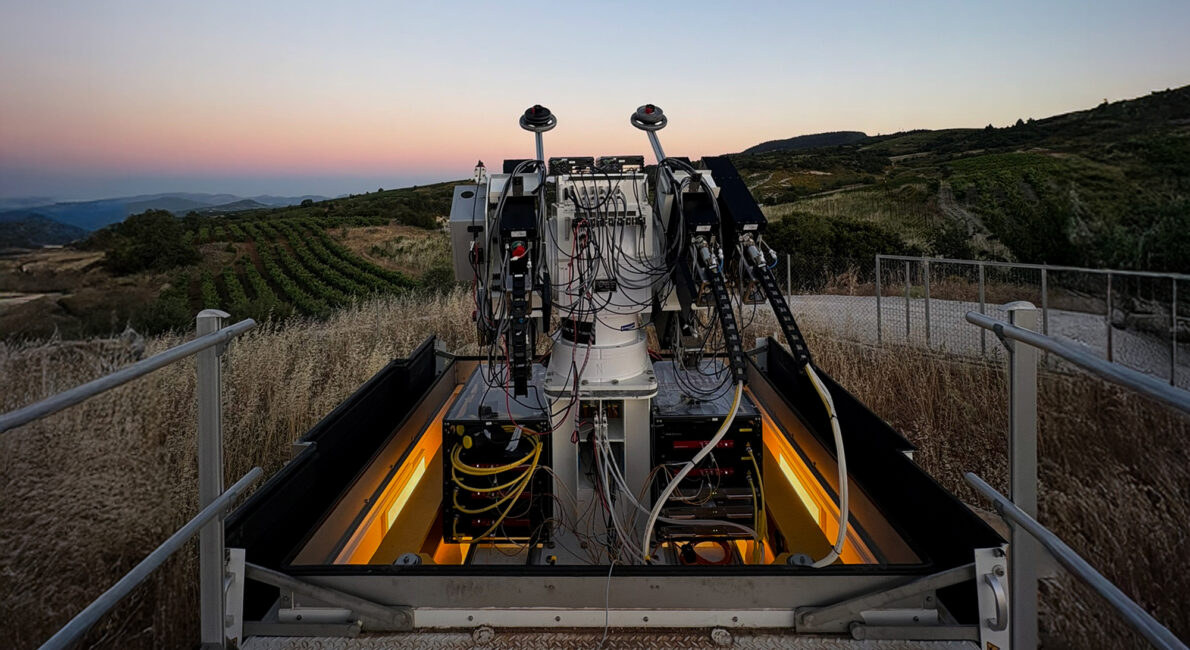
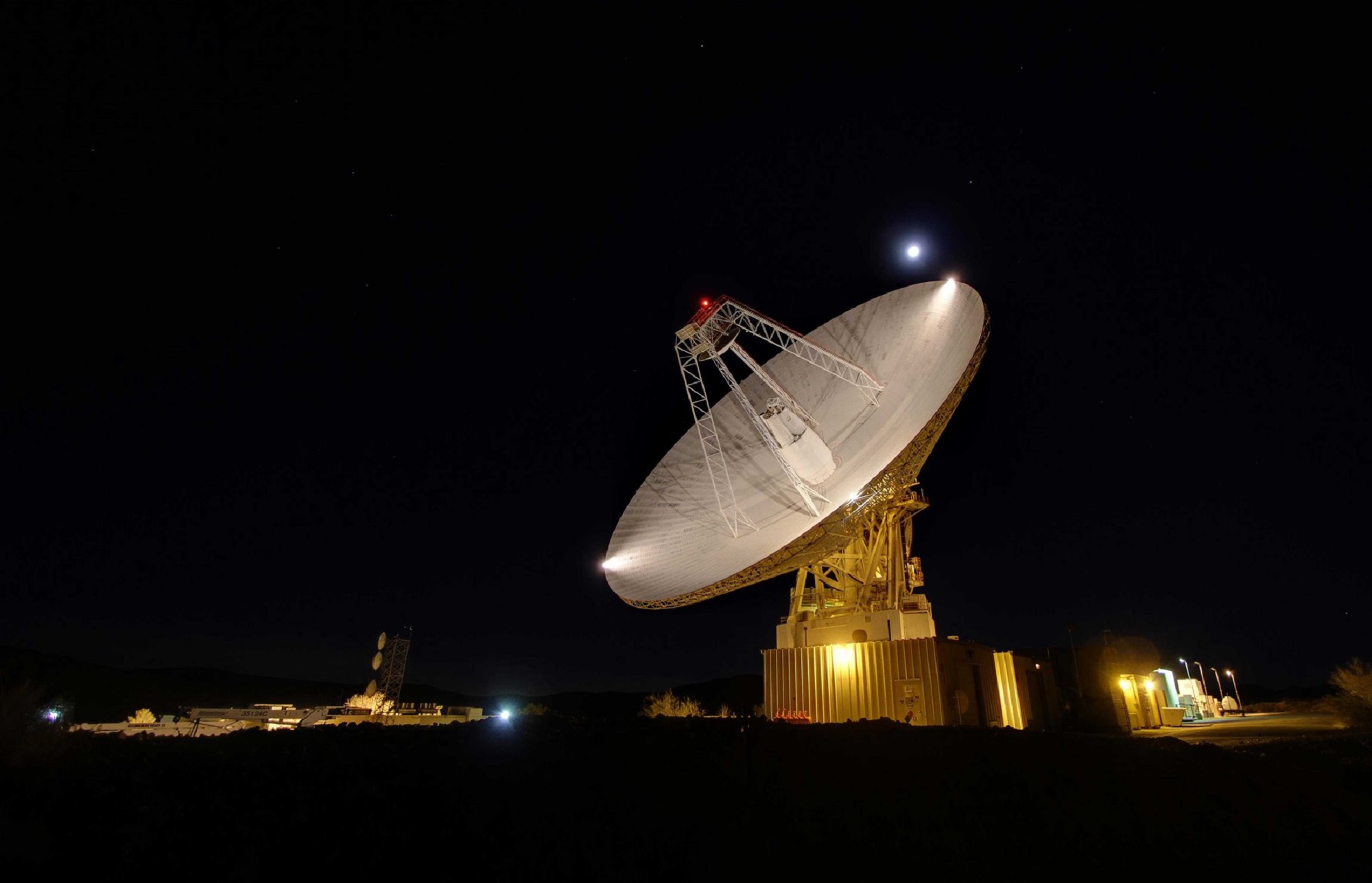
The Deep Space Network — operated by NASA’s Jet Propulsion Laboratory — has been the communications backbone for interplanetary spacecraft since the dawn of space exploration. With gigantic antenna complexes in California, Spain, and Australia, the DSN receives and transmits signals across millions of kilometres.
But here’s where the differences get dramatic:
- Latency is huge. Messages to Mars can take between 4 and 24 minutes one way, depending on orbital positions.
- Typical data rates are modest. Traditional radio communications might offer data rates under a few megabits per second for Mars missions, with averages often cited between 0.5 and 4 Mbps.
This isn’t a failure of technology — it’s a consequence of massive distances and weak signal strengths once you’re tens or hundreds of millions of kilometres from Earth. In fact, deep space communication works at all across these scales because engineers design ultra‑sensitive receivers and error‑correcting algorithms to cope with noise and faint signals.
So if a typical fiber link on Earth can deliver multigigabit data per second in real time with millisecond latency, DSN’s current baseline performance isn’t even in the same league. But that doesn’t mean we’re done innovating.
Optical Communications: A (Laser) Leap Forward
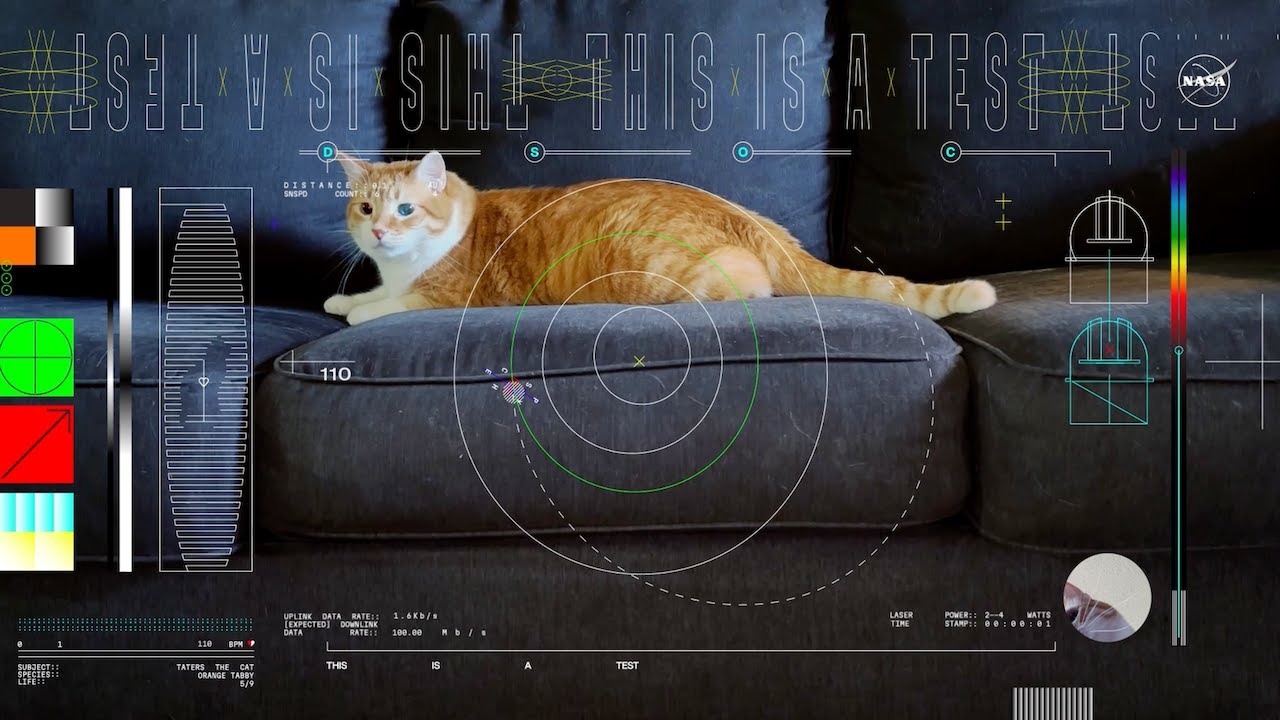
The Deep Space Optical Communications (DSOC) experiment aboard NASA’s Psyche spacecraft marks a groundbreaking shift. Instead of radio waves, DSOC uses lasers — essentially photons beamed across space — to transmit data with much higher efficiency and bandwidth.
In tests:
- DSOC achieved data rates of 267 Mbps at shorter distances, which is 10‑100× faster than traditional DSN RF systems.
- Even at significant distances, sustained downlinks of tens of Mbps — unheard of for typical deep space radio — were accomplished.
Compare that to fiber links that routinely achieve gigabits per second or more. Laser deep space links are still lower in raw throughput — but they represent an enormous leap over classical space communication. And because they use optical wavelengths like terrestrial fiber, they hint at a future where deep space networks could be not just megabits, but gigabits per second at interplanetary distances.
However, this isn’t a simple matter of time it takes for a bit to travel — the fundamental physics bound by light speed remains. What changes is the amount of data we can send and the efficiency of the link.
Lots of Distance = Lots of Delay
One of the perplexing realities of comparing deep space networks to fiber is that distance matters more than medium.
You might ask: how much faster could a deep space signal be if it traveled through an ideal medium? If we could hypothetically replace the space vacuum with a straight fiber from Earth to Mars (which is obviously physically impossible), the latency would still equal the distance divided by speed — and if that fiber somehow matched vacuum light speed exactly, the best possible delay Earth‑Mars would still be on the order of minutes at closest approach.
So while fiber links on Earth are already operating near the speed limit of physics for terrestrial distances, deep space signals — laser or RF — cannot break that fundamental limit. The perceived speed boost with optical systems comes from sending more data per second, not from breaking the light‑travel limit.
The Meaning of “Faster”: Bandwidth vs. Latency
When people talk about a network being “faster,” they usually mean one of two things:
- Higher throughput (more bits per second), and
- Lower latency (less time for data to go from A to B).
In fiber, we can have both — gigabits per second with ~milliseconds of latency across long distances on Earth. In deep space:
- High bandwidth is becoming possible with laser comms but remains capped by distance‑dependent losses.
- Latency, however, is fundamentally unavoidable — Mars isn’t teleporting closer, and the signal travel time remains dictated by light speed in a vacuum.
In that sense, even the most advanced deep space network can never be “faster” in terms of latency than a local fiber connection — but it can be faster than existing deep space systems in terms of Mbps throughput. That’s the real revolution.
Future Horizons: Interplanetary Internet?
NASA, ESA, and other space agencies are actively researching communication protocols and architectures for the so‑called Interplanetary Internet — a decentralized, delay‑tolerant networking system that would support future Mars colonization, lunar bases, and robotic fleets. These networks will leverage innovations like:
- Laser communication links,
- Delay‑tolerant networking protocols that embrace latency,
- Relay satellites that reduce dead zones,
- And eventually optical crosslinks between spacecraft.
While it’s still early, this shows a clear roadmap toward narrowing the functional gap between interplanetary and terrestrial communications. The dream is not to match fiber’s millisecond experience across cosmic distances — because physics forbids that — but to make deep space data feel fast and seamless relative to mission needs.
Summary: What “Faster” Really Means
So how much faster could deep space networks be compared to fiber?
In terms of signal propagation: never faster than the universal speed of light.
In terms of practical latency: always slower for interplanetary distances than terrestrial fiber — because fiber links are measured in milliseconds and deep space links are measured in minutes or hours.
In terms of data throughput: emerging optical systems could push DSN speeds into the hundreds of Mbps or even higher, approaching the lower end of terrestrial fiber performance but across millions of kilometres.
Futures with multi‑Gbps deep space laser networks are conceivable. But bridging the latency gap between cosmic distances and Earthly internet will always be a challenge rooted in fundamental physics.