









In the sprawling world of modern software development, application programming interfaces (APIs) are the invisible highways that enable services to communicate, collaborate, and create the digital experiences we take for granted. As APIs evolve, so do the expectations of developers, businesses, and end users alike. One particularly contentious question that arises with API evolution is the role of beta APIs — and whether they “actually break backward compatibility.” The short answer is nuanced: beta APIs often can break backward compatibility, but the degree to which they do depends on governance, documentation discipline, and expectations set by the API provider.
This article will unpack this issue in depth. We’ll start with fundamental definitions, then dissect what beta versions mean in practice, explore why backward compatibility matters, examine common pitfalls and real‑world scenarios, and conclude with practical advice for API creators and consumers alike.
What Is a “Beta API”?
At its core, “beta” is a label applied to software — or in this case, an interface — that is feature‑complete enough for experimentation and testing, yet not finalized for general availability. In the API world, being in beta typically means:
- Features are available to developers for integration and feedback.
- The API is potentially subject to change without the guarantees applied to stable releases.
- Providers explicitly disavow production‑level stability or service level agreements (SLAs).
Beta APIs act as innovation sandboxes. They give early adopters access to the latest capabilities, but they also signal — implicitly or explicitly — that the API is not yet “locked in.” This status has real implications for backward compatibility.
Backward Compatibility: A Primer
Backward compatibility means that newer versions of an API continue to support the behavior, structure, and expectations established by earlier versions, so that existing clients do not break when updated. In other words, code written against the previous version continues to work without modification when interacting with the newer API.
Backward compatibility has several key benefits:
- Stability for clients: Consumers of the API don’t need to immediately rewrite or refactor their code after an update.
- Smooth evolution: APIs can evolve without disrupting large ecosystems of dependent applications.
- Reduced technical debt: Teams save resources that would otherwise be spent supporting multiple divergent versions.
However, maintaining backward compatibility is rarely free — it demands careful planning, meticulous documentation, and often version management strategies that isolate breaking changes.
Why Beta APIs Tend to Break Backward Compatibility
The label “beta” is not merely cosmetic. Most mature API providers embed an expectation in internal policy and documentation that breaking changes may occur during the beta lifecycle. Microsoft’s Graph API, for example, explicitly reserves the right to make breaking changes in its /beta endpoint and states that developers should not depend on beta features in production environments.
Similarly, services like Google’s Ad Manager API indicate that while they strive for notices before making breaking changes, such changes can happen at any time in beta.
So why does this happen?
1. Beta Is a Test Bed, Not a Contract
Beta is, by definition, experimental. Features are being tried out, tweaked, and sometimes abandoned based on real‑world feedback. When a feature’s design shifts — even in subtle ways — the underlying API contract may change in ways that can break existing client integrations.
2. Lack of Strong Contract Guarantees
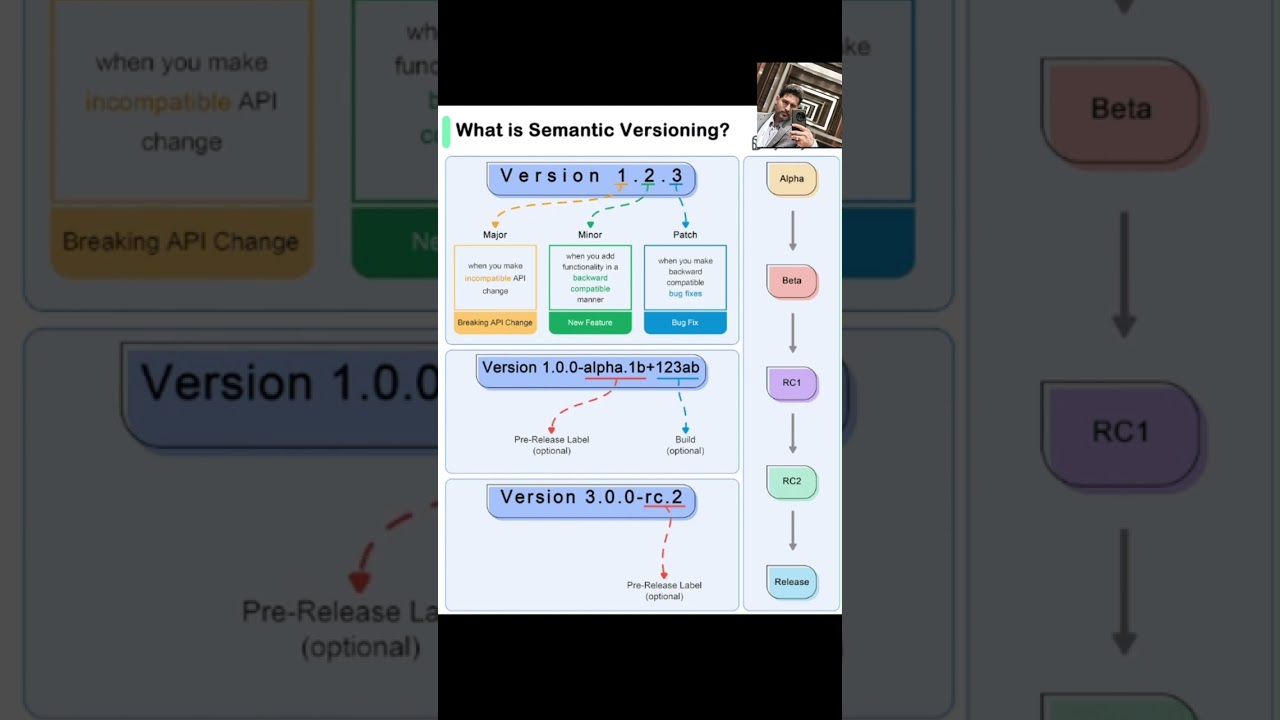
Stable APIs often come with clearly defined semantic versioning (SemVer) and backward compatibility guarantees: MAJOR version changes signify breaking changes, while MINOR and PATCH versions are backward compatible. Beta APIs typically break these conventions — they may use version numbers to signal development progress rather than semantic compatibility.
3. Changing Requirements
Beta features are young and may be under‑specified when released. As priorities shift, requirements change, and new use cases emerge, API responses may modify field names, add or remove data, or change error semantics — all of which can disrupt clients. These are textbook examples of backward compatibility breaks.
4. Developer Expectations
A more subtle reason is expectation misalignment. Many developers adopt beta functionality prematurely, using it as if it were stable. This pushes providers to offer informal stability that they have not committed to deliver, setting up a mismatch between promise and reality.
Types of Backward Compatibility Breaks in Beta APIs
To further understand how beta APIs break backward compatibility, let’s look at common types of breaking changes:
Changing Request and Response Structure
If a beta API changes the data structure, such as renaming fields or altering expected payload formats, existing clients can break because they can no longer serialize or deserialize data correctly.
Adding Required Parameters
Adding a new required field to an API request will break old clients that do not supply that field. Valid clients might suddenly receive error responses instead of successful ones.
Removing Endpoints or Methods
During beta, providers may remove seldom‑used endpoints as they refine the API. Removing an endpoint breaks clients that depended on it.
Changing Error Codes or Status Logic
Even subtle changes — such as new error response formats or different HTTP status codes — can disrupt machinery that relies on specific behavior to handle failures.
These examples are not hypothetical; they occur in practice and are precisely why most providers discourage using beta APIs in production.
When Beta APIs Don’t Break Backward Compatibility
Not all beta APIs break backward compatibility. Thoughtful API design and stewardship can prevent many of these issues.
Clear Versioning
Some API providers adopt aggressive versioning strategies where breaking changes are only applied in new versioned endpoints, even during beta. This isolates instability while preserving an existing contract.

Non‑Breaking Additions
Beta APIs can (and often do) make additive, non‑breaking changes. Examples include exposing new optional fields, new optional endpoints, or enhanced metadata — additions that do not invalidate existing clients.
Strong Beta Agreements
Where a provider clearly communicates expectations and provides a reliable deprecation policy — such as grace periods and tools for migration — backward compatibility disruption can be minimized.
That said, minimizing breakage in beta requires foresight and discipline. Many smaller teams or open‑source projects lack the bandwidth for sophisticated compatibility management, leading to more frequent breaking changes.
How It Feels for API Consumers
Imagine building a mobile app that integrates with a third‑party beta API for real‑time pricing. You deploy your app, expecting stability. Then, overnight, the API removes a required field. Suddenly your app crashes for thousands of users.
This scenario isn’t fiction — it’s been experienced by many developers who have relied on early beta APIs in production, particularly in fast‑moving ecosystems like Kubernetes or experimental cloud services.
From the consumer side, the pain points include:
- Sudden integration failures.
- Increased debugging and patching workload.
- Business disruption if the API backs mission‑critical workflows.
- Loss of developer trust in the provider.
These consequences underline why breaking backward compatibility — even during a beta phase — has tangible costs beyond the code.
Best Practices for Managing Beta API Backward Compatibility
Given the realities above, providers and consumers alike can benefit from concrete best practices.
For API Providers
- Clarify the Beta Promise
Explicitly state that backward compatibility is not guaranteed in beta, and articulate what will be supported. - Use Versioning Rigorously
Semantic versioning and clearly delineated major version boundaries help clients understand when breaking changes occur. - Provide Deprecation Paths
Even in beta, offering transition guides, timelines, and tooling for migration builds confidence. - Limit Breaking Changes When Possible
If a change can be additive or non‑breaking while meeting product goals, choose the safer path.
For API Consumers
- Treat Beta as Unstable
Avoid using beta APIs in production unless you are prepared to handle breaking changes. - Implement Feature Flags and Fallbacks
Structure your integration so that unstable features can be rolled back or disabled without disrupting core flows. - Monitor API Changelogs Closely
Keep abreast of provider announcements and version notes so that breaking changes don’t blindside you. - Build in Tolerance for Unknowns
Clients should gracefully handle unexpected fields, types, or error formats.
Balancing Innovation With Stability
At a philosophical level, the tension around beta APIs breaking backward compatibility reflects a broader trade‑off in software engineering: innovation versus stability.
- Innovation demands freedom to evolve, experiment, and pivot based on real world usage and feedback.
- Stability demands consistency, predictability, and reliability for clients.
Beta represents the intersection of these two forces. Done poorly, it becomes a source of frustration. Done well, it becomes a bridge to future capability — where clients are invited to shape the API without being unduly impacted by instability.
The key is transparency and mutual understanding: providers clearly articulate what “beta” means, and consumers make informed decisions about risk tolerance.
Conclusion: Do Beta APIs Actually Break Backward Compatibility?
The simplest and most accurate conclusion is this:
Yes — beta APIs often break backward compatibility, because by design they are experimental and subject to change. They can and do introduce breaking changes that affect clients, particularly when the API’s contract is not yet stabilized or versioned responsibly.
However, breaking backward compatibility is not an inherent requirement of all beta APIs. With thoughtful versioning, clear communication, and disciplined governance, many beta APIs can avoid unnecessary backward compatibility breaks — or at least make them manageable.
For developers and architects, the lessons are clear: respect the beta label, design for resilience, and treat backward compatibility as both a technical constraint and a user‑experience signal.