









Introduction
The dawn of the commercial space age marks a pivotal shift in how humanity approaches space access. No longer bound solely to government agencies or Cold War imperatives, space launch infrastructure has entered an era where private enterprise drives innovation, economics, and accessibility. Central to this transformation is the concept of the commercial spaceport—a purpose‑built facility designed to enable routine, profitable, and frequent space operations by private companies.
In this comprehensive and engaging article, we will answer the question posed by your title with expert insight and clear context: Which country will host the first commercial spaceport? We will explore the historical origins, technological implications, industry drivers, and future trajectory of commercial launch hubs. The narrative is crafted to be both informative and readable, making complex aerospace trends accessible without diluting their significance.
What Is a Commercial Spaceport?
A commercial spaceport is a launch facility designed and operated primarily for private sector space launch activities. Unlike traditional government space centers—which were built and controlled by space agencies such as NASA, Roscosmos, ESA, or CNSA—commercial spaceports support a wide array of private launch services, space tourism ventures, research payloads, and commercial partnerships.
The key characteristics of a commercial spaceport include:
- Private‑sector leadership in development, operations, or financing.
- Multiple commercial clients leveraging the site for various missions.
- Revenue‑based operations that aim to generate profit and sustain growth.
- Regulatory frameworks that support commercial launch safety, licensing, and environmental compliance.
This concept represents a paradigm shift in space infrastructure, transitioning from state‑driven missions to market‑driven participation in spaceflight.
Historic Milestone: The First Commercial Spaceport
The answer to “Which country will host the first commercial spaceport?” is the United States of America. The very first purpose‑built commercial spaceport in the world is Spaceport America, located in southern New Mexico, United States.
Spaceport America holds the distinction of being the first facility anywhere in the world designed from the ground up specifically for commercial spaceflight operations. Unlike conversions of former military or government launch sites, this spaceport was envisioned and constructed to serve commercial industry partners, establishing a new infrastructure model for private space activities.
Spaceport America: The Birthplace of Commercial Launch Infrastructure
Spaceport America emerged from early strategic planning in the late 1990s and early 2000s as a regionally supported initiative that envisioned private aerospace innovation in a dedicated launch environment.
Why Spaceport America Was Built
The project was motivated by several converging trends:
- Growing private interest in space tourism and commercial satellite launches. Companies like Virgin Galactic saw the opportunity to operate suborbital flights for paying passengers and research payloads.
- Supportive regulatory frameworks. The U.S. Federal Aviation Administration (FAA) established licensing processes that enabled private commercial spaceports to operate safely and according to clear standards.
- Strategic location and infrastructure potential. The New Mexico desert provided vast open space, clear weather, and proximity to restricted airspace suitable for launch operations.
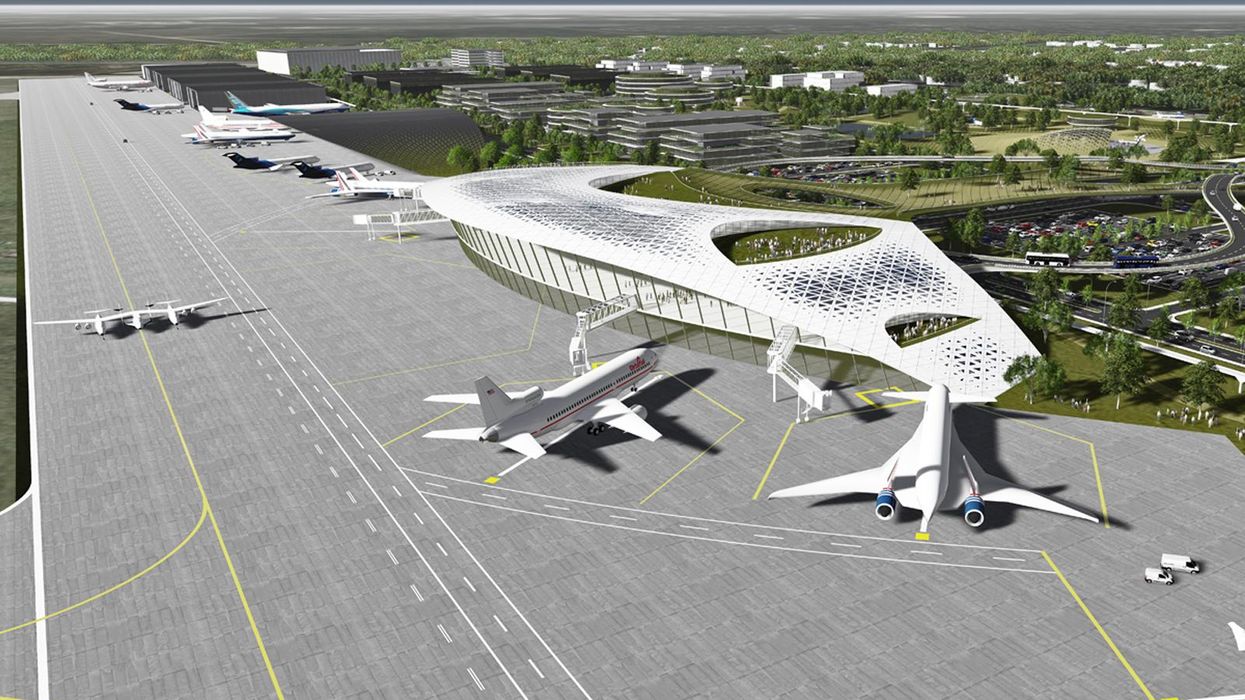
In 2006 ground broke on the project, and by 2011 the first commercial spaceport facilities were completed with support from the New Mexico Spaceport Authority. Since then, Spaceport America has hosted a growing roster of commercial tenants and supported multiple launch operations in partnership with private companies.
Milestones in Commercial Spaceport Evolution
While Spaceport America holds the title of the first purpose‑built commercial spaceport, the broader commercial spaceport ecosystem has grown significantly since its inception.
Spaceport America Operational Highlights
- FAA Licensing: Spaceport America is fully licensed by the FAA for commercial launches, both vertical and horizontal, for private industry clients.
- Anchor Tenants: Early partnerships with companies such as Virgin Galactic helped establish the site as a hub for suborbital space tourism and research flights.
- Launch History: The first rocket launch at Spaceport America dates back to the mid‑2000s, and the facility continues to support launches for aerospace entities in the U.S. private sector.
U.S. Leadership in Commercial Spaceports
The United States’ position as the birthplace of the first commercial spaceport reflects broader national strengths in innovation, regulatory clarity, and private sector leadership. Early establishment of a supportive legal and operational environment enabled private companies to pursue complex space endeavors with clarity and safety protocols in place.
The role of state governments—such as New Mexico’s investment in Spaceport America—also underscores how local and national support combine to accelerate commercial space infrastructure.
Global Expansion of Commercial Spaceports
Since Spaceport America’s development, other nations have started building their own commercial spaceports or space launch facilities with commercial participation. These facilities vary in purpose, capacity, and regional strategic orientation.
Some notable examples include:
Rocket Lab Launch Complex 1 — New Zealand
Rocket Lab established its own launch site on the Māhia Peninsula in New Zealand, successfully launching its Electron rocket for commercial orbital missions. The facility serves as a model for commercial orbital launch activity outside the United States.
Arnhem Space Centre — Australia
Located in the Northern Territory, the Arnhem Space Centre hosted commercial launches in partnership with NASA, marking one of the first uses of a commercial spaceport outside the U.S. for research missions.
Emerging Global Players
Countries such as Japan, Norway, and Oman are also developing commercial spaceport projects, reflecting the growing global appetite for commercial access to space.
What Defines a Commercial Spaceport?
To truly understand the significance of Spaceport America and its successors, we must distinguish commercial spaceports from traditional launch sites. A commercial spaceport typically:
- Facilitates private industry launches for satellites, space tourism, research, or logistics.
- Supports a portfolio of commercial clients rather than serving a single government program.
- Generates revenue through launch services, partnerships, and facility use.
- Operates within a regulatory framework designed to ensure safety while fostering economic growth.
Compared with traditional government space centers, commercial spaceports are more flexible, entrepreneurially driven, and oriented toward market needs.
Why Commercial Spaceports Matter
The emergence of commercial spaceports signals a transformational moment in human spaceflight. Their importance spans multiple dimensions:
Economic Impact
Commercial spaceports create new industries and jobs, attract investment, and stimulate regional economic growth, all while enabling cost‑effective access to space.
Technological Innovation
By lowering barriers to entry and promoting competition, commercial spaceports accelerate advancements in rocket technology, launch systems, and spacecraft design.
New Markets
From space tourism to microgravity research, commercial spaceports expand opportunities for private individuals, businesses, and academic institutions to participate in space activities.
Geopolitical Influence
Countries that nurture commercial space infrastructure increase their strategic footprint in the global space economy and foster international collaboration.
The Future of Commercial Spaceports
Looking ahead, the landscape of commercial spaceports is poised to grow rapidly. Emerging trends include:
- More global launch facilities catering to private companies.
- Reusable launch technologies that reduce cost and environmental impact.
- Space tourism infrastructure that brings suborbital and orbital passenger travel closer to reality.
- New business models such as point‑to‑point space travel and orbital manufacturing.
These developments suggest that commercial spaceports will be essential platforms for mainstream space access and global connectivity in the coming decades.
Conclusion
To answer the question posed in the title: The first commercial spaceport in the world was hosted by the United States, specifically at Spaceport America in New Mexico.
Spaceport America’s pioneering role has reshaped the space industry, paving the way for a growing ecosystem of launch facilities around the globe. Its legacy illustrates how private enterprise, public support, and regulatory frameworks can converge to transform humanity’s relationship with space.