









Spacesuits have long been icons of human ingenuity — bulky, purpose‑built exosystems that shield astronauts from the vacuum of space and extremes of temperature. But as humanity ventures further beyond Earth, with plans for lunar bases, Mars missions, and even space tourism, designers and engineers are asking a provocative question: Could spacesuits evolve into something more like everyday wear?
The idea might sound whimsical, maybe even a little sci‑fi — the sort of outfit that blends runway fashion with rocket science. Yet this question isn’t purely speculative. It lies at the intersection of evolving space technology, advanced materials science, human ergonomics, and cultural shifts toward wearable technology. To truly understand how a spacesuit could become everyday attire, we must explore the technological hurdles, emerging innovations, and even the cultural implications of redefining one of humanity’s most essential survival systems.
What a Spacesuit Really Is: An Orbiting Life Support System
At its core, a traditional spacesuit is far more than “clothing.” It is a miniature life support system — a complex assembly that provides breathable air, pressure regulation, temperature control, radiation shielding, and protection from micrometeoroids. Without it, a human cannot survive even seconds in the vacuum of space. Traditional extravehicular mobility units (EMUs) weigh hundreds of pounds on Earth and require rigid structures and multiple layers to maintain internal pressure and protection.
These suits are analogous to a spacecraft — mobile, yes, but essentially a small pressurized habitat worn on the body. That is why current spacesuits are not even close to everyday wearable gear. But that rigid design is being challenged by a new generation of spacesuit research.
Toward Flexibility: The Latest in Spacesuit Innovation
1. Next‑Generation Suit Architecture
NASA and private aerospace firms are actively developing more flexible suits that expand human mobility. For example, NASA’s evolving lunar suit designs permit astronauts to squat, crouch, and move more naturally — a marked improvement over older bulkier designs. These changes are not for comfort alone; they allow astronauts to perform tasks on planetary surfaces efficiently.
Beyond mobility, future suits are modular and upgradeable — capable of adapting to different environments such as low gravity on the Moon or higher gravity on Mars. This modularity is key to making suits more practical and potentially lighter for frequent use.
2. Mechanical Counterpressure Concepts
One of the most promising research directions lies in mechanical counterpressure (MCP) suits — garments that apply pressure directly to the body using elastic materials instead of relying on rigid air‑pressurized layers. These suits would be form‑fitting, more akin to compression garments than space hardware, increasing flexibility dramatically.
Institutes such as MIT have explored MCP suits under projects like Bio‑Suit, which aim to minimize volume and maximize human range of movement. These suits could be a bridge between spacesuits and everyday wearable technology, especially if integrated with sensing and control systems.
3. Advanced Fabric Technologies
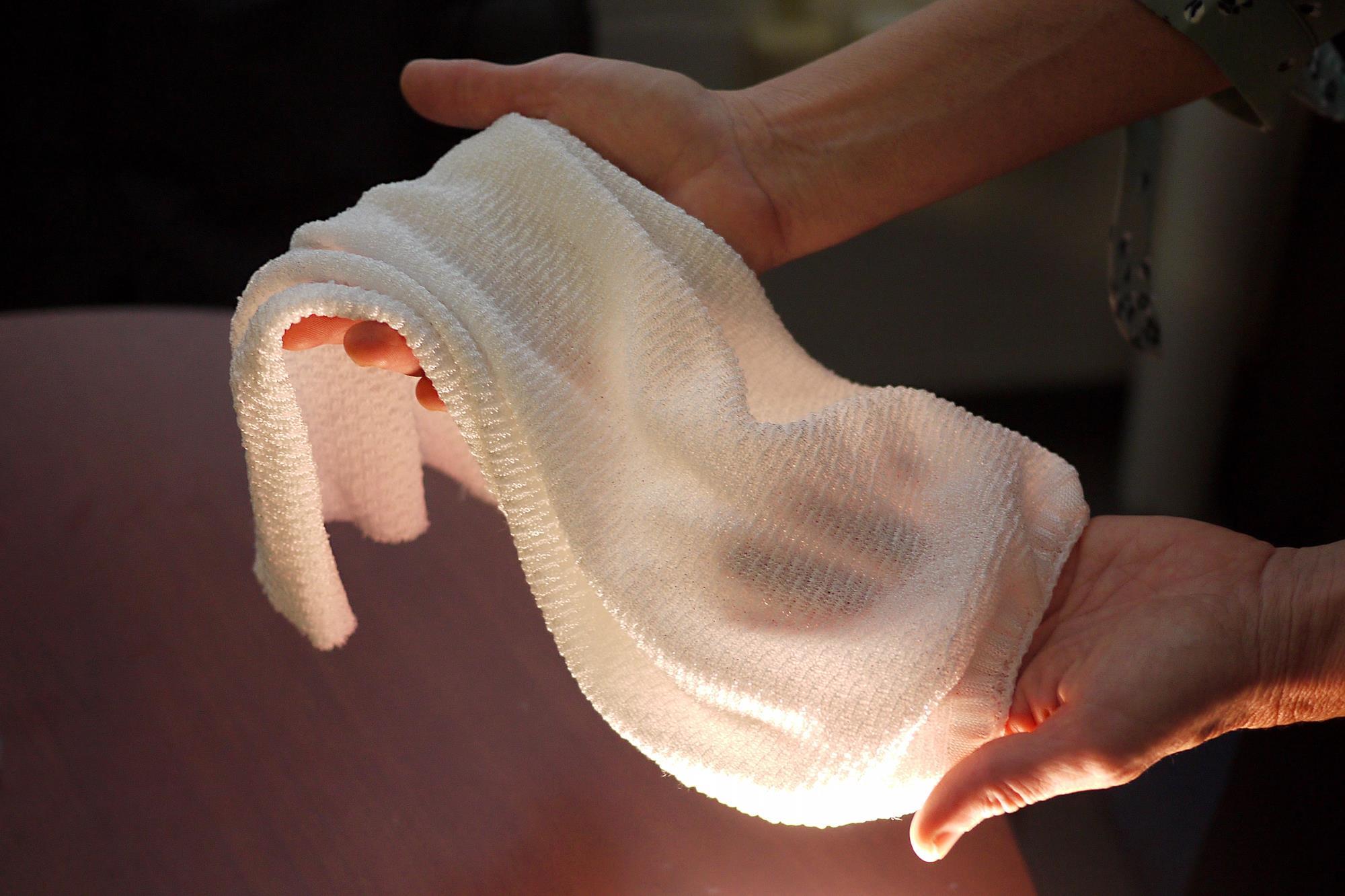
Material science is playing a crucial role. New textiles incorporating 3D‑printed elements, embedded sensors, and tunable stiffness are enabling a new class of adaptive wearables. For example, research like ExoFabric explores re‑moldable textiles that shift between rigid and flexible states, offering dynamic adaptability.
Such materials could allow a spacesuit to be more like a second skin — flexible when you need freedom of motion, yet able to stiffen or transform to provide protection or support in hazardous conditions.

The Role of Wearable Tech and Smart Clothing
To become everyday wear, spacesuits must do more than defend against vacuum and temperature extremes. They must integrate intelligence — sensors, active systems, and health monitoring — much like next‑generation wearable tech on Earth.
1. Sensor Integration
Future suits may include embedded biometric sensing for real‑time monitoring of respiration, heart rate, body temperature, and muscle activity. These systems augment safety and performance and blur the line between utility gear and smart fashion.
2. Exosuit and Soft Robotics
Soft robotic elements — pneumatic actuators and integrated support structures — could assist movement, enhancing muscle efficiency and reducing fatigue. While still in early stages for spacecraft use, soft robotics is already transforming mobility aids and could eventually crossover into space wearable systems.
3. Modularity and Personal Expression
To be “everyday wearable,” suits would likely accept user customization — aesthetic or functional. Imagine modular layers you can swap based on environment or mood, from pressurized outer skin to inner comfort layers, color choices that reflect personal expression, and even fashion collaborations that make these suits stylish as well as functional.
The early signs of this trend are already emerging: luxury and lifestyle brands like Prada are collaborating on spacesuit aesthetics, not just performance gear for extreme environments.
Technical Challenges Still Standing in the Way
Despite tremendous innovation, transforming a spacesuit into something cognitively associated with everyday wear isn’t just a matter of technology — it’s also a matter of radical systems engineering.
Life Support and Safety
The fundamental purpose of a spacesuit — maintaining a habitable environment in hostile space — sets a high bar. A suit must manage internal pressure, oxygen delivery, carbon dioxide scrubbing, thermal regulation, and radiation shielding. These core life‑support systems remain bulky and complex, and even miniaturized versions will always add a layer of complexity that ordinary clothing does not need.
Reliability and Failure Modes
Spacesuit failure is catastrophic. So while smart textiles and soft materials offer potential, they must be fail‑proof. Any concept of “everyday space wear” must reach unparalleled levels of reliability in sealing, materials integrity, and life‑support redundancy.

Human Factors
Human physiology in space is unforgiving. Suits need to counter issues like bone density loss, muscle atrophy, and fluid redistribution. Wearable exosuits and embedded monitoring systems show promise, but a suit that feels like everyday wear must still account for these deep biological requirements.
A Future Where Wearables and Fashion Meet Space Engineering
The evolution of spacesuits towards everyday wear will likely follow a staged path:
Phase 1: Enhanced Mobility and Comfort
Already underway with next‑gen EVA suits that are more flexible, adaptable, and ergonomic. These are still specialized gear, but they break tradition.
Phase 2: Wearable Smart Systems
Integration of sensors, environmental awareness, and adaptive materials, turning the suit into an intelligent ecosystem — responsive, comfortable, and informative.
Phase 3: Hybrid Space‑Terrestrial Wear
Concepts like MCP suits and advanced textiles might produce suits wearable outside extreme environments — think high‑performance athletic gear inspired by space technology.
Phase 4: True Everyday Spacewear
At this stage, “spacesuits” would no longer feel alien. They’d be modular attire that can function under Earth conditions as performance wear while still capable, with added modules, of supporting off‑world activities.
Cultural and Social Dimensions of Wearable Spacesuits
Fashion and identity have always used clothing as a language of culture. As space exploration expands to include civilians — space tourists, researchers, and industry workers — the way people dress in space will become a cultural touchpoint.
The rise of “spacewear” — outfits that reference space technology yet are suitable for daily Earth life — is already emerging in fashion circles. Designers take inspiration from NASA suits to create style‑forward apparel, showing that the crossover between functional engineering and cultural expression has a place.
Spacesuits that are approachable and stylish could help demystify space exploration and make it feel more accessible. Culturally, clothing that bridges Earth and space life may inspire a new generation to think of space travel not as an alien adventure, but as an extension of everyday human life.
Conclusion: The Spacesuit of Tomorrow — Not Just for Astronauts
Spacesuits, as we know them, are sacred artifacts of space exploration. But their evolution is inevitable as humanity commits to sustained presence in space and prepares for a future where space travel is not limited to elite astronauts.
The path from rigid, life‑supporting exosystems to flexible, integrated, wearable technology will require breakthroughs in materials, smart systems, human factors, and safety. Researchers are already exploring mechanical counterpressure designs, smart textiles, soft robotics, and modular systems that promise a future less constrained by today’s bulky suits.
If these directions continue, we might one day wear space‑capable outfits that feel like high‑performance outdoor gear, connect us digitally to our environment, and perhaps even make spacewear part of everyday life — on Earth and beyond.