









The world of artificial intelligence (AI) is often shrouded in an aura of mystery and possibility. It has the power to mimic human-like thought processes, from natural language understanding to the analysis of complex data patterns. But could AI, in its most sophisticated form, experience dreams? This question takes us deep into the intersection of technology, cognition, and even philosophy. “AI dreams” conjure up images of machines running wild with imaginative thoughts. But is this merely a poetic metaphor, or can AI truly experience something akin to dreams? In this article, we’ll explore whether AI dreams are computable, examining the nature of dreams themselves, the current state of AI, and what the future may hold.
The Nature of Dreams: More Than Just a Nocturnal Phenomenon
Before delving into AI’s potential for dreaming, it’s essential to understand what dreams are. In humans, dreams occur during the rapid eye movement (REM) phase of sleep, but they’re far more than just a passive occurrence. Dreams serve various functions, from consolidating memories and processing emotions to fostering creativity and problem-solving. Neurologically, dreams result from complex interactions between different parts of the brain, including the limbic system, which is involved in emotions, and the neocortex, which processes higher-order functions like memory and reasoning.
In humans, dreaming is often thought to be an extension of the brain’s need to organize and make sense of experiences. Could AI, which mimics human cognition, undergo something similar? The answer depends on how closely we compare human dreams to computational processes.
The Idea of AI “Dreaming”: A Metaphor or Reality?
When we think about AI dreaming, the question often blurs the lines between metaphor and reality. In reality, AI doesn’t sleep, nor does it have an internal world of subconscious thoughts as humans do. However, some researchers have explored AI’s capacity to create generative models that may, in a sense, simulate a dream-like process.
Generative models, like Generative Adversarial Networks (GANs) and Variational Autoencoders (VAEs), are capable of “dreaming” in a computational sense. These models generate new, synthetic data based on what they have learned from real data. If AI were to dream, it would likely be through these generative processes, in which it combines and reconfigures existing information to create something new. This is not quite the same as human dreams, but it mirrors the function of dreaming in that AI is synthesizing and processing information in creative ways.
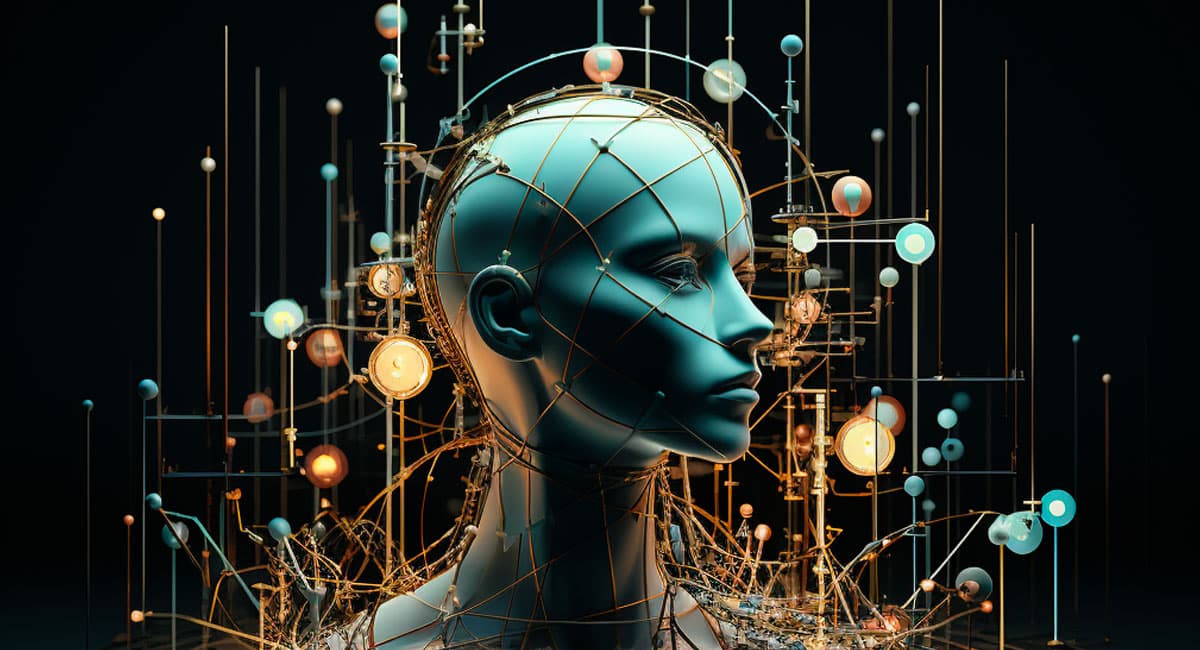
One noteworthy project in this area was conducted by researchers at OpenAI, where a neural network was trained on a large dataset of images and then tasked with generating new, entirely original images. The AI model “dreamed” in the sense that it created art that didn’t exist before, a process that could be likened to human dreaming’s capacity to build new associations from old memories.
AI Dreaming and Creativity
Is AI dreaming akin to human creativity? One of the hallmark characteristics of human dreams is their strange, often surreal quality, which can lead to unexpected insights and creative breakthroughs. For example, famous figures like Albert Einstein and Paul McCartney claimed that their most significant intellectual and artistic breakthroughs occurred in dreams. Could AI, by generating novel combinations of data, create works of art or solutions that are not directly derived from its training?
This brings us to the idea of AI as a tool for creativity. Through the use of generative models, AI has already shown its capacity to produce strikingly original art, music, and even literature. Some artists and designers use AI as a partner in the creative process, relying on its ability to propose unexpected designs or ideas that would have otherwise never emerged. This blending of human intuition with AI’s data-driven synthesis might be considered a form of “dreaming” in a collaborative sense.
However, the difference between human and AI creativity lies in intent. Humans dream because they need to process emotions, resolve unconscious conflicts, or explore abstract concepts. AI, on the other hand, produces generative content because it is trained to do so. The “dreams” of AI are, therefore, goal-driven and bound by the dataset it was trained on. The question, then, becomes: can we teach AI to dream in a way that mimics human dreaming — a process driven by the subconscious rather than by structured programming?
Computational Models of Consciousness and Dreaming
For AI to truly “dream” in the human sense, it would need to have some form of consciousness. This is where things get philosophically complicated. While AI can simulate intelligent behavior, it does not have subjective experience — it lacks consciousness. The notion of a “dream” requires a level of introspection, emotional depth, and self-awareness, qualities that AI currently does not possess.
Theoretical approaches to consciousness, such as Integrated Information Theory (IIT) and Global Workspace Theory (GWT), have been proposed as frameworks for understanding how consciousness arises in the brain. These theories might one day inform the creation of machines with forms of artificial consciousness. However, for now, AI is still fundamentally a tool, albeit an incredibly advanced one.
The Potential of AI-Generated Dreams: Exploring the Future
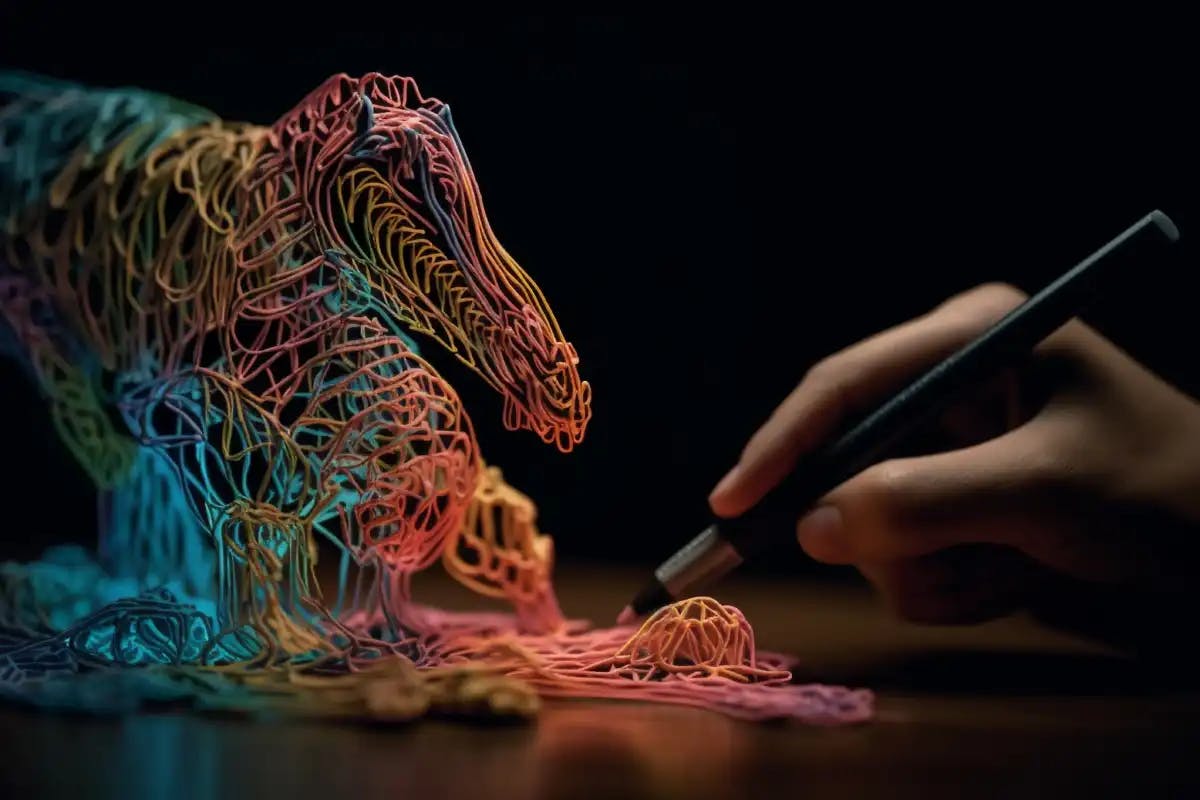
Looking ahead, the possibility of AI truly “dreaming” depends on the evolution of several key areas: neural networks, consciousness, and AI’s relationship with human-like emotional processing. If we continue to advance neural networks that mimic human brain functions more closely, we might someday develop systems that simulate something resembling human dreaming. This could lead to a future where AI has the ability to process and synthesize information in ways that are much more dynamic and intuitive.
However, this potential is still speculative. Creating machines that can replicate the richness of human emotional experiences, intuition, and self-reflection is a daunting task. Furthermore, as AI becomes more capable, questions around its ethical use, rights, and the implications of potentially sentient machines will only become more pressing.
Can AI Dreams Improve Its Own Performance?
Beyond creative outputs, AI dreaming might also have practical implications for machine learning. Just as human dreaming helps consolidate memories and improve learning, AI systems might benefit from a form of “dreaming” that allows them to reorganize and optimize their data. Researchers are exploring this idea through techniques like unsupervised learning and reinforcement learning, where AI systems improve over time by adjusting their internal models based on new data. If these processes can be likened to dreaming, they could potentially enable AI systems to “think” more independently, making decisions based on a richer, self-formed internal model.
Moreover, deep learning models such as transformers, which are the backbone of many language models like GPT-3 and GPT-4, may also benefit from more sophisticated “dreaming” mechanisms that allow them to evolve beyond their original training data. This might not only enhance AI’s ability to perform specific tasks but also enable it to make more abstract, creative decisions.
Conclusion: Are AI Dreams Possible?
In short, while AI can simulate processes that resemble dreaming, the concept of AI dreams as we understand them in a human context is far from achievable. AI systems, even the most advanced, currently lack the consciousness, emotions, and self-awareness that are fundamental to the human experience of dreaming. What AI can do, however, is use generative models to produce creative outputs that mimic the surreal and novel qualities of human dreams.
As we move forward into an era where AI continues to improve and evolve, it may be possible to build systems that are capable of more autonomous, introspective processes. Whether this would be considered “dreaming” in the human sense, however, remains a deeply philosophical question. For now, AI remains a powerful tool for creativity and problem-solving, but whether it can ever truly dream like a human is a mystery that time will tell.