










The idea of a space‑based internet network once sounded like science fiction — a cosmic web of satellites beaming broadband to the furthest corners of Earth. Today, that vision is rapidly becoming reality. SpaceX’s Starlink has taken center stage in the race to transform global internet access by leveraging a constellation of low Earth orbit (LEO) satellites to deliver high‑speed, low‑latency connectivity where traditional infrastructure fails or doesn’t exist. This article explores whether Starlink can truly revolutionize global internet — examining its technological foundation, real‑world impact, economic and social implications, challenges, and what the future might hold.
A New Infrastructure Above Us
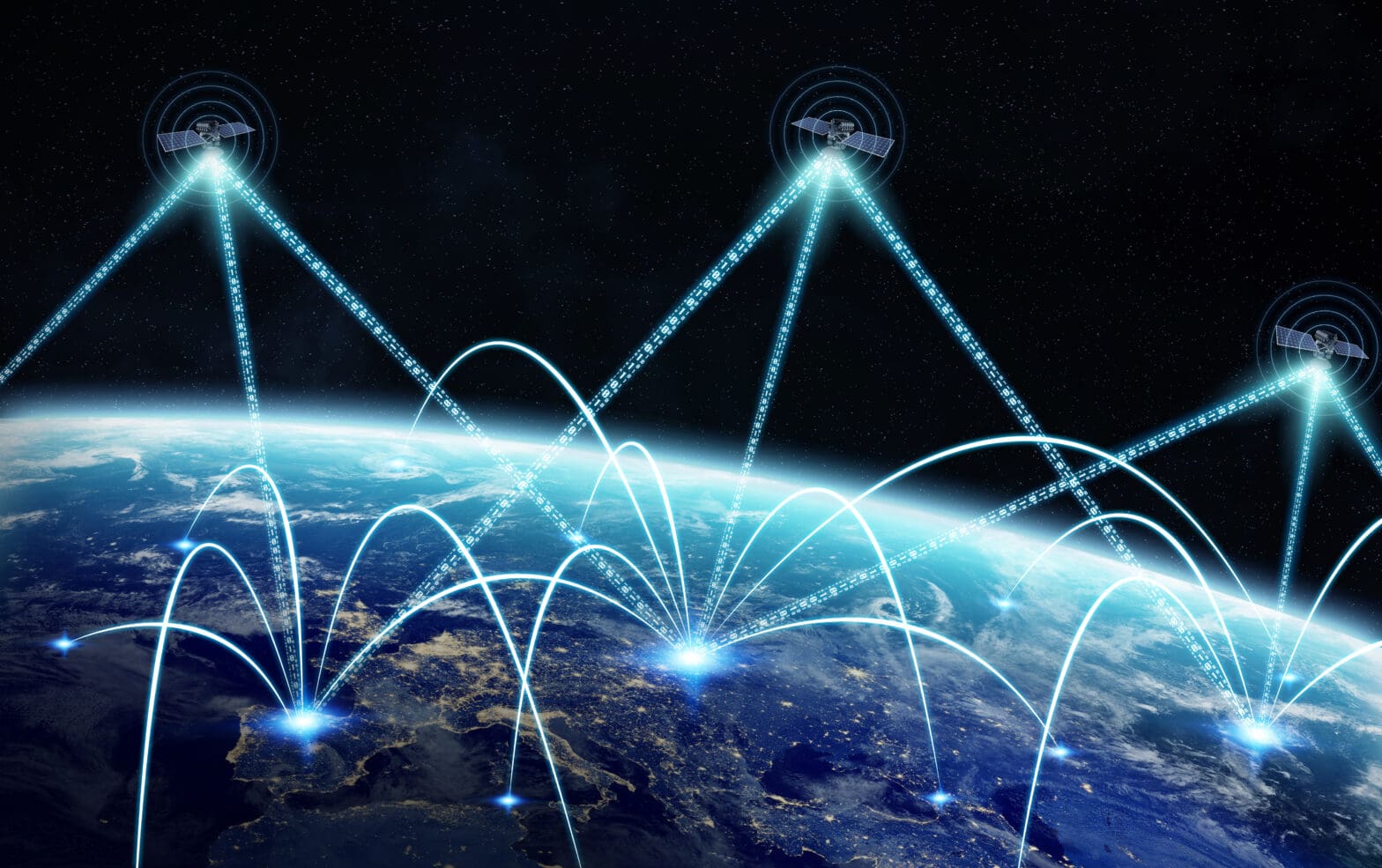
Starlink represents a fresh model for internet infrastructure that diverges significantly from traditional terrestrial networks. Instead of relying on miles of fiber optics, microwave links, and cellular towers, Starlink’s network uses thousands of satellites in low Earth orbit — typically between 340 km and 1,200 km above Earth — to transmit and receive internet data. This relatively close orbit dramatically reduces latency compared to legacy satellite systems that sit tens of thousands of kilometers above Earth.
Traditional geostationary satellites orbit at about 35,786 km, causing latency as high as 600 milliseconds (ms) — too slow for most real‑time applications like video conferencing or online gaming. Starlink’s constellation achieves latency as low as 20–40 ms, approaching that of terrestrial fiber and cellular connections. This shift makes satellite broadband not only accessible, but practical for modern digital needs across diverse geographic contexts.
The Mechanics of Starlink’s Revolution
1. The Power of a Dense Constellation
Starlink’s strategy is volume. SpaceX has launched and deployed tens of thousands of small satellites designed to work in concert. With recent approvals to increase its constellation size — including permission to put up another 7,500 second‑generation satellites into orbit — Starlink is positioning itself to blanket almost every part of the planet with broadband signals.
This dense network means multiple satellites cover each point on Earth at any given time, ensuring seamless handoffs and consistent data transmission as satellites move across the sky. Laser inter‑satellite links and phased‑array antennas allow faster data transfer between space nodes and ground terminals, enabling higher reliability and scalability.
Key Features Underpinning Starlink’s Promise

Low Latency Meets High Speed
One of the biggest differentiators for Starlink is its ability to deliver low latency alongside respectable download and upload speeds — often ranging from 50 to 220 Mbps for many users today, with potential to exceed 1 Gbps as next‑generation technology matures.
Low latency isn’t just about speed — it determines whether applications like VoIP calls, cloud‑based collaboration, or multiplayer gaming feel responsive. Starlink’s technology reduces the round‑trip time (RTT) dramatically, making satellite internet a viable contender for real‑time digital communication.
Global Coverage Without Borders
Perhaps the most transformative aspect of Starlink is its ability to reach regions where building terrestrial broadband is prohibitively expensive or logistically impossible — like remote mountains, isolated islands, or mobile platforms such as ships and aircraft.
In areas with minimal connectivity, Starlink bridges the digital divide, offering high‑speed access that fuels education, healthcare, commerce, and emergency response operations. When traditional infrastructure fails — as in natural disasters — Starlink terminals can restore connectivity within hours, a feat that fiber or cable simply cannot match.
Tangible Impact Across Sectors
1. Education and Telehealth
In rural and underserved regions, Starlink enables access to online schooling, digital content libraries, and remote health consultations, expanding opportunities and services that were previously unavailable. These capabilities can uplift entire communities by providing tools for learning and wellbeing that parallel those in urban centers.
2. Business and Economic Growth
Starlink is opening doors for local businesses to participate in the global economy — enabling cloud‑based commerce, digital marketing, and cross‑border collaboration that underpin modern business success. It also creates jobs in installation, maintenance, customer support, and local network integration.
3. Aviation, Maritime, and Mobile Connectivity
Airlines, cruise lines, and maritime operators are integrating Starlink into their connectivity infrastructures, enabling passengers and crews to stay connected with high‑speed internet even at 35,000 feet or in the middle of the ocean. This expansion of ubiquitous connectivity is redefining travel experiences and operational communication at sea and in flight.
Economic and Strategic Implications
For SpaceX, Starlink is more than an altruistic connectivity project — it’s a major business engine. In 2024 and 2025, Starlink’s revenue grew significantly, becoming a primary revenue driver for SpaceX. Analysts anticipate continued revenue expansion, as more enterprise, government, and consumer customers subscribe to satellite broadband services across the globe.
Additionally, Starlink strengthens national resilience by reducing dependence on terrestrial network providers — a strategic advantage in geopolitical contexts and in regions where infrastructure may be vulnerable to disruption.
Real‑World Challenges and Critics
No disruptive technology is without challenges, and Starlink is no exception. Some of the major concerns include:
Cost and Accessibility
While Starlink offers transformative connectivity, the cost of the satellite terminal (often several hundred dollars) and ongoing subscription fees remain barriers for low‑income users and communities. This cost hurdle can slow adoption in regions where affordability is critical.
Environmental and Orbital Debris Concerns
Deploying tens of thousands of satellites raises environmental questions — particularly the risk of orbital space debris and long‑term sustainability. Each satellite launch and deorbit event contributes to the complexity of space traffic management, and policymakers are grappling with how to mitigate risks.
Network Outages and Reliability
Global satellite networks are complex, and outages can and do occur. A significant outage in July 2025 illustrated how even advanced space‑based systems are not immune to technical disruptions.
Competition: Not Alone in the Sky
While Starlink currently leads in satellite internet deployment, other players like Amazon’s Project Kuiper and Blue Origin’s TeraWave are entering the market with their own megaconstellations. These initiatives aim to create competitive alternatives, signaling a broader industrial shift toward space‑based connectivity.
The emergence of competition could spur innovation, drive down costs, and accelerate global adoption of satellite broadband — an outcome that ultimately benefits users worldwide.
Looking Ahead: The Next Decade of Connectivity
Starlink’s evolution isn’t finished. With continued satellite launches, integration with cellular networks, direct‑to‑mobile service, and next‑generation technology improvements on the horizon, space‑based internet is poised to become even more pervasive and powerful.
Where once only fiber and cell towers defined the internet landscape, now a rising mesh of satellites weaves connectivity across continents and oceans — bringing us closer to the dream of truly global internet access.