








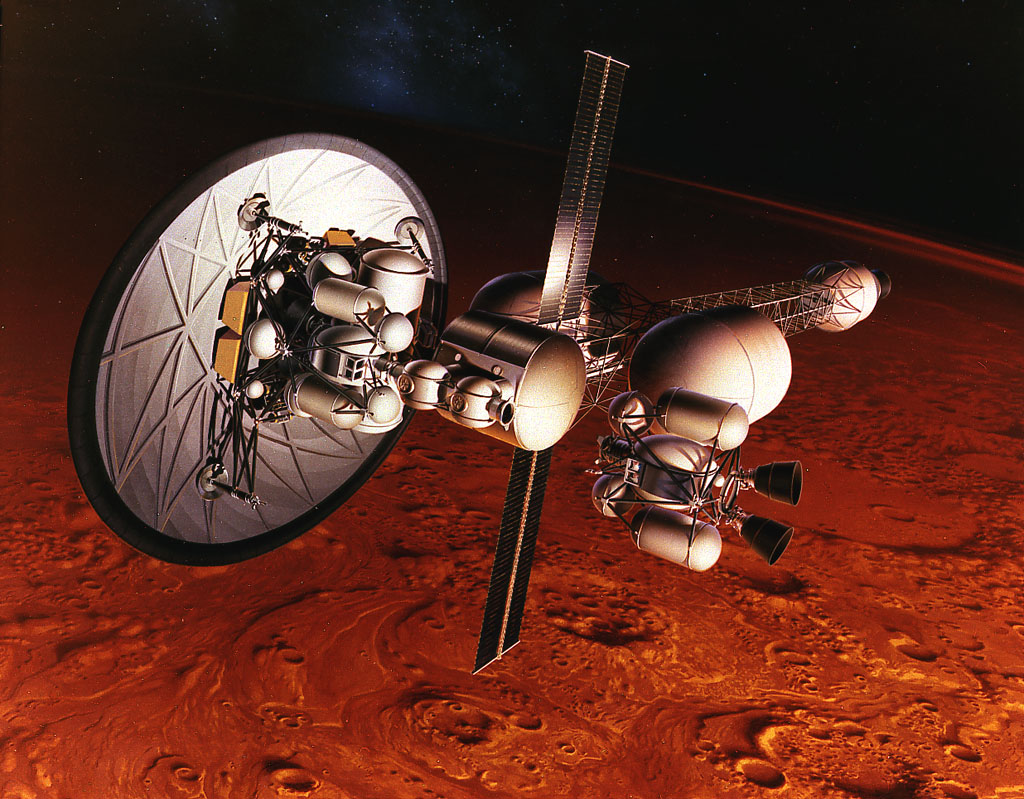

In the grand cosmic ballet of human exploration, the Earth‑to‑Mars trip has always felt like a meditation in patience — slow, expensive, and full of technological compromises. But imagine cutting that transit time dramatically, powering spacecraft with reactors that draw energy from atomic nuclei instead of chemical rockets, and opening a pathway not just to Mars, but to the outer planets and beyond. This is the promise of nuclear propulsion, a suite of advanced technologies that could very well define humanity’s next giant leap into deep space.
In this sweeping yet technical yet reader‑friendly exploration, we’ll break down what nuclear propulsion is, how it works, why space agencies and aerospace companies are actively pursuing it, and the profound challenges it must overcome. Along the way, you’ll see why many scientists, engineers, and futurists believe nuclear propulsion is not just a theoretical idea — but the future of deep space travel.
What Is Nuclear Propulsion?
At its heart, nuclear propulsion refers to any system that harnesses nuclear energy — usually via fission (splitting atoms) or potentially fusion (joining atoms) — to propel a spacecraft. Unlike conventional chemical rockets (which rely on burning propellant with oxidizers), nuclear propulsion can provide vastly more energy per unit mass and far better efficiency for long journeys.
There are several major categories of nuclear propulsion, each with unique mechanics and applications:
1. Nuclear Thermal Propulsion (NTP)
This approach uses a nuclear reactor to heat a propellant like hydrogen to extreme temperatures. The heated propellant expands through a rocket nozzle, generating thrust — effectively replacing combustion heat with nuclear heat. NTP offers much greater efficiency (specific impulse) than chemical rockets and significantly reduced travel times.
2. Nuclear Electric Propulsion (NEP)
Here, a nuclear reactor doesn’t directly heat propellant — instead, it generates electrical power. That electricity then powers ion thrusters or Hall‑effect thrusters, which provide continuous but low thrust over long durations. NEP is extraordinarily efficient, ideal for deep space robotic missions and cargo transport.
3. Fusion‑Driven Concepts
Fusion propulsion aims to harness the same process that powers stars — combining light nuclei to release energy — for propulsion. While fusion remains a grand scientific challenge, its potential energy densities could outclass fission by orders of magnitude, promising truly high‑speed interplanetary travel.
4. Pulse Propulsion (Project Orion-like systems)
A historical and highly speculative idea, nuclear pulse propulsion uses successive explosions behind a spacecraft to propel it forward. While theoretically capable of huge thrust and even interstellar speeds, this method faces daunting regulatory, safety, and engineering barriers.
Why Nuclear Propulsion Now?
Dramatically Shorter Travel Times
One of the biggest advantages of nuclear propulsion is its ability to shorten travel times. For example, nuclear thermal rockets could reduce a Mars mission from the typical six‑to‑nine‑month transit down significantly, potentially to just a few months or even less for optimized missions.
Shorter transit isn’t just about convenience. It directly reduces astronaut exposure to cosmic radiation and microgravity health risks — two of the biggest hazards of long‑duration spaceflight.
Higher Efficiency and Payload Capacity
Nuclear propulsion systems can provide higher specific impulse — a measure of how efficiently a rocket uses propellant — compared to chemical rockets. The result is a spacecraft that either carries more cargo or completes missions with fewer resources.
For deep robotic exploration missions, nuclear electric propulsion could carry heavy science payloads or sample return systems farther and faster than any chemical rocket alone.
Power for Surface Operations
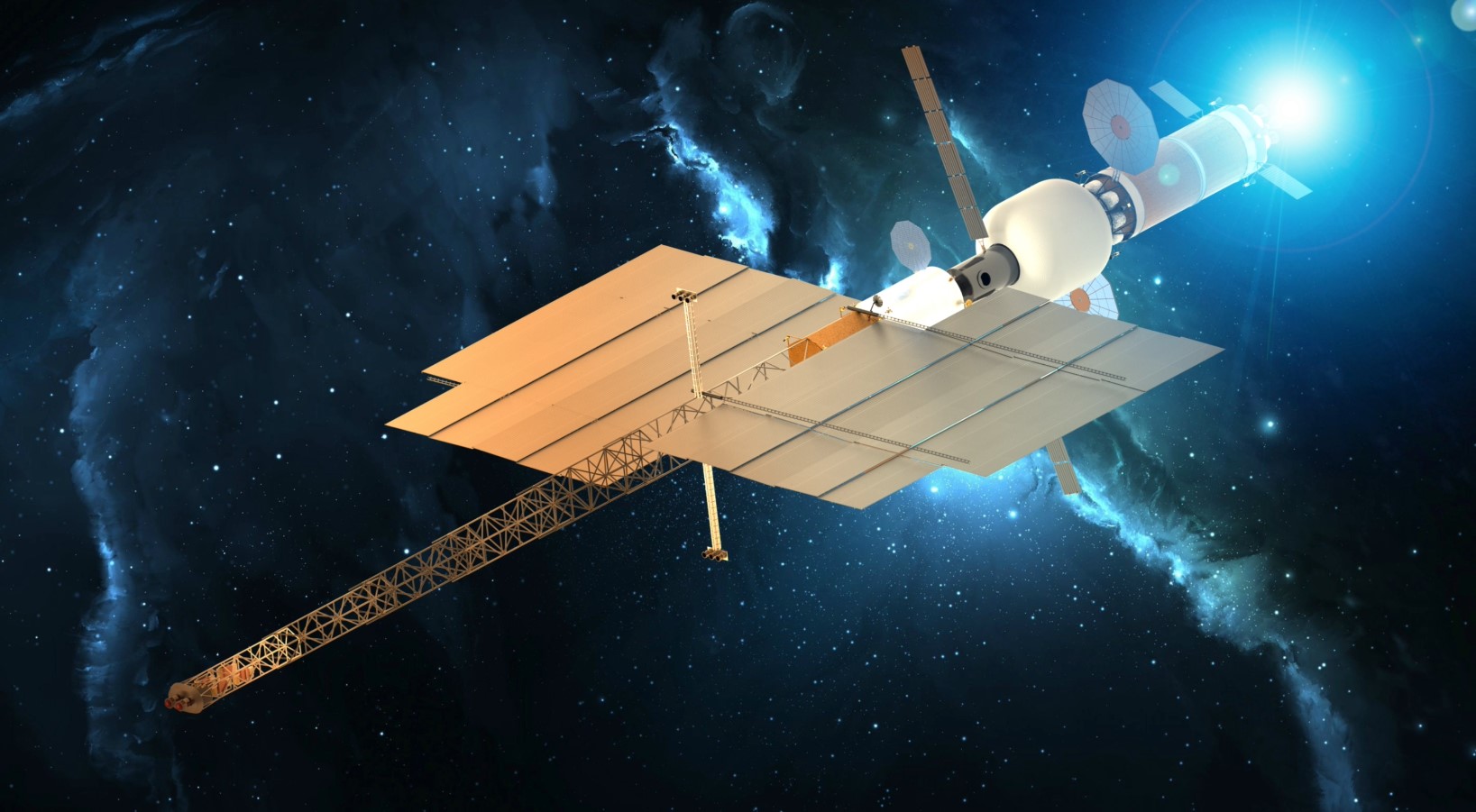
Beyond propulsion, nuclear reactors could provide reliable long‑duration power for human habitats, scientific outposts on the Moon or Mars, and even in situ resource utilization facilities. This continuity of power extends mission capabilities well beyond what solar or battery systems alone can sustain.
International Momentum and Funding
Major space agencies and institutions around the world are actively investing in nuclear propulsion research:
- NASA and DARPA are collaborating on the DRACO nuclear thermal rocket project, aiming for a flight demonstration in the late 2020s.
- NASA’s Space Nuclear Propulsion Office continues to study NTP and NEP systems as part of long‑term deep space objectives.
- Private companies and international partners are exploring fusion propulsion and related technologies that could reshape the future of space travel.
How Nuclear Propulsion Works
Nuclear Thermal Propulsion (NTP)
NTP engines use a compact nuclear reactor to heat a propellant:
- Fission Reactor Core: Uranium or similar nuclear fuel undergoes controlled fission, releasing massive heat.
- Heat Transfer to Propellant: A lightweight working fluid (often hydrogen) passes through the reactor core, absorbing heat.
- Expansion Through Nozzle: This now superheated gas expands rapidly through a rocket nozzle to generate thrust.
Unlike chemical rockets, where energy comes from chemical bonds, NTP draws from the far more energy‑dense nuclear reactions. This allows for higher exhaust velocities and greater fuel efficiency.
Nuclear Electric Propulsion (NEP)
NEP systems separate propulsion from thrust production:
- Reactor Generates Electricity: The onboard reactor converts nuclear energy into electrical power.
- Electric Thrusters Use Power for Propulsion: Ion or plasma thrusters use electric fields to accelerate propellant to high speeds over long durations.
The thrust is low compared with NTP, but because it is applied continuously, NEP systems can achieve exceptionally high final velocities — ideal for cargo and unmanned missions where duration is less critical than efficiency.
Fusion Propulsion
Fusion propulsion is still in early research phases but holds amazing potential:
- Fusion reactions could theoretically provide huge amounts of energy with low radioactive waste.
- Systems like the Direct Fusion Drive aim to blend thrust and power generation for future spacecraft.
If fusion propulsion becomes viable, it could enable drastically shorter travel times — potentially transforming the economics and logistics of solar system exploration.
Benefits and Game‑Changing Advantages
Let’s summarize why nuclear propulsion is more than a futuristic idea — it’s a potential paradigm shift:
- Reduced Mission Duration: Faster trips mean reduced risks and lower life‑support burdens on humans.
- Greater Payload & Efficiency: Higher specific impulses allow larger scientific payloads and expanded mission scopes.
- Sustainable Power Supply: Nuclear reactors can power long‑duration surface bases and scientific instruments far from sunlight.
- Enabling Deeper Horizons: From Mars to the outer planets, nuclear propulsion opens destinations that are prohibitively slow with chemical engines.
Challenges and Risks
Despite its promise, nuclear propulsion faces serious hurdles:
Safety & Public Perception
Launching a powered nuclear reactor into space — even un‑fired — generates legitimate safety and political concerns. A launch accident could scatter radioactive materials in the atmosphere or environment, fueling public opposition and tighter regulations.
Engineering Complexity
Designing reactors that survive launch vibrations, microgravity environments, and extreme temperatures is no small feat. The heat management alone — particularly for NTP engines — requires advanced materials that can withstand temperatures above 4,000°F (2,200°C).
Regulatory and Treaty Constraints
International treaties and national policies limit the use of nuclear materials in space and require stringent safety protocols.
Cost and Long Development Timelines
Developing, testing, and qualifying nuclear space systems is expensive and time‑intensive. While chemical rockets have decades of heritage, space nuclear technologies must undergo rigorous testing before regulatory approval and deployment.
The Near Future: What’s Coming Next
Several programs illustrate how rapidly space nuclear propulsion is advancing:
DRACO (NASA + DARPA)
This ambitious program aims to build and test a nuclear thermal rocket stage in orbit by the late 2020s, exploring how NTP can transform space transportation beyond Earth orbit.
NASA’s Ongoing Research
NASA’s Space Nuclear Propulsion Office continues evaluating both nuclear thermal and nuclear electric systems for next‑generation robotic and crewed missions.
International and Commercial Interests
European space agencies and private companies are exploring nuclear electric and fusion propulsion technologies with flight test possibilities in the coming decades.
These near‑term developments suggest that while nuclear propulsion may not carry humans tomorrow, within a generation we could see powerful reactors propelling orbiters, cargo tugs, and intermittent crewed missions across the solar system.
Ethical and Policy Considerations
With great power comes great responsibility — and nuclear propulsion brings ethical questions too:
- Environmental Concerns: What happens if a launch vehicle with a nuclear reactor fails?
- Space Governance: How do international treaties reconcile competing national interests for nuclear space assets?
- Equity in Space Access: Who gets to use these powerful technologies — and for what purposes?
Balancing scientific ambition with safety, sustainability, and ethical stewardship will be vital as we push farther into space.
Conclusion: A Nuclear Future for Deep Space?
After decades of theoretical research, incremental breakthroughs, and renewed global interest, nuclear propulsion stands at the threshold of reality. From NASA’s collaboration with DARPA to international and fusion‑driven concepts, these technologies could dramatically shorten travel times, expand payload capacity, and unlock destinations far beyond Earth’s orbit.
Challenges remain — technical, political, and ethical — but the momentum is undeniable. For explorers, scientists, and dreamers alike, nuclear propulsion represents the closest thing to a true enabler of deep space travel. Whether we’re talking about humans on Mars, robotic missions to the outer planets, or even interstellar precursors, harnessing atomic power may well be the trail that leads us to the stars.