








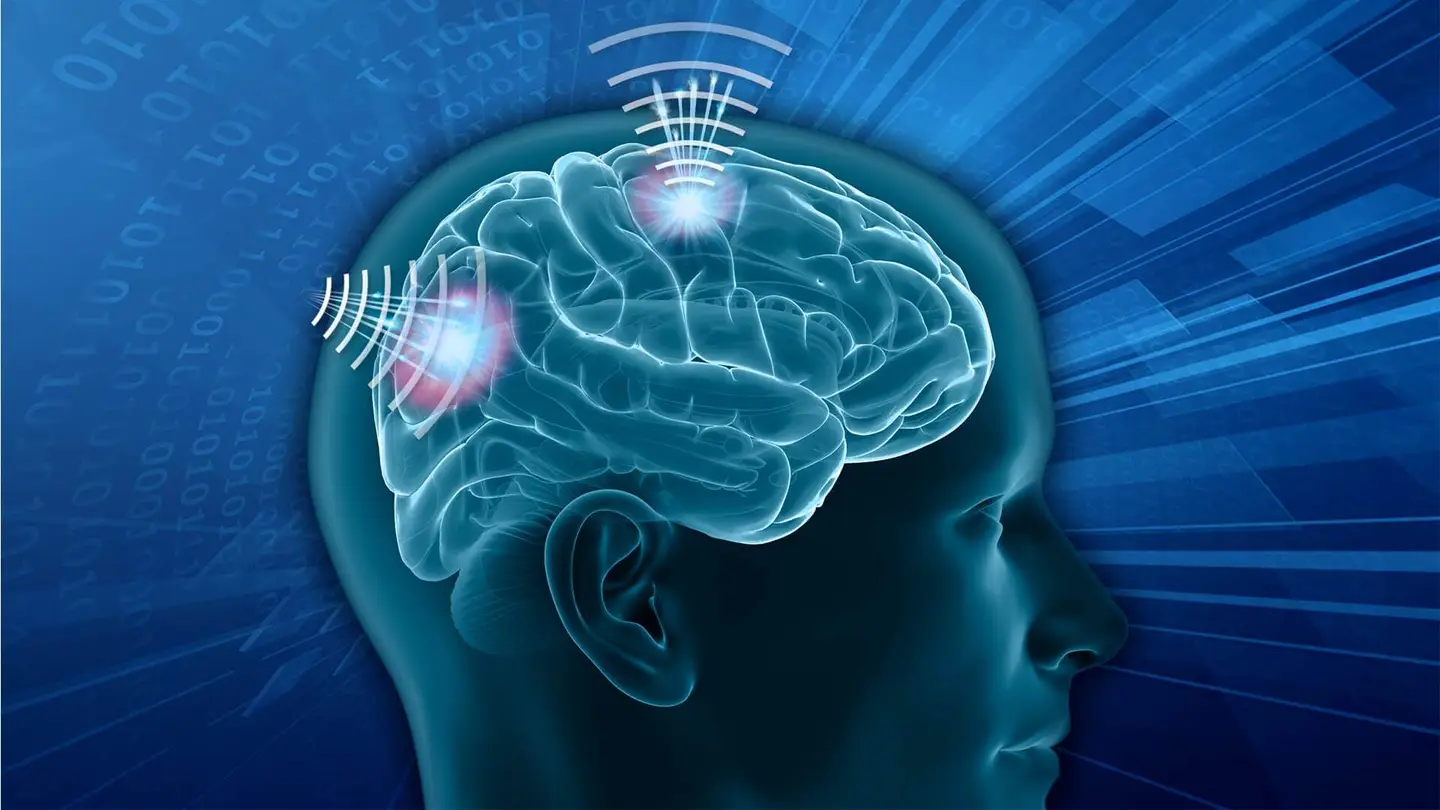

In the evolving landscape of neuroscience and technology, one question ripples through labs, ethics boards, venture capital firms, and science fiction forums alike: Are humans ready for brain‑to‑brain communication? The idea that one person’s thoughts might be transmitted directly to another brain — bypassing speech, typing, and gestures — feels pulled straight from science fiction. Yet, over the past decade, researchers have methodically blurred the line between speculative futurism and demonstrable reality. What was once only imaginable in “Neuromancer” or The Matrix is now a topic of serious academic, technological, and ethical inquiry.
This article explores the current state of brain‑to‑brain communication (B2B), the key technologies enabling it, the notable experiments that have brought it within reach, the scientific and engineering hurdles still looming large, the ethical and societal implications, and whether, as a species, we are truly prepared for such a profound leap in the way humans connect. Along the way, we will examine both promise and peril — and refine what “ready” might actually mean.
The Genesis: From Sensory Communication to Neural Interfaces
Human communication evolved over hundreds of thousands of years. Early hominins likely relied on gestures and simple vocalizations, progressing to complex language, symbolic thought, and technology. All of this occurs through sensory channels — spoken language received through ears, visual cues, and tactile feedback — processed by billions of neurons interacting in exquisitely coordinated networks deep within the brain.
But the idea of transmitting thoughts directly from one brain to another — without relying on muscles, eyes, ears, or vocal cords — would require a fundamentally different mechanism. Rather than sending encoded sound waves through air or light patterns through retinae, this kind of communication demands a neural interface — a technological bridge that links biological neural activity with digital systems and, potentially, directly with another brain.
This transition from sensory modes to neural interfaces is embodied in the field of brain‑computer interfaces (BCIs). A BCI can read neural signals and translate them into a format that computers understand, enabling a paralyzed person to control a robotic limb or type using thought alone. In more advanced configurations, BCIs can also write information back into the brain — albeit at this stage, only in rudimentary forms.
Researchers have now combined these read and write capacities to create setups that attempt direct brain‑to‑brain interfaces (B2BIs). In the first documented case of human brain‑to‑brain communication, a sender’s brain signals were recorded via electroencephalography (EEG) and transmitted over the internet to stimulate another person’s brain using transcranial magnetic stimulation (TMS), causing the receiver to perform an action like pressing a button in a computer task — marking a primitive but remarkable form of neural communication without traditional sensory input.
Another experiment encoded and transmitted binary data representing simple words between human subjects through a combination of BCI and computer‑brain interface (CBI) techniques without relying on speech or physical movement.
These early forays confirm that brain‑to‑brain communication is possible, but they also illustrate how limited the capabilities currently are — often involving only directional, simple signals and usually moderated by computers or external devices.
The Building Blocks: EEG, TMS, and the Technology Stack
To understand what makes brain‑to‑brain communication possible, we need to look at the core technologies that enable it. Three pillars currently dominate experimental research:
1) Brain‑Computer Interfaces (BCIs)
A BCI can detect electrical or magnetic patterns generated by neuronal activity, interpret them, and translate them into machine‑readable commands. The most accessible method involves EEG, which uses sensors on the scalp to record voltage changes associated with neural firing. Despite being non‑invasive, EEG suffers from low spatial resolution compared with invasive electrodes, which penetrate brain tissue and directly capture signals from individual neurons.
BCIs have enabled paralyzed individuals to control prosthetic limbs, cursors, and speech synthesizers using thought alone. One notable recent advancement is a system that decodes a person’s inner monologue — essentially their imagined speech — using implanted electrodes and artificial intelligence. Although still in early stages, this technology achieved ~74% accuracy interpreting internal thoughts as text.
2) Computer‑Brain Interfaces (CBIs)
CBIs form the reverse channel: from computer to brain. Techniques like transcranial magnetic stimulation (TMS) allow researchers to write information into the brain by inducing neural activity with magnetic fields. In brain‑to‑brain experiments, TMS has been used to trigger simple motor outputs, such as hand movements, by stimulating specific brain regions of the receiver’s cortex based on signals sent from a sender’s brain via computer link.
3) Neural Interfaces and Implants
More advanced approaches involve implantable devices — tiny electrodes or optogenetic interfaces that sit inside the brain. These can achieve higher fidelity signal capture and stimulation but come with greater medical risk and ethical complexity. Progress in minimally invasive optogenetic implants that communicate via light patterns suggests future neuroprosthetics may leverage new modalities beyond electrical signals.
Together, these technologies constitute the backbone of emerging B2B systems, enabling bidirectional communication between brains via digital intermediaries.

Human Studies: Milestones and Limitations
Although the term “brain‑to‑brain communication” conjures images of telepathy, current implementations are far more modest. Experiments so far can be grouped into a few categories:
Simple motor decision transmission.
In one early experiment, two participants engaged in a cooperative game. The sender’s motor intention — thinking about moving a hand — was captured with EEG, and the receiver’s motor cortex was stimulated with TMS to induce the corresponding action. This allowed the duo to play a simple game cooperatively without speaking or moving voluntarily.
Binary encoding of information.
Other efforts have transmitted simple bits of data representing basic information streams between participants, encoding them into sensory signals that are decoded by the receiving brain. Though the message complexity was incredibly low, this experiment demonstrated conscious transmission of information between brains without peripheral sensory systems.
Multibrain collaboration models.
Research frameworks like BrainNet proposed systems where multiple participants could collaborate on tasks using brain signals broadcasted to a receiver’s brain region, suggesting potential models for collective cognitive systems rather than strictly 1:1 communication.
Nonhuman primates and hybrid systems.
Separately, neural interfaces in animals and hybrid systems that link animals’ neural activity to machines — and machine output to human interpreters — have advanced the underlying science, although they stop short of full human‑to‑human direct communication.
What’s missing? Rich semantic communication — sharing complex thoughts, intentions, abstract concepts, emotions, or language at anything resembling normal conversational bandwidth — remains out of reach. Experimental setups thus far involve minimal, highly constrained messages, and rely on computers to mediate translation between neural activity and interpretable information.
Engineering and Scientific Barriers
Current brain‑to‑brain communication has demonstrable success in controlled environments. Yet, the path to advanced, reliable, high‑bandwidth human B2B systems is strewn with scientific and engineering challenges.
1. Signal Complexity and Resolution
The human brain comprises roughly 86 billion neurons forming trillions of synapses — an informational complexity orders of magnitude beyond current measurement capabilities. Non‑invasive techniques like EEG are limited by skull interference and low spatial resolution, while invasive electrodes offer high resolution but involve major medical risks.
Even when signal capture is successful, interpreting complex thoughts — semantics, intentions, and abstract concepts — requires deciphering patterns that are only partially understood. Decoding inner speech with ~74% accuracy using implanted electrodes is significant, but this technology is currently far from decoding richer cognitive content at will.
2. Writing To The Brain
Injecting information into the brain is even more complicated than reading from it. Methods like TMS can stimulate large populations of neurons but lack the precision needed for detailed data transmission. As of today, neural stimulation can trigger motor responses or percepts (e.g., phosphenes) but cannot reliably encode language or abstract meaning.
3. Biocompatibility and Longevity
Implantable devices face challenges like immune response, scarring, long‑term stability, and power delivery. Researchers propose ultra‑miniature “neural dust” systems powered via ultrasonic links as a possible future solution, but long‑term operation in living tissue remains a formidable hurdle.

4. Encoding and Decoding Interpretation
Even if we could extract all relevant neural signals, understanding what specific patterns mean — especially in the context of internal language and complex thought — remains a vast open problem. Contemporary AI models help interpret some patterns, but context, abstraction, and personal neural idiosyncrasies add layers of complexity.
Are We Technically Ready?
From an engineering standpoint, early forms of brain‑to‑brain communication have been demonstrated convincingly at low bandwidth, mostly in laboratory settings. We have proof of concept that neural signals can be transmitted between brains with minimal use of peripheral senses. However, the idea of high‑fidelity, bidirectional, meaningful thought transmission remains a horizon technology — conceptually plausible but not yet practically achievable for everyday human use.
In this sense, humans are partially ready: the foundational building blocks exist, and the field is progressing rapidly. But the step from lab experiments with simple motor tasks to a robust brain‑to‑brain messaging system capable of transmitting complex ideas is still very large.
Ethical, Legal, and Societal Dimensions
Engineering readiness is only one part of the readiness equation. Equally significant are the moral and societal implications of technologies that mediate direct neural communication.
1. Mental Privacy and Cognitive Liberty
If brain signals can be accessed, decoded, or even shared, who controls that access? Are thoughts — long considered private and sacred — now data that can be captured, stored, or analyzed? Privacy laws are not designed to protect the inner workings of human cognition, and civil liberties advocates warn about potential misuse by corporations, governments, or bad actors.
Some experimental setups require conscious consent mechanisms — for example, a neural passphrase that must be activated to allow decoding — to prevent unwanted access. But broader societal safeguards do not yet exist.
2. Equity and Access
If brain‑to‑brain technologies become viable, will access be equitable? Highly invasive, expensive systems could deepen social divides if only available to wealthy individuals or elites, raising concerns about a cognitive class gap.
3. Agency and Identity
What does it mean for personal agency if another entity — human, algorithm, or artificial intelligence — can influence your thoughts or decisions directly? Philosophers, ethicists, and legal scholars are only just beginning to grapple with issues of responsibility and autonomy in neurotechnological contexts.
4. Regulation and Oversight
There is currently no comprehensive international governance framework around neural interfaces. National regulators vary widely in their approach to medical devices, investigational technologies, and data protection, creating a patchwork environment that could be exploited.
Toward a Responsible Future
Scientific and technological progress is unstoppable, and the breakthroughs in brain‑to‑brain communication — from EEG‑TMS experiments to decoding imagined speech — are extraordinary. Yet readiness is not merely about building technology: it’s about building a society that can wield it responsibly.
The next decade will likely bring:
- More refined neural decoding techniques leveraging AI for richer interpretation of thoughts and intentions.
- Better stimulation methods that offer more precision in writing information into neural tissue.
- Improved ethical frameworks shaped by multidisciplinary collaboration among neuroscientists, ethicists, policymakers, and the public.
- Legal protections that secure cognitive privacy and data rights.
Humans may be technically on the path toward brain‑to‑brain communication, but whether we are socially, ethically, and legally prepared is a much more complex question. True readiness demands that we confront the profound implications of bridging minds — recognizing that such power, like all transformative technologies, can uplift or undermine human dignity depending on how it is steered.
In the end, readiness is not a binary state but a spectrum — and we are still navigating the early terrain.