








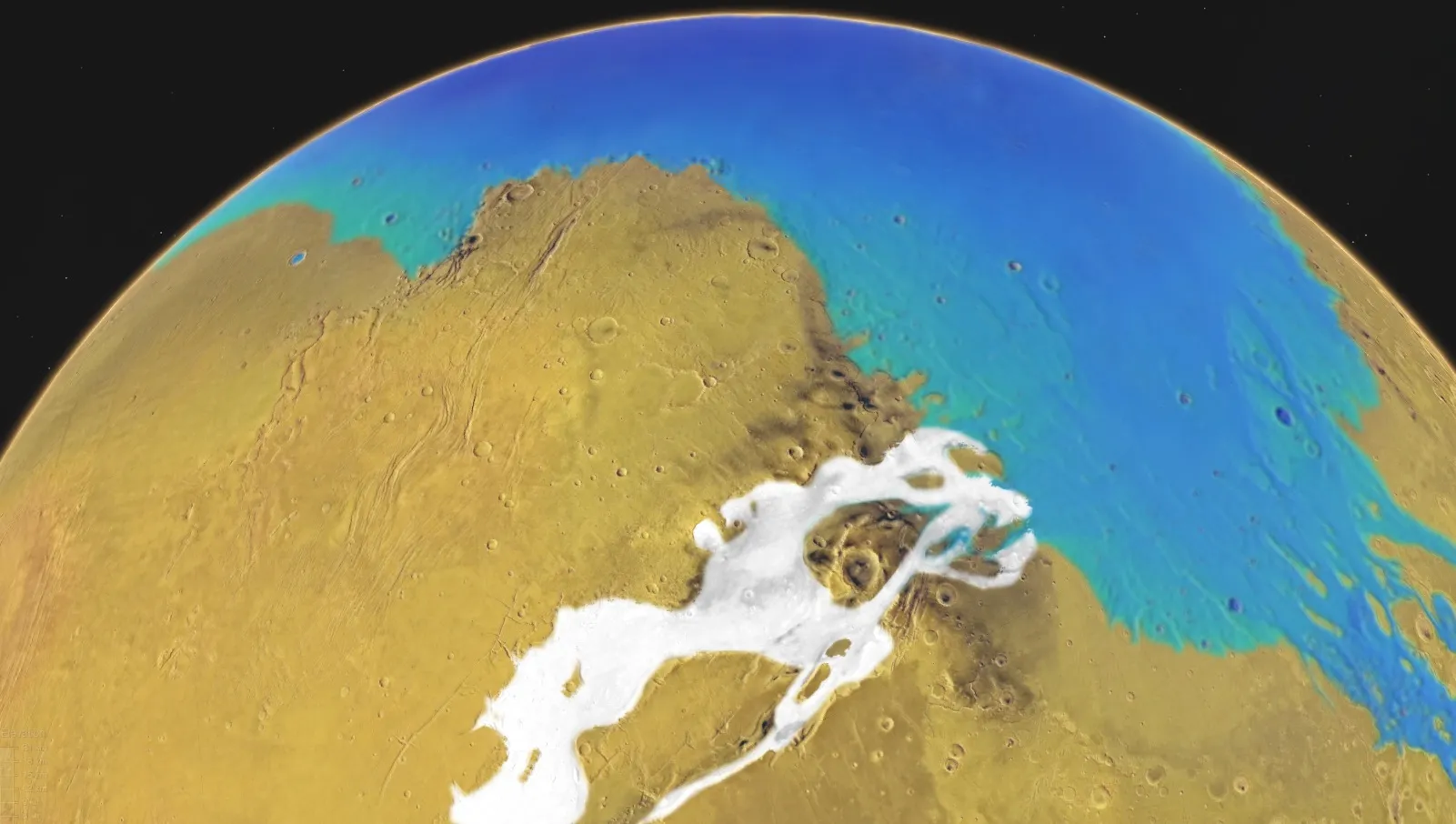

For over a century, the burning question on futurists’ minds has been: can humans truly re‑shape a whole world? Particularly, can we transform Mars, a hostile desert of ice and dust, into a second Earth—warm, wet, and filled with life? This is no longer mere science fiction. Terraforming Mars stands at the fascinating crossroads of planetary science, engineering innovation, and ethical futurism.
In this article, we’ll explore what terraforming Mars really means, summarize the scientific challenges and theoretical tools, highlight novel research directions, and evaluate whether the dream of turning the Red Planet into a habitable world is technically feasible today—or at least within reach of future generations.
What Does “Terraforming Mars” Actually Mean?
At its core, terraforming refers to radically altering a planet’s environment to make it suitable for Earth‑like life—especially humans and terrestrial ecosystems. For Mars, this would mean:
- Raising surface temperatures to allow liquid water to exist.
- Thickening the atmosphere sufficiently to support breathing and stable weather.
- Developing soil and climate systems that can sustain plants and ecosystems.
Unlike building a Mars habitat or small colony, terraforming is planetary‑scale climate engineering—making a world liveable without spacesuits. However, it’s just as ambitious as it sounds.
The essence of the challenge is confronting Mars’s current environment: a frigid, airless surface with a thin carbon dioxide atmosphere at under 1 % of Earth’s pressure and no global magnetic field.
The Scientific Reality: Mars Today
A Thin, Cold Atmosphere
Mars’s atmosphere is composed mostly of CO₂. Yet its pressure is so low—about 0.6 % of Earth’s atmospheric pressure—that water cannot remain liquid; it evaporates or freezes.
This is a fundamental barrier. Raising the atmospheric pressure to anything resembling Earth’s would require an enormous input of greenhouse gas that we presently cannot produce or access at scale.
Lack of a Magnetic Shield
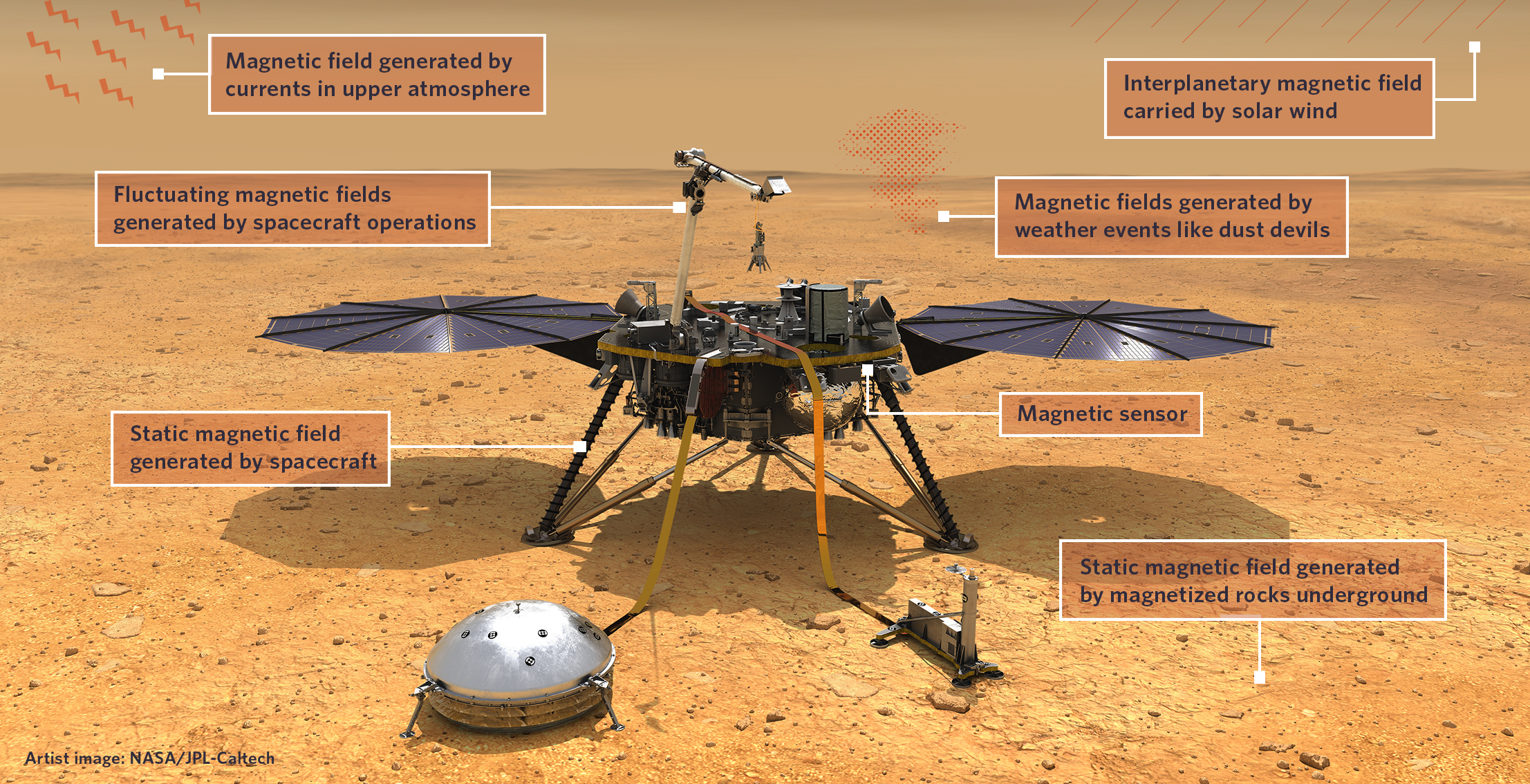
Earth’s magnetic field protects its atmosphere from the solar wind—streams of charged particles from the Sun. Mars, however, lacks a global magnetic field, which means its atmosphere has been stripped away over billions of years. Any efforts to rebuild an atmosphere risk repeating this loss unless we find a way to shield the planet.
The Ice and Carbon Reservoir Deficit
Early proposals assumed there was enough CO₂ in Martian ice or surface minerals that simply needed to be released. But research using spacecraft data from orbiters and atmospheric studies shows that Mars does not hold enough accessible CO₂ to meaningfully increase pressure and temperature for terraforming with current technology.
Water Exists—but Not in Liquid Form
Despite discoveries of subsurface ice and potential briny water pockets, most water on Mars remains inaccessible or too cold. Liquid water is necessary for life, but it cannot persist on the surface under current conditions.
Why Many Scientists Say It’s Not Feasible—Yet
Based on the best evidence we have, NASA concluded that terraforming Mars is not possible with present‑day technology. The reasoning is grounded in a realistic assessment of the planet’s climate, available materials, and limits of current engineering.
Here’s why that conclusion holds weight:
1. No Sufficient Greenhouse Gas Reservoir

There simply isn’t enough accessible CO₂ on the planet—whether in ice caps, soil, or minerals—to increase atmospheric pressure to a point where liquid water or Earth‑like temperatures become stable. Even liberating all accessible sources would only modestly increase pressure and temperature.
2. Terraforming Requires Immense Energy
Any attempt to heat Mars or thicken its atmosphere would require massive amounts of energy—far more than human civilization currently has available. Whether that’s releasing gases at planetary scale or deploying huge mirrors or reflectors, the energy need is staggering.
3. Atmospheric Loss to Space Won’t Stop
Mars’s atmosphere continues to leak into space due to solar wind. Without a planetary magnetic field, any effort to build an atmosphere could be temporary at best.
4. Timescales Stretch into Centuries or Millennia
Even with theoretical technologies, fully terraforming Mars—so that humans could breathe without artificial support—would take hundreds or thousands of years at minimum. This is both a political and technological challenge.
If Not Now, Then When?
That said, the academic and scientific community hasn’t fully closed the door on terraforming Mars. Instead, current thinking reframes the goal as incremental habitability enhancement rather than full terraforming.
Alternative Climate Engineering Ideas
Scientists have proposed several intermediate strategies to make Mars more accessible and possibly habitable over long time periods:
1. Engineered Aerosols or Nanoparticles
Researchers have suggested deploying engineered particles—tiny rods or aerosol particles—into Mars’s atmosphere to trap heat and raise surface temperature. These materials, unlike greenhouse gases, could have high radiative forcing, warming Mars more efficiently.
The concept involves producing or importing particles that can absorb sunlight and reduce heat escaping into space. While not a solution for breathable air, this could make surface conditions less hostile over decades.
2. Orbital Sunlight Reflectors
Another idea involves placing large mirrors in Mars’s orbit to redirect extra sunlight onto the surface, increasing temperatures to release subsurface volatiles. This is a classic geoengineering concept but scaled up to planetary proportions.
3. Synthetic Biology
Some futurists propose using genetically engineered microbes capable of surviving Martian conditions and slowly altering the environment. While speculative, this intersects with astrobiology and synthetic biology, potentially laying the groundwork for biological atmosphere transformation.
These ideas are still theoretical, but they move terraforming from fantasy toward gradual, staged engineering projects.
The Engineering Perspective: Hard Science, Harder Logistics
Terraforming Mars isn’t just about ideas—it also tests the limits of engineering logistics.
Materials and Manufacturing
To modify a planet, we would need either to:
- Manufacture materials (gases, particles, reflectors) in situ on Mars, using its raw materials and energy; or
- Transport massive supplies from Earth, which is currently cost‑prohibitive.
In situ production is more promising but requires entirely new industrial infrastructure on Mars, including energy generation, mining, and manufacturing—all without existing human presence.
Energy Sources
Terraforming requires immense energy. Options include:
- Nuclear power generators on Mars.
- Solar power arrays scaled up across huge areas.
- Advanced fusion reactors (not yet available).
Without cheap, abundant energy, planetary modification remains theoretical.
Planetary Protection and Unknowns
Even if we could generate the atmospheric conditions, we must consider possible Martian life forms—past or present—before intervening. Ethical and scientific guidelines try to prevent contamination of other worlds. For example, introducing Earth organisms could obscure or destroy evidence of indigenous life.
Philosophical and Ethical Dimensions
Terraforming isn’t just technical—it’s philosophical. Should humans alter a planet forever?
The Stewardship Debate
Some argue that transforming another world is a continuation of human progress, akin to agriculture or civilization building. Others caution that it represents a form of planetary imperialism that could destroy unknown ecosystems or scientific heritage.
The Risk of Irreversible Change
Once you change a planet’s atmosphere or climate, you can’t easily reverse those changes—especially on the scale of geological time. The ethics of forever altering Mars becomes a matter of interplanetary environmentalism.
Intergenerational Responsibility
Terraforming would likely span centuries or millennia. How do we govern a project that outlives nations and generations? This touches on long‑term policy, global cooperation, and moral obligations to future humans.
So, Is Terraforming Mars Technically Feasible?
In the strictest sense with present technology, no. NASA and multiple scientific bodies have concluded that Mars cannot be terraformed with technologies available today. The Red Planet simply doesn’t have enough accessible greenhouse gas to thicken its atmosphere enough for liquid water or human survival without spacesuits.
However:
- Certain long‑term climate engineering ideas—like aerosol warming or solar reflectors—may be technically conceptually feasible in the future.
- Incremental approaches could improve conditions for human explorers and settlers.
- Breakthrough technology in energy, bioengineering, and planetary science could shift feasibility assessments.
So while the dream of a blue Mars remains out of reach now, the question of feasibility is not binary—it evolves with scientific advances and humanity’s willingness to undertake extreme planetary engineering.
What This Means for the Future
Terraforming Mars, in the grandest sense, remains a vision for the distant future—an idea that pushes the boundaries of science, engineering, and philosophy. It is not something the current generation of technologies can achieve, but it remains a guiding star for innovation.
This long view invites us to think not just about whether we can change a planet—but whether we should, how we might do it responsibly, and what we learn along the way.