








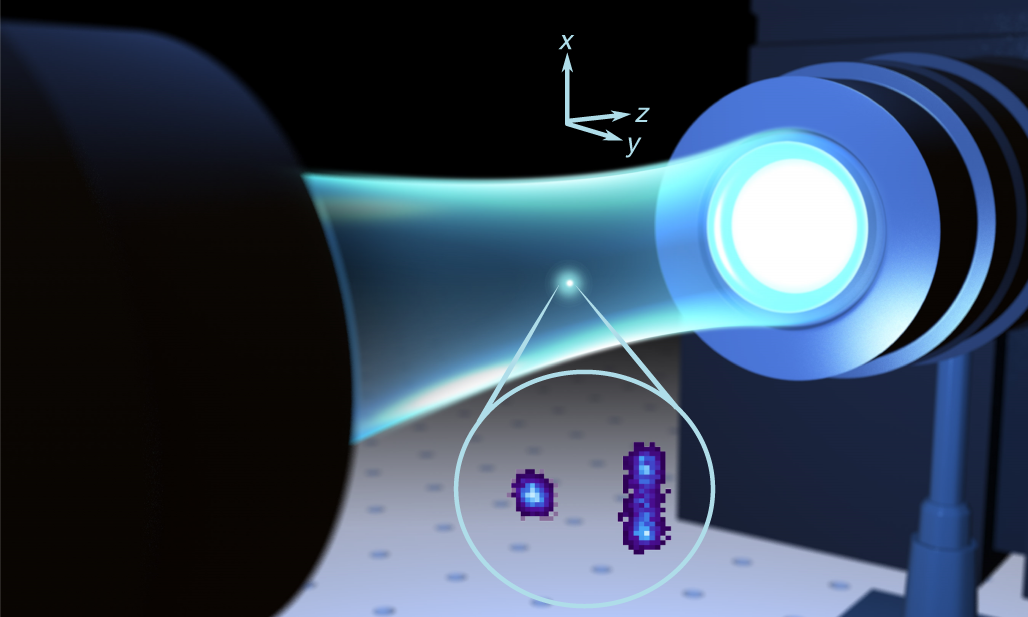

In the technological tapestry of the 21st century, few concepts sound as futuristic — and as audibly intriguing — as sound lasers. The term instantly evokes visions of sci‑fi sound beams cutting through the air, sonic beams communicating across crowded rooms, and speakers as thin as glass that deliver perfect audio without moving parts. But what exactly are sound lasers, why are they intriguing to scientists and audio engineers, and could they really ignite the next revolution in audio technology? This in‑depth article unpacks the science, the promise, and the possible paths forward for this nascent field.
What Are Sound Lasers?
To understand sound lasers, we must first deconstruct the idea of a laser itself. The word “laser” is an acronym for Light Amplification by Stimulated Emission of Radiation. Traditional lasers operate by stimulating atoms to emit photons — particles of light — all in the same direction and phase, creating intensely coherent and focused beams.
By analogy, a sound laser — often called a saser (Sound Amplification by Stimulated Emission of Radiation) — aims to generate coherent sound waves, often modeled as streams of quasiparticles called phonons rather than photons. Phonons are the quantum mechanical description of vibrational energy in a medium — the building blocks of acoustic waves. A phonon laser, therefore, doesn’t emit light but rather a precise and coherent stream of sound energy.
However, unlike light, sound cannot travel through a vacuum; it needs a physical medium — like air, solid material, or liquid — to propagate. This fundamental difference means that a “laser” of sound doesn’t behave exactly like a conventional laser beam. But inside devices — whether on a silicon chip or embedded in a specialized material — it can produce highly controlled acoustic output in a way that resembles the functional properties of optical lasers.
The Physics Behind Sound Lasers
At its core, the science behind sound lasers involves amplification and stimulated emission, but instead of exciting electrons to emit photons, scientists stimulate mechanical vibrations — phonons — in a controlled way.
Phonons: The Quanta of Sound
In solid materials, atoms vibrate in complex patterns. These vibrations can be mathematically treated as quasiparticles (phonons) — parcels of energy that represent sound waves in a quantized form. In a phonon laser, an array of mechanical resonators or engineered materials stimulates phonons coherently, concentrating them at a specific frequency and phase, much like photons in a laser cavity.
The Challenge of Coherence
Generating coherent phonon streams is extremely challenging because sound waves naturally disperse, interfere, and lose energy as they travel through a medium. Achieving coherence — where all phonons share the same frequency and phase — requires precise engineering of resonators and the materials that support acoustic modes.
A breakthrough came when researchers used microelectromechanical systems (MEMS) and stacked semiconductors to stimulate phonon emissions directly, proving that phonon lasers (or “sas ers”) were feasible. Later advances on chip‑scale designs eliminated the need for external laser excitation, simplifying integration with other devices.
Potential — and Real — Applications
You might be thinking: That’s cool physics — but why should I care? The real excitement around sound lasers isn’t just theoretical; it comes from the possibilities they unlock. Let’s explore several domains where sound lasers could disrupt the status quo.
1. Medical Imaging and Ultrasound
Sound lasers are poised to influence ultrasound technology. Traditional ultrasound probes rely on piezoelectric crystals vibrating at specific frequencies to produce and detect ultrasound waves. In contrast, phonon lasers could offer much narrower frequency bands and controllable coherence, potentially improving resolution and signal clarity in medical imaging. Researchers believe that integrated phonon lasers could reduce power consumption and enhance miniaturization of ultrasound diagnostic devices.
2. Underwater Communication
Underwater environments are notoriously difficult for wireless communication. Radio waves attenuate quickly in saltwater, and acoustic modems have limited bandwidth and range. Sound lasers could offer a new way to modulate and deliver coherent signals over longer distances with greater precision. A recent review on laser‑induced acoustic communication highlights this technique’s potential to overcome traditional medium boundaries and enable cross‑domain data transmission with improved reliability.
3. Directional Audio Beaming and Targeted Sound
Among consumer applications, directional audio — audio that can be “beamed” to a specific listener or region without disturbing everyone nearby — is particularly compelling. Imagine advertising billboards that project sound only to people standing at precise points, or museum exhibits that narrate in perfect audio only when you’re right in front of them, without the need for headphones. These systems rely on focused audio transmission and could benefit from refined laser‑based sound projection systems.
4. High‑Precision Sensing and Measurement
In industrial and scientific contexts, coherent sound waves can enhance sensing accuracy. For example, sound lasers could improve sonar systems or noninvasive monitoring techniques. By generating highly coherent acoustic fields, sensors could detect finer changes in materials or environmental conditions.
How Does Laser‑Generated Sound Compare to Traditional Speakers?
Traditional speaker systems create sound by mechanically moving air via vibrating components like cones and diaphragms. These systems work wonderfully for everyday use, but they have limitations: moving parts wear out, they take up physical space, and their directivity (how narrowly focused sound is) is constrained.
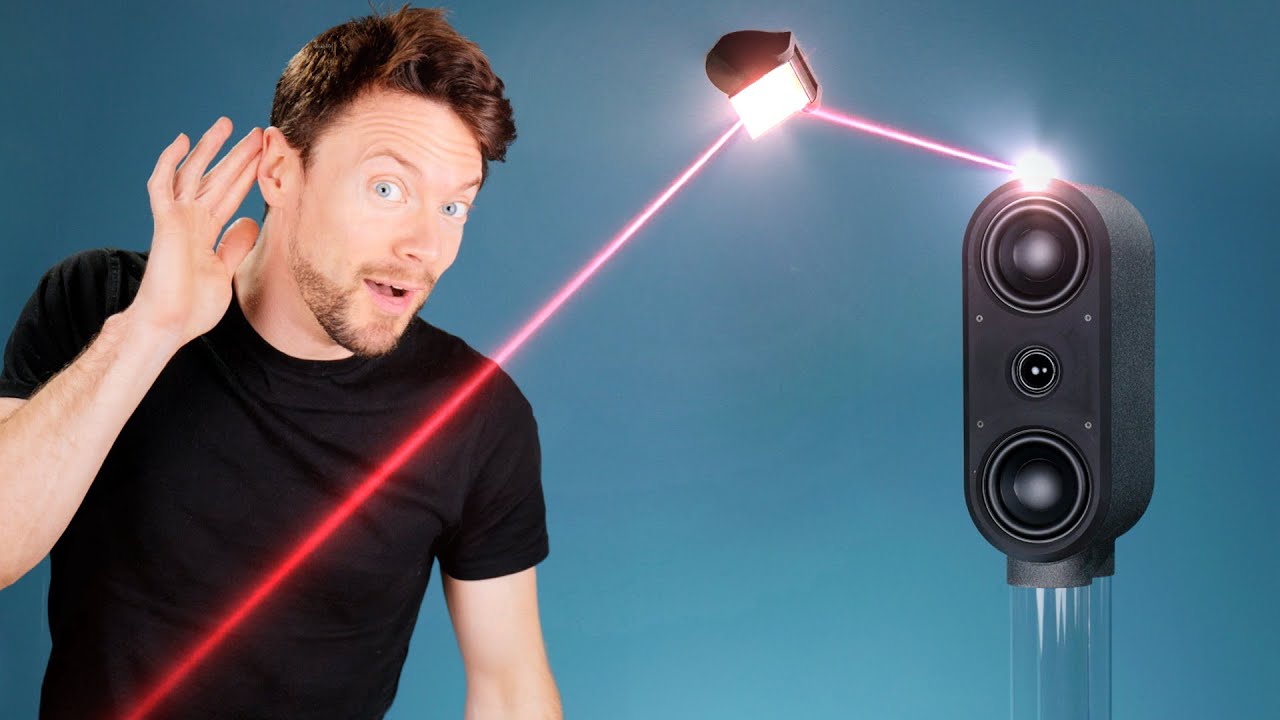
Laser‑generated sound techniques — including the photoacoustic effect and plasma‑based methods — convert light energy directly into sound without moving parts. In one experimental setup, a single laser unit emits high‑energy pulses into the air or onto surfaces, utilizing the rapid expansion and collapse of plasma to generate acoustic waves faithfully reproducing complex audio signals. This method allows for massless sound sources, which can theoretically “place” audio anywhere within a space.
The Photoacoustic Effect: Turning Light Into Sound
Many modern laser audio concepts rely on the photoacoustic effect, where rapidly pulsed light energy — usually a laser — induces pressure waves in a medium (like air) that we perceive as sound. This effect was first discovered in the 19th century and has since been applied in spectroscopy, sensing, and now audio generation.

Researchers have leveraged the photoacoustic effect in experimental loudspeakers that use carbon nanotubes. By heating these nanotube sheets with modulated laser light, pressure variations create audible sound without any electrical contact or moving parts. The result? Ultra‑thin, transparent speakers that could adhere to virtually any surface.
These photoacoustic speakers are compelling because they:
- Reduce mechanical complexity
- Improve reliability (no moving parts to fail)
- Enable flexible form factors
- Potentially deliver high‑fidelity audio with low distortion
The seamless integration of light and sound in these systems points to a future where speakers are built into windows, walls, or even clothing.
Limitations and Challenges
Despite the promise, sound lasers and laser‑generated audio systems face formidable hurdles before they become mainstream.
Physics Limits
Sound requires a medium to travel. While light lasers can propagate through space, a sound laser cannot. Even when sound lasers generate acoustic waves within a device, those waves must still travel through air or material, which naturally attenuates and scatters sound — especially at lower frequencies. This makes full‑spectrum audio reproduction from laser‑only systems technically challenging.
Safety and Regulations
Using high‑intensity light in public spaces raises eye‑safety concerns. Systems that transmit audio using lasers must comply with strict safety standards to prevent ocular damage. Research into safe wavelengths and power levels is ongoing, but consumer deployment will require careful engineering and regulatory approval.
Practicality and Cost
Prototypes of laser‑based speakers and phonon lasers are, at present, expensive and complex, requiring specialized components and precise control systems. For the average consumer, traditional speaker systems will remain far more cost‑effective for many years. However, that’s often how revolutions begin: expensive and niche before they become ubiquitous.
The Future — A Sonic Frontier?
So, are sound lasers the next audio revolution? The short answer is not yet — at least not in the way sci‑fi enthusiasts often imagine. But the direction of current research suggests that laser‑driven audio technologies could reshape specific aspects of sound reproduction and acoustic communication. Phonon lasers might not replace traditional speakers in living rooms next year, but they are poised to impact medical imaging, underwater communication, industrial sensing, and highly targeted audio delivery.
Moreover, hybrid systems that combine laser‑based sound generation with conventional speakers could usher in new classes of audio products — think ultra‑directional sound zones in public spaces, invisible speakers embedded in architectural surfaces, or compact devices offering high‑precision acoustic manipulation. The landscape of audio engineering is vast, and sound lasers are carving out an intriguing niche within it.
In many ways, we’re witnessing a confluence of optics, acoustics, and digital signal processing that challenges how we conceive of sound. Whether or not sound lasers become the dominant audio technology, they are already expanding the boundaries of what audio systems can do.
Innovation, after all, rarely announces itself with a single breakthrough. It unfolds as a series of incremental but powerful ideas — and sound lasers might just be one of those compelling ideas that shapes the future of audio.