








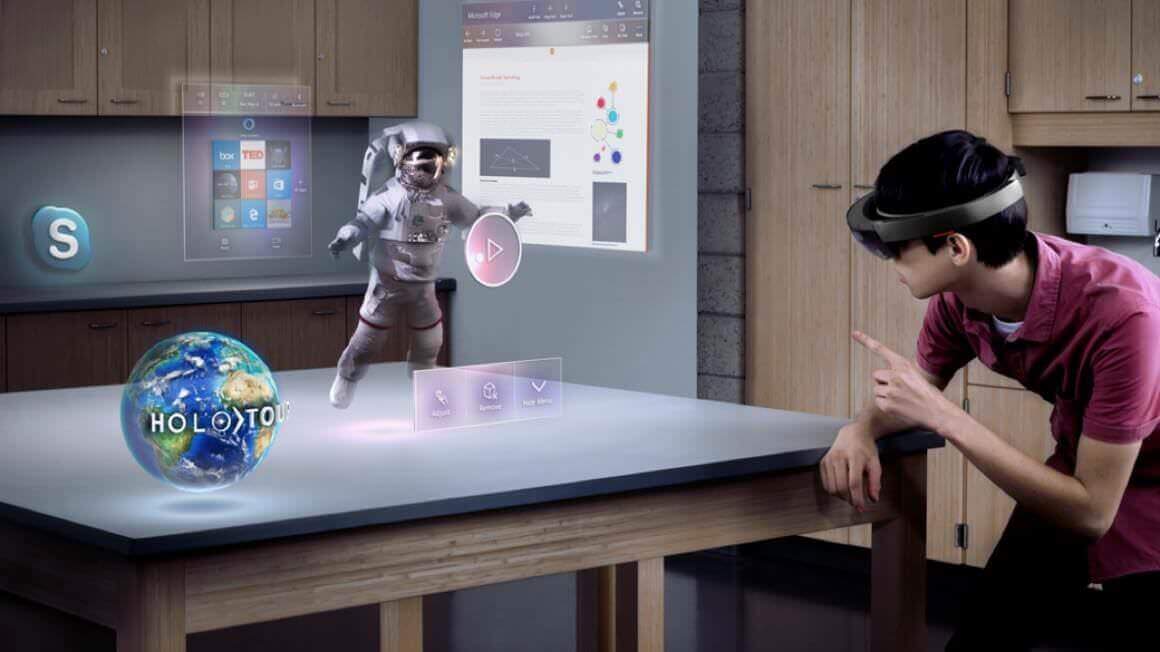

Imagine waking up one morning and instead of scrolling through flat photos and videos on a screen, you’re greeted by lifelike holograms of your friends dancing, waving, or even walking into your bedroom. This might sound like something right out of science fiction, but the convergence of holography, artificial intelligence, ultra-fast networks, and immersive computing is rapidly pushing us toward a future where holographic social media becomes not just possible—but transformative.
In this article, we’ll dive deep into what holographic social media is, the technologies powering it, the opportunities and challenges it presents, and what the future of human interaction might look like when our screens dissolve into real-space holographic experiences.
What Is Holographic Social Media?
At its core, holographic social media refers to platforms and communication systems that use three-dimensional (3D) holographic imagery to represent people, content, or environments in real space, enabling interactions that feel more like real-life encounters than flat displays. Instead of text posts, videos, and emojis, users might see floating holograms of friends chatting in your living room or collaborating in a virtual boardroom that appears above your desk.
Traditional social networks are evolving from 2D spaces into rich, spatial experiences that blend augmented reality (AR), virtual reality (VR), mixed reality (MR), and holography. These are not gimmicks—they’re steps toward recreating presence in a digital environment.
Why Holographic Social Media Matters
Social media today has drastically reshaped how humans connect, communicate, and bond. Texting and video chats have broken down countless barriers to communication, but they still exist within flat screens—windows, not worlds. Holographic social media promises:
1. Truer Human Presence
Holography aims to bridge the emotional gap left by 2D video calls. Imagine seeing a friend’s real gestures, eye contact, and body language projected into your physical space. Unlike simple video chats, this form of communication uses depth, spatial positioning, and natural interaction cues to make virtual meetings feel like actual presence.
2. More Immersive Interaction
Content isn’t contained inside a screen—it can exist around you. Whether you’re attending a concert, a meeting, or a social hangout, holographic environments can create immersive shared spaces where users can interact naturally with each other and with digital objects.
3. New Dimensions of Creativity
Brands, creators, and artists could craft experiences that go beyond video and images. Holographic ads, 3D storytelling, and interactive 3D art mean social media becomes a canvas for new forms of expression.
4. Economic and Cultural Shifts
Just as social media reshaped advertising and entertainment, holographic social media may redefine commerce and performance. Global events could be attended as interactive holographic experiences, blending live and virtual attendance in ways previously unimagined.

The Tech Under the Hood
Making holographic social media a reality requires the fusion of several cutting-edge technologies:
Artificial Intelligence (AI)
AI is critical for generating realistic holograms, tracking human movement, interpreting speech and gestures, and personalizing interactions in real time. It’s the cognitive layer that makes digital avatars feel alive and convincing.
Advanced Display and Projection Systems
Holographic projection and light-field displays allow images to float in the air without glasses or headsets. Some companies are already pioneering glasses-free holographic systems that display 3D visuals in real space.
5G, Edge Computing, and Next-Generation Networks
The massive amounts of data required for real-time hologram rendering and streaming demand ultra-low latency and high bandwidth—exactly what 5G and emerging network architectures provide.
3D Capture and Depth Sensing
High-precision scanning technologies such as LiDAR, depth cameras, and volumetric capture help convert real people and environments into accurate 3D models that can be transmitted and displayed as holograms.
Use Cases Today (and Tomorrow)
While full-blown holographic networks are still emerging, several technologies and early examples hint at how this future might unfold:
Holographic Communication Platforms
Google’s experimental Project Starline (now Google Beam) offers a real-time 3D video chat booth that makes participants appear as if they’re in the same room.
Microsoft’s Holoportation research allows users to transmit 3D holograms of themselves into remote environments through AR/VR headsets.
Affordable Holographic Displays
Startups and hardware companies are launching glasses-free holographic displays that can project 3D companions or digital avatars above devices, enabling far more natural interactions than tablets or flat screens provide.
Immersive Events and Entertainment
Virtual festivals like HoloFest have showcased how holographic avatars and spaces can create deeply immersive social events, with attendees interacting in shared holographic worlds.
Benefits That Could Redefine Social Interaction

Deeper Emotional Connectivity
Eye contact, gestures, and presence matter. Holography makes these natural communication elements possible across distances, potentially strengthening relationships more than text or video ever could.
Accessibility and Global Reach
People who are geographically separated—or unable to travel due to cost, health, or mobility challenges—can interact as if they were in the same physical space.
More Engaging Work and Collaboration
Remote work could become more collaborative and less draining if colleagues can stand next to lifelike holographic representations of each other in shared virtual spaces.
Reimagined Education and Training
Interactive holographic lessons and training simulated environments could boost learning outcomes and engagement far beyond static screens.
Challenges on the Path Ahead
While promising, holographic social media faces significant hurdles:
Technical and Infrastructure Limits
Rendering and streaming full-scale holograms will demand enormous processing power and high bandwidth. Networks and edge computing must continue evolving to meet these demands.
Privacy and Ethics
With lifelike digital representations comes the potential for misuse—identity replication, unauthorized recordings, and deepfake abuse. Ethical frameworks must evolve alongside technology.
Cost and Accessibility Gaps
High-end holographic setups are expensive today; widespread adoption depends on making hardware affordable and reliable for everyday users.
User Experience Considerations
Human comfort with holographic interactions will vary; designers must ensure experiences feel natural, not intrusive, and avoid sensory overload.
The Road to Adoption: Gradual and Layered
Holographic social media won’t replace existing platforms overnight—but it could layer on top of them. Think holographic chat features in apps you already use, or mixed reality layers that enhance, rather than replace, traditional feeds.
We are likely to see:
- Hybrid social platforms that support both flat and holographic modes.
- Augmented reality insertions into everyday content creation.
- Mixed reality spaces where physical and digital worlds blend seamlessly.
By the 2030s, experts predict immersive 3D virtual spaces and persistent holographic presences could be commonplace, reshaping not only entertainment and work but the very fabric of social interactions.
A Future of Presence, Not Just Posts
In many ways, holographic social media is about presence—an evolution from posting to being there. As our technologies become more capable of recreating real-world cues and contexts in digital formats, the boundary between physical presence and virtual interaction blurs, offering a future where distance feels less significant, and relationships feel more complete.
The promise of social media has always been connection. Holographic social media may finally deliver connection in three dimensions.