









The Moon has been humanity’s closest celestial companion since time immemorial. It lights up our night skies, inspires poets and scientists alike, and has challenged us to understand its mysteries. Yet one part of this cosmic neighbor remained hidden from human eyes for nearly all of history: the far side of the Moon — the hemisphere that perpetually faces away from Earth. For decades, it was simply called the “dark side” of the Moon (a poetic but misleading label), and it was imagined in fiction as a place of mystery, strange landscapes, or even hidden bases. With the advent of space exploration, our myths met measurement, and today we know that the far side does indeed guard secrets — but the truth is far richer and more intriguing than fiction.
In this article, we’ll journey to the lunar far side — exploring its geological quirks, ancient volcanic history, exotic chemistry, clues to lunar formation, and tantalizing prospects for future scientific discovery. What we now know is a testament to the relentless work of planetary scientists and robotic explorers that have unlocked the Moon’s long-hidden side.
What Is the Far Side and Why It Stayed Hidden
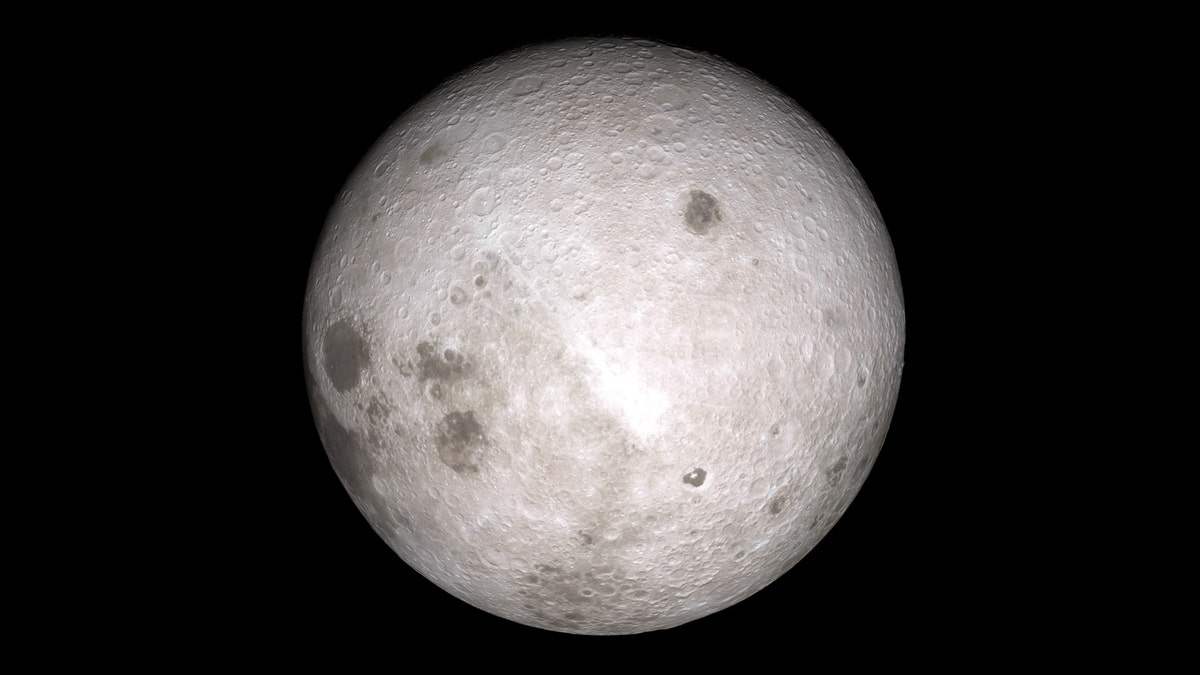
The Moon is tidally locked with Earth, meaning it rotates on its axis in exactly the same time it takes to orbit Earth. The result? One hemisphere — the near side — always faces us, while the far side always faces away. Early telescopes and human observers could only see the near side. The breakthrough came in 1959 when the Soviet spacecraft Luna 3 flew around the Moon and sent back the very first images of the far side. These grainy photographs forever changed our view of the Moon, revealing a vastly cratered and rugged terrain unlike what we saw from Earth.
Unlike the near side, which displays vast, dark volcanic plains called maria — remnants of ancient lava flows — the far side is dominated by high, battered highlands and far fewer maria. This stark contrast was one of the first clues that the Moon’s history wasn’t uniform — that the hidden face might hold answers to deep questions about planetary evolution.
The Geography of the Far Side: A World Apart
When scientists refer to the far side of the Moon, they’re talking about a realm that appears dramatically different from the familiar near side:
- Cratered Terrain: The far side is pockmarked with craters of all sizes, a surface sculpted by billions of years of cosmic impacts.
- Thicker Crust: The crust on the far side is significantly thicker and more rugged than on the near side — a clue that the Moon’s internal structure wasn’t evenly distributed during its formation.
- Few Maria: Dark basaltic plains — caused by ancient volcanic eruptions — are common on the near side but rare on the far side, suggesting very different volcanic histories between the two hemispheres.
These geographic contrasts set the stage for deep scientific inquiry: why is one face of the Moon so different from the other, and what does that tell us about the early solar system?
Chang’e‑6: The First Sample Return From the Far Side
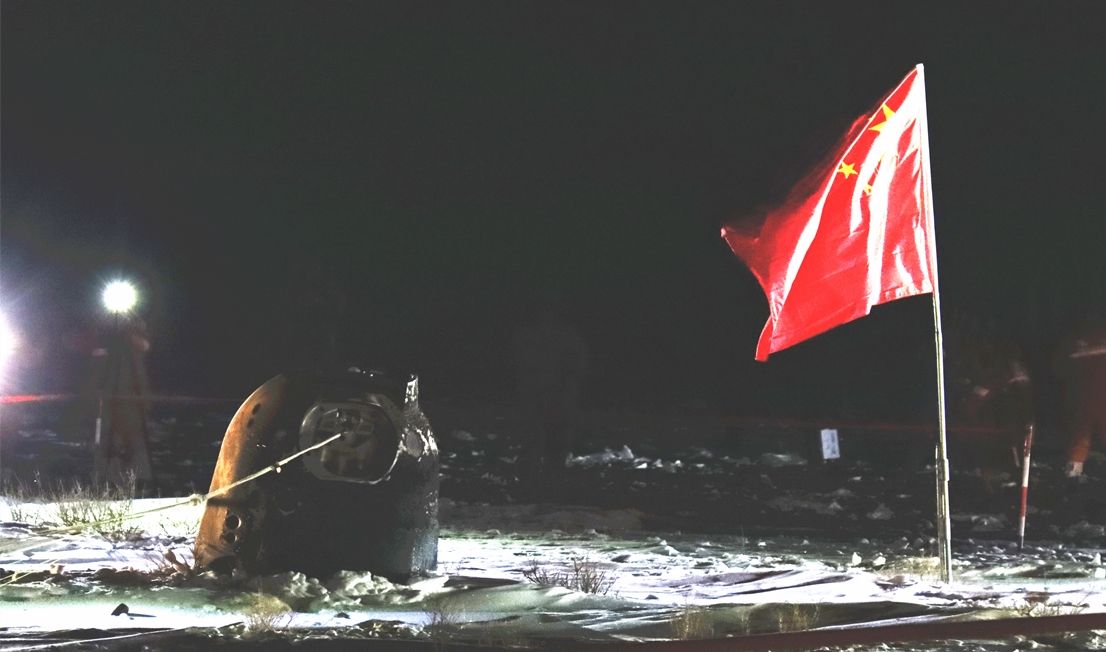
One of the most transformative advances in our understanding of the lunar far side came with China’s Chang’e‑6 mission, which successfully landed on the far side and returned samples to Earth in 2024 — the first ever from that hemisphere.
This represents a historic milestone. While lunar missions in the Apollo and Luna programs returned hundreds of kilograms of lunar rock, they all landed on the near side. Chang’e‑6’s 1,935.3 grams of far-side material are the first direct physical samples scientists have ever analyzed from away from Earth’s view.
Why this matters: Until now, all hypotheses about the far side’s composition were based on remote sensing or orbital imaging. Actual rock samples allow researchers to apply laboratory techniques such as isotope analysis and mineralogy to paint a far more precise picture of the Moon’s evolution.
Ancient Impacts and Isotope Fingerprints
One of the most compelling discoveries from the Chang’e‑6 samples is the isotopic signature contained within them — particularly involving potassium isotopes. Scientists identified unusual ratios (notably high ratios of potassium‑41 to potassium‑39), which are best explained by the enormous impact that created the South Pole–Aitken (SPA) Basin more than 4 billion years ago.
This ancient impact was not just a surface event. The colossal energy released — equivalent to millions of nuclear bombs — would have heated the lunar interior, reshaping the distribution of elements and leaving behind a chemical fingerprint. The far side’s volatile elements (like potassium and water) appear depleted compared to the near side, a clue that this impact profoundly influenced the Moon’s chemistry, geology, and thermal evolution.
In other words, the far side’s ingredients carry a recipe card from an ancient cosmic collision — a big piece of the puzzle about how the Moon formed and evolved.
Volcanic History: A Surprisingly Active Past
For decades scientists assumed the far side was geologically dead and monotonous compared to the near side. However, recent studies based on the Chang’e‑6 samples have shown that the far side did experience volcanic activity — and it lasted a long time. Basalts found in the samples have been dated to roughly 2.8 billion years old, younger than many previous lunar basalts.
This suggests that volcanic eruptions on the far side occurred not just once or twice, but repeatedly, over significant stretches of lunar history. The presence of both older and younger volcanic rocks implies at least 1.4 billion years of episodic volcanism — a massive discovery that challenges prior assumptions about far-side geology.
But crucially, the far side’s basalt coverage is far less extensive than that on the near side — only a small percentage of the surface shows basaltic plain features. Why? Scientists think it goes back to differences in internal heat and elemental distribution during the Moon’s formative years.
A Cooler, Drier Interior
Recent research indicates that the far side’s interior was cooler than that of the near side. Analyses of the far-side basalts suggest they formed from magma at temperatures around 1,100 °C — significantly cooler than similar rocks from the near side.
This thermal imbalance hints at deeper structural differences. One hypothesis is that during the Moon’s early days — when a global magma ocean was still cooling — the distribution of heat-producing radioactive elements (like uranium, thorium, and potassium) ended up uneven between the two hemispheres. The near side concentrated more of these elements, providing sustained heat and more volcanic activity, while the far side cooled faster and produced fewer basaltic flows.
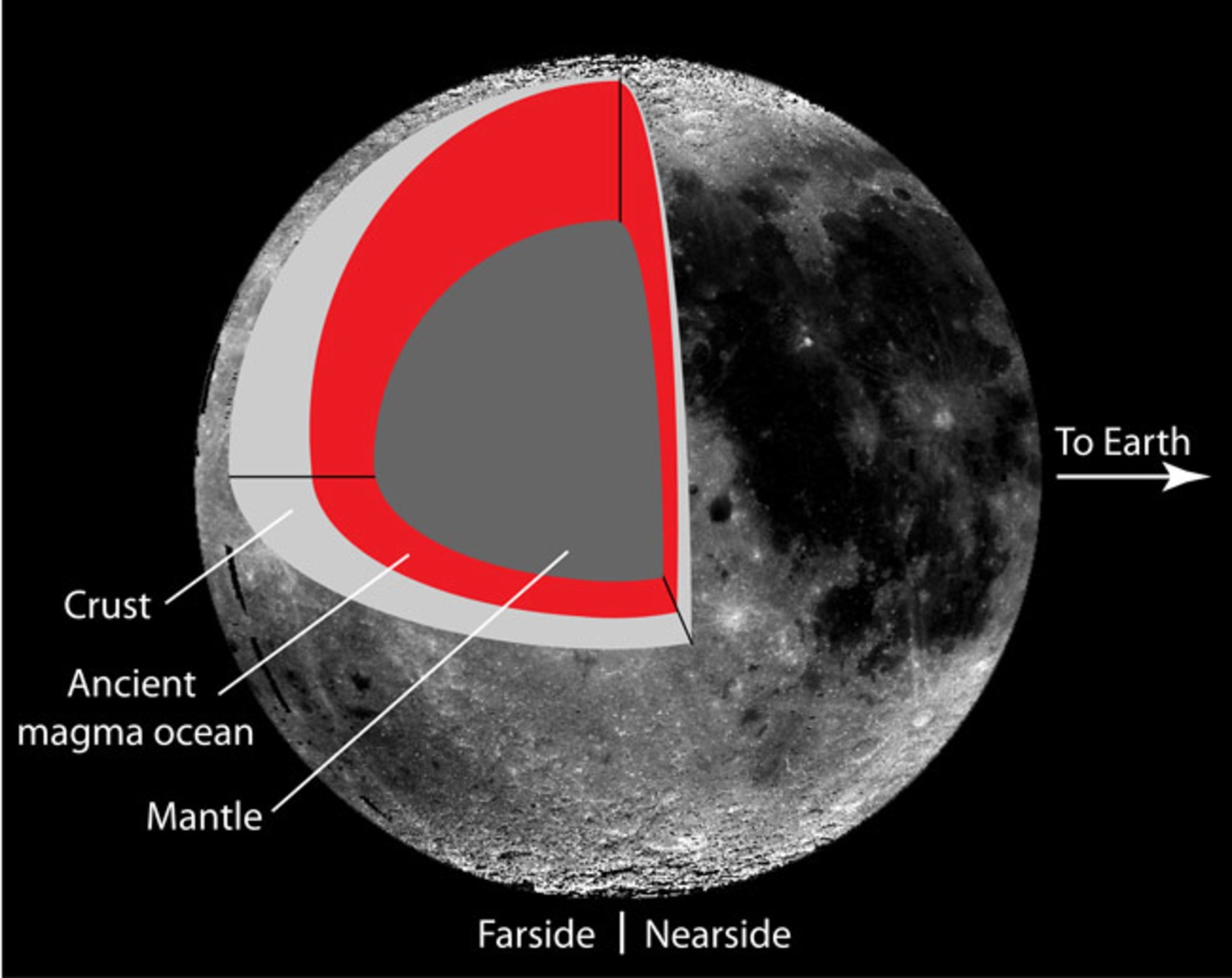
Adding to this picture, soil analyses show that the far side’s mantle source is depleted in incompatible elements — those that preferentially enter melts rather than solid crystals during differentiation — and water content appears markedly lower than on the near side.
Together, these insights solidify a view of the far side as a place where early lunar history — from the primordial magma ocean to giant impacts and volcanic flows — played out differently than on the Moon’s familiar face.
The Radio‑Quiet Sanctuary for Cosmic Discovery
Beyond geology, the far side of the Moon may soon reveal its secrets in a completely different way: as a platform for deep space observation. Because it is permanently shielded from Earth’s radio noise, the far side is an ideal site for placing low‑frequency radio telescopes that could detect signals from the early Universe — including the cosmic Dark Ages, before the first stars formed.
Proposed projects like the FarView Radio Array aim to exploit this unique environment to explore fundamental cosmological questions that are impossible to probe from Earth-based observatories. This quiet zone could host arrays capable of detecting faint, long‑wavelength signatures from the infant cosmos — truly opening a new window into the earliest epochs of cosmic history.
Future Missions and Human Presence
China’s Chang’e‑6 has already changed lunar science, but it will not be the last mission to explore the far side. NASA’s Artemis program is targeting the lunar south pole — near but not on the far side — to search for water ice and other resources that could support future crewed missions and long‑term installations.
International collaborations and private ventures are also considering missions to the far side and polar regions, from robotic landers and rovers to communications relays and orbiters that could support sustained exploration.
Why These Secrets Matter
At first glance, understanding the far side of the Moon might seem esoteric — confined to academic journals and space agencies. However, the insights gathered there reach far beyond the lunar surface:
- Planetary Formation: Studying far‑side rocks helps refine theories of Moon formation, including the giant impact theory that also explains Earth’s early history.
- Solar System Evolution: Ancient volcanism and impact signatures provide timelines for early solar system events that shaped all terrestrial planets.
- Resource Potential: Understanding water and volatile distribution informs future lunar habitation and in‑situ resource utilization.
- Cosmology: The radio‑quiet environment could help answer questions about the origin of galaxies, dark matter, and the first cosmic light.
The far side of the Moon is no longer merely hidden — it is a frontier rich with scientific secrets. Each new mission, each carefully analyzed grain of lunar rock, delivers insights into our cosmic past and pushes the boundary of human knowledge.