









Human beings have always looked up at the night sky and asked the same profound question: Can we live there? Today, as space agencies and private ventures race toward the Moon, Mars, and beyond, this question gains new scientific urgency. To sustain human life on another world—or even on a long voyage across the solar system—we must solve one of the most ambitious engineering and ecological problems ever conceived: building a self‑sustaining biosphere.
This article explores whether a space biosphere—a closed ecosystem capable of supporting life with minimal external inputs—can truly sustain itself, the scientific principles governing such systems, the experiments that have tested them, and the challenges that remain before such technology can carry humans safely to other worlds.
The Core Concept: What Is a Space Biosphere?
A space biosphere refers to an enclosed system that recycles all essential biological resources—air, water, food, and nutrients—within a closed environment, relying only on an external energy source (like sunlight or artificial light). In technical terms, these are often called closed ecological life‑support systems (CELSS) or bioregenerative life support systems (BLSS).
In such systems, every waste output from one part of the ecosystem becomes an input for another. Human respiration produces carbon dioxide that plants use to photosynthesize oxygen. Plant waste and human metabolic waste are broken down by microbes and reused as nutrients. Water cycles through evaporation, condensation, purification, and reuse. Ideally, if this cycling is complete and robust, the biosphere can sustain itself indefinitely—with only a continuous input of energy. However, the reality is far more complex than the idea.
Learning from Earth: The Ultimate Biosphere
Before designing life support for space, we must understand the one biosphere that we know does sustain life indefinitely: Earth’s own. Earth’s biosphere is matter‑closed for many biological resources (carbon, nitrogen, water) and energy‑open (sunlight provides continuous energy), which allows life to thrive through complex feedback loops between organisms and their environment.
This natural system constantly recycles nutrients and regulates conditions suitable for life through intricate biogeochemical cycles. It also has massive buffering capacity—extremely large reservoirs of water, soil, and living organisms—which make the system resilient to many kinds of change. Most artificial systems lack this scale and complexity.
Historic Experiments: Biosphere 2 and Others
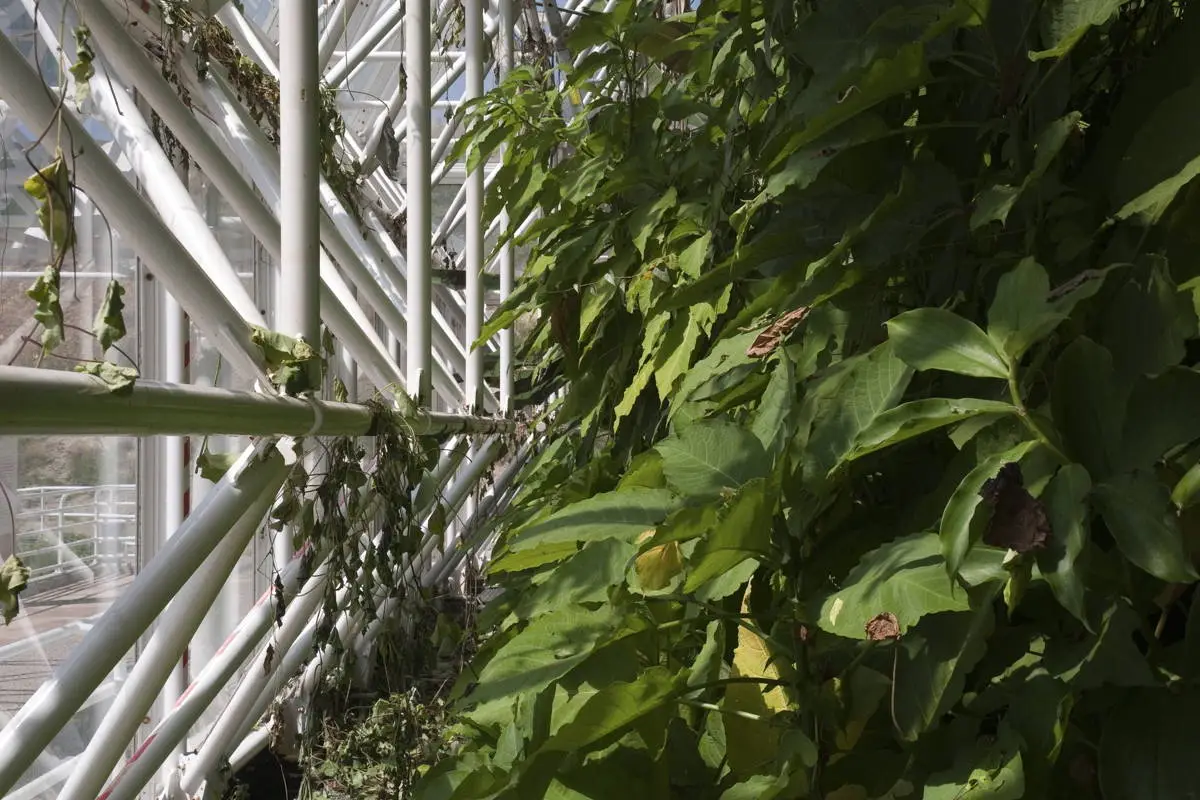
Biosphere 2 remains the most famous experiment in attempting to replicate a self‑sustaining ecological system on Earth as a prototype for space habitats. In the early 1990s, a team of scientists and “biospherians” lived inside a sealed glass structure with multiple biomes—rainforest, desert, ocean, and agriculture—designed to recycle air, water, and food without outside inputs.
Although the experiment lasted two years, it faced significant difficulties: oxygen levels fluctuated beyond expected ranges, crops underperformed, and the ecosystem required external interventions to remain viable. These issues underscored how unpredictable even well‑designed artificial ecosystems can be.

Other controlled systems such as Bios‑3 in Russia and Yuegong‑1 (Lunar Palace 1) in China have also simulated closed habitats to study long‑duration human survival and resource recycling in isolated spaces. These projects are smaller but offer valuable data on waste recycling, nutrition, and psychological factors in closed communities.
The Science Behind Sustainability
At its core, sustaining life in a space biosphere depends on matter cycles (air, water, nutrients) and energy flows (sunlight or artificial light), balanced so that inputs and outputs loop efficiently.
Air Recycling
Human beings breathe oxygen and exhale carbon dioxide. In a closed system, autotrophic organisms like plants and algae must absorb the carbon dioxide and release oxygen through photosynthesis. Achieving a stable balance between these gases over long periods is one of the most critical challenges.
Water Recycling
Water can be recycled with high efficiency through processes similar to Earth’s hydrological cycle—evaporation, condensation, and purification. NASA’s Environmental Control and Life Support System (ECLSS) aboard the ISS already recycles most water, including urine and sweat, into potable water. However, this system still relies on mechanical and chemical filters and requires periodic resupply.
Nutrient and Food Production
Growing food inside a space biosphere requires soil or hydroponic systems, balanced light spectra, precise water and nutrient delivery, and efficient waste recycling. NASA’s Veggie plant growth module on the ISS has successfully cultivated lettuce, cabbage, and other crops, demonstrating that plants can thrive in microgravity with proper environmental control.
Microbial Recycling
Microorganisms play an essential role in decomposing waste, cycling nutrients, and maintaining soil health—much like they do on Earth. Advances in microbial bioreactors and bioregenerative life support (such as ESA’s MELiSSA program) aim to harness microbial communities to recycle human and plant waste into usable resources.
The Balance of Closed and Controlled
A key insight from research into space biospheres is that completely closed systems are theoretically possible but incredibly difficult to maintain. Real systems tend to be closed for matter but open for energy—meaning they recycle materials internally but must accept a continuous supply of energy and reject waste heat. The Earth does this naturally through sunlight and infrared radiation into space. Most artificial biospheres rely on external light or power to maintain temperature and drive photosynthesis.
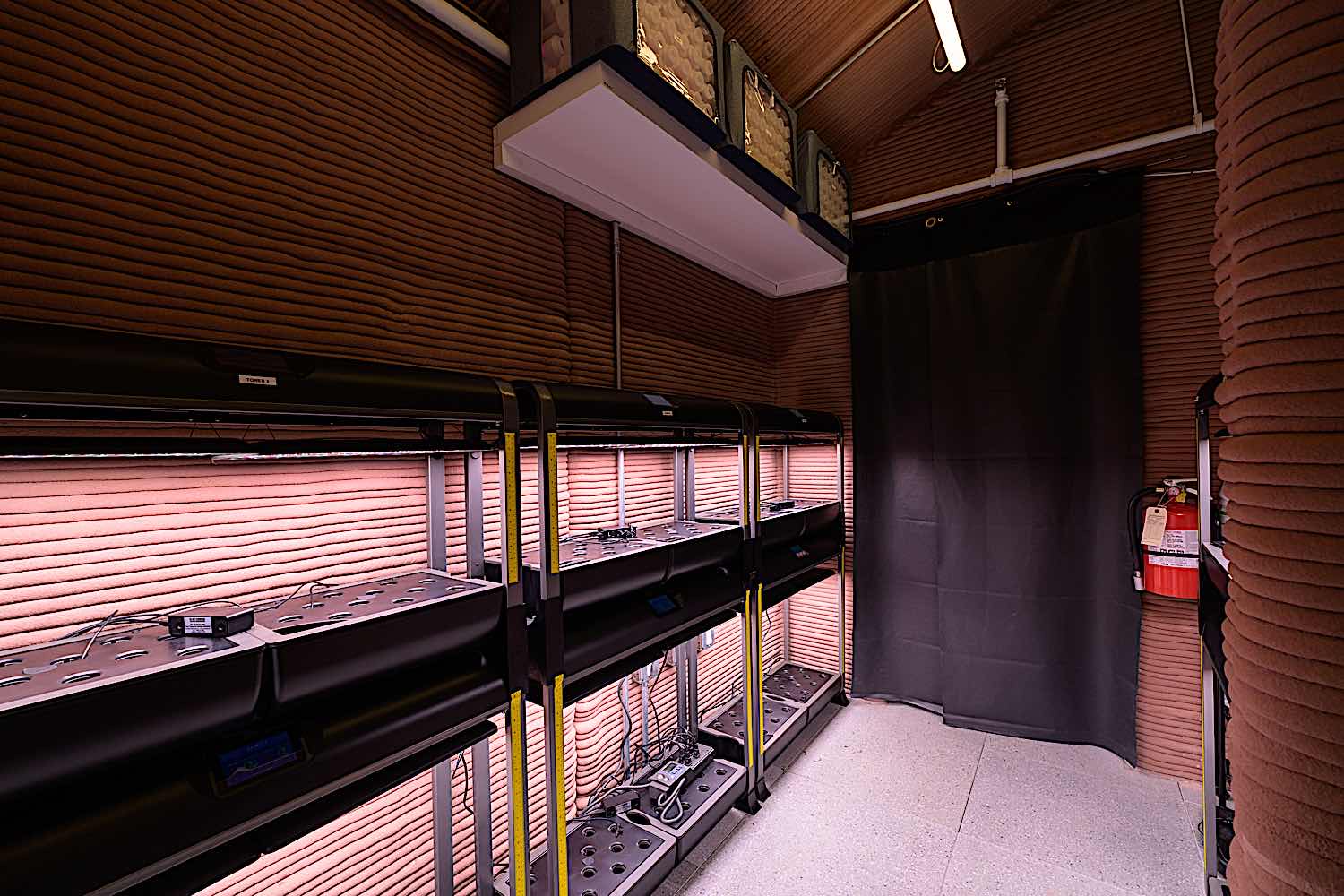
This makes the idea of self‑sustaining space biospheres tricky: if the system requires constant technological intervention (e.g., electrical power for lighting, heat regulation, atmospheric control), can it truly be called self‑sustaining? The answer depends on how one defines sustainability—zero inputs beyond energy, or minimal human maintenance.
Challenges in Space Environments
Gravity and Microgravity
Gravity affects nearly every biological process: from plant root growth and fluid movement to microbial behavior and human physiology. In microgravity, plants may struggle to orient roots, water may form unpredictable bubbles, and human health can deteriorate in ways that alter metabolic demands. These factors complicate the stability of closed ecosystems.
Radiation
Outside Earth’s protective magnetic field, space radiation can damage DNA, disrupt photosynthesis, and alter microbial communities. Shielding or adaptive life forms are required for long‑term sustainability beyond Earth orbit.
Psychological and Social Factors
Life in a sealed biosphere isolates inhabitants from the natural world and external stimuli. Historical experiments have shown that stress, interpersonal conflict, and confinement can impact performance and decision‑making—factors that are as important as physical engineering challenges.
Prospects: Near and Far Futures
Short‑term goals such as growing food on the ISS and refining water recycling systems are already reality. Projects like MELiSSA aim to integrate biological and technological systems for deeper recycling and reduced resupply needs.
Mid‑term goals include lunar habitats that produce a portion of their own consumables and Martian greenhouses that leverage local resources. These will still require significant infrastructure and energy input, but they demonstrate progress toward partial sustainability.
Long‑term visions imagine vast space habitats or spomes—fully self‑sufficient worlds that recycle all matter internally while using energy from external sources (e.g., stars). The concept of a spome was first introduced by science fiction author Isaac Asimov, suggesting that future space settlements could become self‑sustaining ecosystems in their own right.
So, Can a Space Biosphere Sustain Itself?
The short answer is: not fully yet—but in principle, yes. Modern research and space experiments have shown that many essential components of a self‑sustaining biosphere are feasible: air recycling, water purification, plant growth, and waste decomposition all work independently and in combination. Yet current systems require maintenance, energy input, and careful balance to avoid collapse.
The leap from controlled, partially closed life support systems to fully autonomous space biospheres remains enormous. It demands advances in ecological modeling, robotics, materials science, and space power generation—alongside deeper understanding of how life adapts beyond Earth. Despite these challenges, human engineering increasingly mirrors nature’s elegance, and so carrying our biosphere into space is no longer science fiction but an engineering frontier.