









Invention is one of humanity’s oldest pursuits — a dance between imagination and reality, where dreams take shape in the messy, exhilarating forge of creation. Yet, behind every iconic device or breakthrough technology sits a lesser‑told story of stumbles, misfires, revisions, and reinventions. This naturally leads to a deceptively simple question with colossal implications: Is there such a thing as a “perfect” first draft for every invention?
The short answer — if you’re hoping for a neat, definitive yes — is no. But that answer barely scratches the surface. The deeper truth is far more fascinating, revealing insights into how creativity, engineering, human psychology, and even economics shape the birth of new things. In this comprehensive exploration, we’ll uncover why the myth of a perfect first draft persists, why it’s unrealistic, how the real invention process unfolds, and what this means for aspiring inventors, designers, technologists, and innovators everywhere.
The Myth of the Perfect First Draft
Imagine a world where Thomas Edison flicks a switch, and boom — the light bulb works perfectly on the first try. Or where Steve Jobs sketches the iPhone design once and sends it straight to production with no revisions. These are alluring fantasies — but they’re myths.
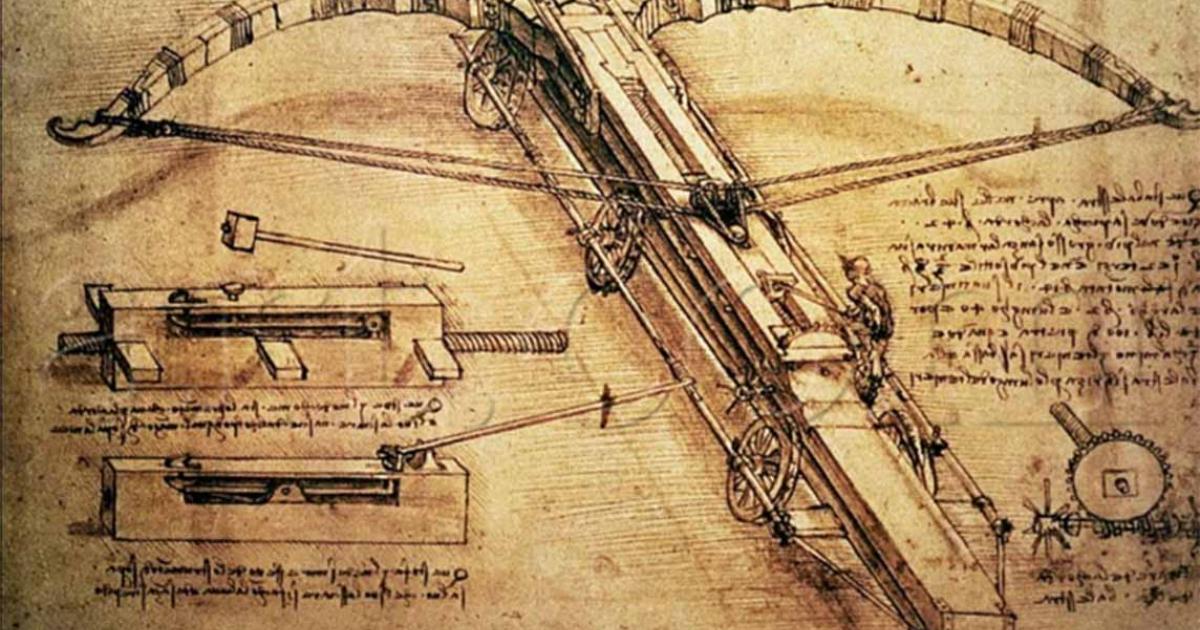
Even historically revered inventions rarely emerged fully formed in their creators’ minds. Leonardo da Vinci, one of history’s most brilliant inventors and observers, filled notebooks with thousands of sketches that married art, science, and mechanical curiosity, yet few of his ideas reached mature prototypes in his lifetime. His designs showcased imagination, yes — but also countless iterations and explorations that stayed incomplete or impractical in his era.
The very phrase “first draft” suggests that what comes next is revision, refinement, and evolution. When John von Neumann wrote the influential First Draft of a Report on the EDVAC — the early architectural sketch of modern computers — it wasn’t “perfect.” It was incomplete and sparked controversy precisely because it left room for debate, refinement, and contribution from others.
Why does this myth persist? Because storytelling favors clean narratives and heroes who seem to just know. But the real process is usually bloody, unpredictable, and beautifully iterative.
Why the Perfect First Draft Doesn’t Exist
There are several fundamental reasons why perfection on the first try is essentially impossible when inventing something genuinely novel:
1. Invention Is a Search Through the Unknown
Inventions — by definition — are solutions to problems that haven’t been solved yet. That means there is no complete blueprint to copy. Instead, inventors must explore, test, fail, and refine. This process depends on feedback — from the thing itself, from users, from collaborators, and even from critics.
Patents and innovation studies reinforce this: inventive activity often resembles a combinatorial process where ideas are combined, recombined, and refined over time rather than produced perfectly from scratch.
2. Early Prototypes Are Tools for Learning, Not Perfection
Inventors often start with low-fidelity prototypes — rough models, sketches, cardboard mockups, or crude digital forms that help externalize an idea and uncover hidden challenges. These first representations are not meant to be perfect. They’re tools for exploration.

James Dyson, for example, famously built thousands of prototypes while developing his bagless vacuum cleaner — not because he was aiming for perfection from the start, but because each version taught him something new about airflow, suction dynamics, and manufacturing.
3. Feedback Changes Everything
Even if an inventor could build a working first prototype, real perfection is relative and depends on context: How do real users interact with it? What problems emerge under real‑world conditions? How does it compare to competing solutions?
This is why modern design methodologies — like iterative design — emphasize cycles of prototyping, testing, analyzing, and refining instead of seeking perfection first.
4. The First Draft Often Isn’t Even Seen by Others
Many inventors keep their initial prototypes private — rough sketches or early working models that are purely functional and unfinished. These “first drafts” are internal tools rather than polished deliverables. They exist to help the inventor think and learn, not to impress others.
What Actually Happens: The Real Life of Invention
Inventive work is messy, and understanding it helps demystify the myth of the perfect first draft. Here’s how it typically unfolds:
Step 1: Ideation
Everything starts with a problem, a curiosity, or a hunch. Some inventors begin with extensive research; others start with a gut feeling. Regardless, the initial idea is just the seed.
Step 2: Concept Exploration
At this stage, sketches, diagrams, concept notes, and informal discussions help flesh out possibilities. Ideas evolve quickly and often discard early assumptions.
Step 3: Rough Prototyping
This is where the first “draft” gets physical or digital form. Whether a paper model of a gadget, a foam board concept of a mechanism, or a quick CAD sketch, this prototype is meant for experimentation, not perfection.
Step 4: Testing and Feedback
Real feedback — from users, collaborators, engineers, or experts — begins to shape the invention. Testing reveals flaws that were invisible on paper.
Step 5: Iteration and Refinement
With each subsequent version, the prototype gets closer to solving the real problem in a viable way. This stage can involve dozens, hundreds, or even thousands of adjustments.
Step 6: Finalization and Scale
Only after repeated refinement does the invention reach a form that’s reliable, manufacturable, and commercially viable.
At no point does perfection manifest magically. Instead, it is the accumulated effect of countless small improvements, guided by data, intuition, and human judgment.
When Inventors Feel Like They Have a Perfect First Draft
There are moments when an idea looks so promising that it almost feels perfect on the first try. This can happen when:
The Inventor Has Deep Prior Knowledge
Some inventors work within domains they know extremely well — experienced engineers, scientists, or designers who have internalized years of tacit knowledge. Their first models may feel near‑perfect because they have already internalized countless prior drafts in their mind.
But even then, reality usually reveals hidden constraints or unexpected behavior.
The Problem Is Incremental, Not Radical
If an invention is a variation on an existing product — a small improvement rather than a disruptive innovation — the first prototype may not be far from ideal. But this is not the same as a truly novel invention arriving perfect on its first attempt.

Lucky Convergence
Occasionally, all the variables align and a prototype works smoothly the first time. But this is luck, not a reliable design principle.
The Hidden Value of Imperfect First Drafts
If perfection isn’t achievable — or even desirable — what is the value of the first draft of an invention?
1. Proof of Concept
A first draft shows that the basic idea can work. It translates abstract concepts into something tangible.
2. Learning and Surprise
Every prototype reveals new information — sometimes about the idea itself, sometimes about the assumptions you didn’t know you were making.
3. Communication
A rough prototype helps others understand your vision faster than pages of explanations. Whether pitching to collaborators, mentors, or investors, something physical gives context and credibility.
4. Risk Mitigation
By uncovering flaws early, prototypes help save time, money, and reputational risk later in the process.
5. Foundation for Iteration
No invention ever emerged fully formed. The first prototype is a foundation — not a final answer.
Case Studies That Break the Myth
James Dyson’s Vacuum Cleaner
Dyson’s journey to invent a bagless vacuum involved more than 5,000 prototypes. This wasn’t perfection on the first try — it was relentless refinement until a breakthrough emerged.
Wright Brothers’ Flyer
The Wright brothers didn’t fly on their first glider; they tested wind tunnels, adjusted wing designs, and learned from each failure before achieving powered flight. Real invention was a sequence of trials.
Early Touchscreen Designs
Long before modern touchscreens became ubiquitous, pioneers like Émile Dufresne crafted early touchscreen concepts in the 1920s that were dismissed as impractical at the time — a reminder that even visionary first drafts can be far from perfect.
So What Should Inventors Do?
Here are practical lessons rooted in reality:
Embrace Iteration, Not Perfection
Great inventions are usually the result of repeated refinement. Instead of striving for a perfect first draft, aim for an informative first draft.
Build to Learn, Not to Impress
Your first prototype doesn’t need to be beautiful; it needs to teach you something. If it fails, it’s doing its job.
Seek Feedback Early and Often
Don’t hoard your prototype until it’s polished. Early external feedback is worth far more than internal perfectionism.
Manage Expectations
Perfection isn’t the goal — progress is. Every prototype moves you closer to a solution that works.
Conclusion: Perfection Is a Journey, Not a Starting Point
At a glance, the idea of a “perfect first draft” might seem enticing, even motivational. But when you peer with honest eyes at the history of invention, engineering practice, and real creative work, it becomes clear that perfection is never the beginning. It’s the accumulation of countless imperfect drafts — sketches, models, tests, failures, and reimaginations — that gives birth to what we call an invention.
One first draft may be elegant. Another may be messy. But perfection rarely wears its best clothes on day one. Instead, it earns its place through iteration — driven by curiosity, guided by evidence, and forged through the human capacity to learn from failure.