








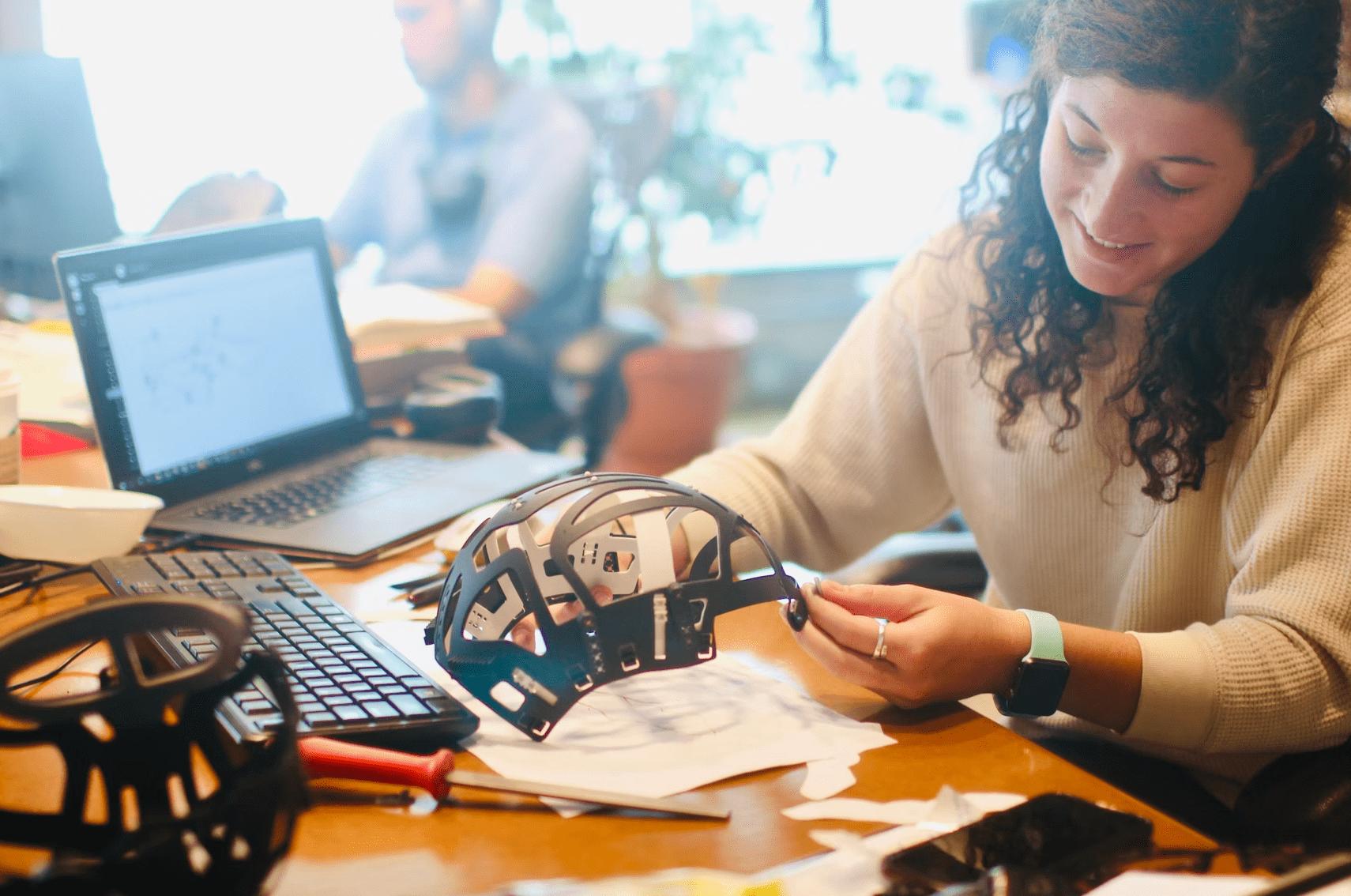

In the world of design and innovation, we’re all taught to chase perfection, to refine relentlessly, to polish until a product can stand proudly on a store shelf or a launch stage. But some of the most powerful creative breakthroughs don’t come from perfect prototypes — they come from prototypes that are beautifully wrong.
A beautifully wrong prototype is an idea that fails — but fails in a way that’s fascinating, productive, and deeply insightful. It’s not just a prototype that didn’t work; it’s one that reveals unseen assumptions, exposes hidden constraints, and sparks exploration in unexpected directions. Instead of hiding away flaws, a beautifully wrong prototype celebrates them as creative fuel.
In this long-form article, we’ll explore not only what it means for a prototype to be beautifully wrong, but why — counterintuitively — failure can become a design superpower.
The Paradox at the Heart of Prototyping
Prototyping, in the traditional sense, is about validation. It’s about building a physical or digital model of an idea, testing it, and iterating towards a solution that works. But even in the design thinking process — where prototyping is a sacred step — there’s emphasis on embracing failure and learning from it. Designers are encouraged to test as early and as often as possible, and to throw prototypes away once they’ve answered the questions they were meant to answer.
This is a mindset shift: prototypes are not just checkpoints on the way to success — they are experiments with purpose.
A beautifully wrong prototype doesn’t just fail silently behind closed doors. It teaches you something profound. It reveals an assumption you never knew you had. It questions the very problem you think you’re solving.
In other words, it turns failure into feedback.
What “Beautifully Wrong” Really Means
So what differentiates a prototype that’s “wrong” from one that’s beautifully wrong? Let’s break it down.
1. It exposes assumptions you didn’t know you were making
Every prototype is built on a set of assumptions — about how users will interact with it, what constraints exist, what the real problem is. A beautifully wrong prototype reveals these assumptions quickly and clearly. The failure isn’t just functional; it’s epistemic — it reveals what you didn’t know you didn’t know.
2. It reframes the problem
Sometimes a prototype fails not because it’s technically flawed, but because it’s solving the wrong problem. A beautifully wrong prototype can act like a mirror: it shows you that your problem definition may be off the mark, which is often the most valuable insight of all.
3. It accelerates learning
A hypothesis-driven prototype — especially a low-fidelity one — is meant to be thrown away. Rapid iteration and early feedback mean you learn fast. Beautifully wrong prototypes teach faster than those that work on the surface but hide deeper flaws.
4. It stimulates dialogue
Beautifully wrong prototypes become conversation starters. They help teams and stakeholders visualize what doesn’t work, which often leads to more creative discussions about what could work.
5. It enriches future ideas
Ideas rarely come fully formed. Prototypes that fail often become the seeds for next-generation concepts. A beautifully wrong prototype leaves a trace — an insight, a guideline, a caution — that shapes future design decisions.
In essence, a beautifully wrong prototype isn’t a mistake — it’s a tangible learning artifact.
Why Design Culture Must Embrace Beautifully Wrong Prototypes
In most organizations, failure is stigmatized. People aim to hide flaws and avoid risk. But in design — especially human-centered, experimental design — this mindset kills innovation.
Great companies understand that design is exploration. When prototypes go wrong, they don’t get buried — they get studied.
Here’s why that matters:
Redefining Failure as a Learning Engine
Traditional approaches treat failure as a setback. But beautifully wrong prototypes turn every failure into an insight. This isn’t just semantics — it’s strategy. By normalizing failure as part of the learning cycle, teams become more resilient and creative.
Reducing Time and Cost to Innovation
Waiting too long to test ideas often results in massive rework. Rapid, even ugly prototypes — ones that might be “wrong” on purpose — can prevent waste and focus efforts on the biggest unknowns early.
Creating a Culture of Curiosity
Design teams that celebrate exploratory failure tend to be more curious, more experimental, and ultimately more innovative. When failure is not a taboo, people take bold creative risks.
Encouraging Honest Feedback Loops
Teams that hide prototypes that failed lose out on learning opportunities. When beautifully wrong prototypes are shared openly, feedback becomes richer and more actionable.
The Mechanics of Beautifully Wrong Prototypes
What makes a prototype beautifully wrong isn’t luck — it’s intentional design and experimentation.
Here are some design practices that help generate beautifully wrong prototypes:
1. Start with Low-Fidelity Prototypes
Low-fi prototypes are quick, cheap, and imperfect by design. They allow you to test core hypotheses without investing too much. These could be sketches, paper mockups, or tangible cardboard models.
This approach often leads to prototypes that are “wrong” early — but wrong in meaningful ways.
2. Define What You Want to Learn
Before building a prototype, ask: What assumption am I testing? What do I need to know that I don’t already know?
A beautifully wrong prototype is one that answers this targeted question — even if the overall design fails.
3. Use Prototypes to Test Boundaries
Designers often focus on whether something works. Beautifully wrong prototypes test edges — what happens when constraints are pushed? When a prototype reveals limits, it exposes important design trade-offs.
4. Document Every Failure
The most valuable prototypes are documented. When a prototype fails, record why it failed, what assumptions were broken, and what new questions emerged.
Failures should fuel future design decisions, not disappear into a drawer.

5. Embrace Unexpected Feedback
Sometimes the most insightful feedback isn’t what you expected. A beautifully wrong prototype often elicits responses that point away from your original direction — and that’s valuable.
The Psychology of Beautifully Wrong Prototypes
Beautifully wrong prototypes are as much about mindset as mechanics. Designers must cultivate comfort with uncertainty and ambiguity.
This requires overcoming three common cognitive biases:
The Endowment Effect
People often overvalue a prototype simply because they created it. This bias can prevent honest evaluation. By embracing low-fi prototypes and quick iterations, designers avoid becoming too emotionally attached to any single idea.
Confirmation Bias
We tend to see what we expect to see. A beautifully wrong prototype forces designers to confront what is instead of what they hope it is.
Status Quo Bias
Humans prefer familiar solutions. A beautifully wrong prototype shakes this bias — often revealing that the familiar solution is not the best one.
Cultivating a mindset that welcomes beautifully wrong prototypes is not easy — but it’s essential for high-velocity innovation.
Beautifully Wrong Prototypes Beyond Product Design
The idea of beautifully wrong prototypes isn’t limited to physical products. It applies to:
UX and Interaction Design
Wireframes or flow diagrams that illustrate flawed user journeys can reveal misaligned mental models and unexpected friction points long before coding begins.
Organizational Processes
Prototyping internal workflows — even if they’re imperfect — can help uncover systemic bottlenecks and cultural assumptions that aren’t visible on day one.
Service and Experience Design
Mocking up service touchpoints — like a customer onboarding flow — can reveal gaps in empathy and expectation without pouring resources into live deployment.
Strategy Prototypes
Digital dashboards, business model canvases, or exploratory value propositions can be prototyped and stress-tested against real-world conditions. Even when wrong, these prototypes sharpen strategic clarity.
In all these domains, beautifully wrong prototypes act as learning accelerators.
Beautifully Wrong in Innovation Culture
Innovation thrives on iteration, exploration, and reflection. Beautifully wrong prototypes are part of a learning organization — where even mistakes are assets.
In the final analysis, beautifully wrong prototypes encapsulate a radical truth: that failure — when framed properly — is not just acceptable, but beautifully generative. They remind us that exploration isn’t about confirming what we already know, but discovering what we don’t.
And often, the wrongest prototypes lead to the rightest ideas.