








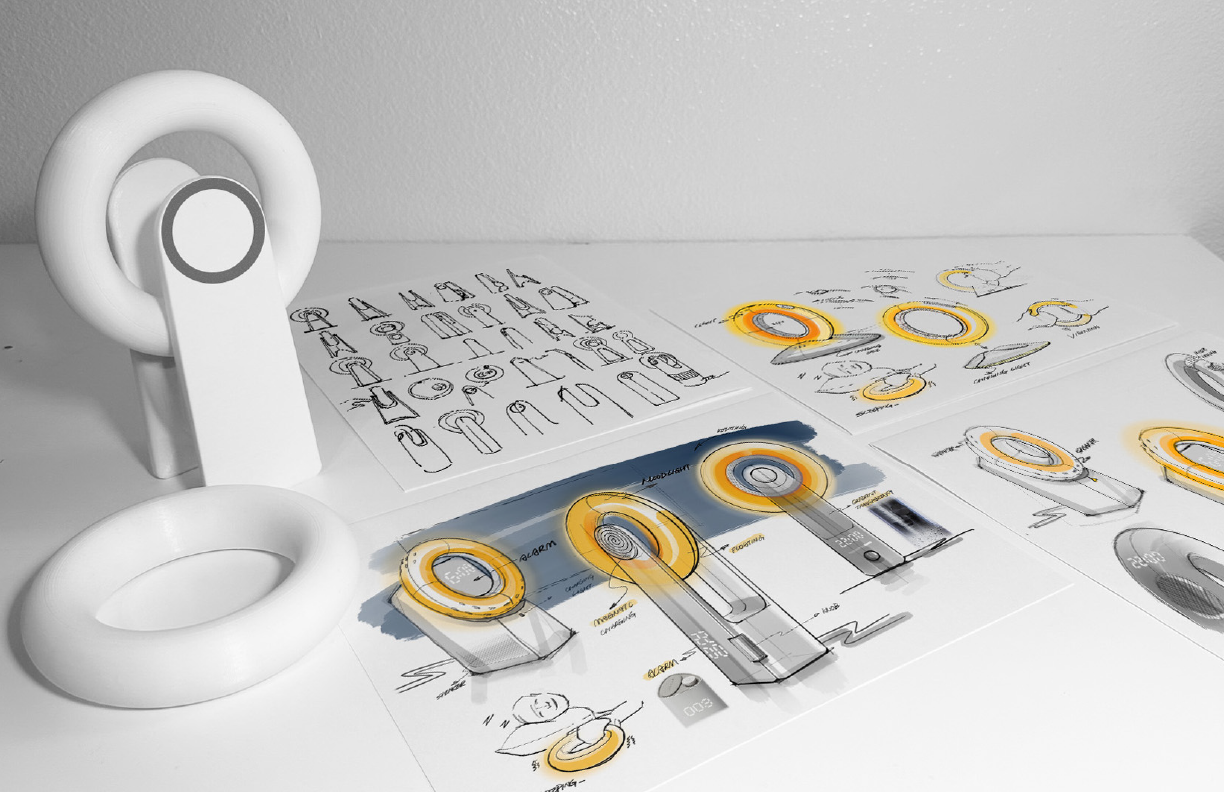

In the world of innovation, we often picture prototypes as crude models — rough sketches scrawled on napkins, foam‑core mock‑ups cobbled together in workshops, or primitive digital wireframes used for early testing. Yet increasingly, many prototypes begin to resemble works of art. These artifacts can be striking, expressive, and at times evocative of an aesthetic experience more commonly found in galleries or design exhibitions than in engineering labs. Why does this happen? What forces shape prototypes into forms that transcend pure utility? And what does it mean when a functional model starts to look like an artwork? This deep dive explores the intersection of design, aesthetics, conceptual thinking, and innovation, and explains why some prototypes wear the mantle of art — not just by accident, but by design.
The Essence of Prototyping: Beyond Form Follows Function
At its core, a prototype is an early model of a product used to test a concept or process. Designers build prototypes to simulate a design’s look, feel, and behavior so they can learn, test, iterate, and refine ideas before final production. Prototypes exist at various stages — from low‑fidelity sketches and paper interfaces to high‑fidelity interactive models that mimic real products.
The traditional view in design and engineering — particularly in the 20th century modernist tradition — was that form should follow function. This principle meant that the shape of a product should be dictated purely by its utility and performance. In pure utilitarian design, extraneous decoration was often rejected as wasteful or distracting, and beauty was considered secondary to purpose.
However, as design practice evolved, so did the role of aesthetics. Designers, engineers, artists, and creators began to see aesthetic experience as an integral dimension of prototype exploration — not something added after the fact, but something that could expand insights about user perception, emotional resonance, and experiential qualities.
Thus, some prototypes come to embody both form and meaning, straddling the boundary between technical exploration and expressive form.
Prototypes As Creative Experiments
Prototyping is inherently experimental. It invites designers to materialize uncertainty, to make abstract ideas tangible, and to explore possibilities that have not yet been fully defined. In this way, the prototyping process itself can be creative — even artistic.
Consider the following ways in which creative exploration shapes prototypes toward art:
1. Prototypes as Sculptural Explorations
When a prototype is used to explore form beyond basic function, it begins to resemble sculptural practice. Designers working with physical materials — clay, metal, wood, resin, or advanced materials like 3D‑printed polymers — often experiment with shape, proportion, surface, and spatial relationships in ways that mirror fine art.
A prototypical body of work can resemble an abstract sculpture if it prioritizes expressive form over engineered precision, even as it retains essential design logic. In these cases, material experiments may be as important to the learning process as functional testing.
2. Conceptual Prototypes That Challenge Perception
Some prototypes are less about testing the final product than challenging how we *think» about problems. These conceptual prototypes may explore future scenarios, social experiences, or speculative worlds. In doing so, they resemble conceptual art, which emphasizes ideas over traditional aesthetics.
Conceptual prototypes might not ever become marketable products. They might never be manufactured at scale. Rather, they provoke thinking and invite viewers — designers, stakeholders, communities — to reflect on larger questions about technology, culture, society, or human experience. This emphasis on meaning and interpretation is a hallmark of artistic practice.
3. Emotional Engagement and Storytelling
Products and prototypes that evoke emotion, narrative, or metaphor cross into territory traditionally associated with art. When a prototype is designed to communicate a story, mood, or emotional impact, it performs an aesthetic function — stimulating imagination and sentiment rather than merely solving a technical problem.
This kind of emotional design often employs visual elements, texture, rhythm, contrast, and expressive cues that are not strictly necessary for functionality, yet deeply influential in how prototypes are perceived.

The Aesthetic Dimension of Prototypes
When a prototype looks like art, it signals that the aesthetic dimension of the design is playing a prominent role. But what exactly constitutes aesthetic experience in this context?
Aesthetic experience is not just “pretty” or surface appeal. It encompasses an interplay of perception, emotion, interpretation, and meaning. An object that looks “artistic” often invites reflection: it has presence, depth, contrast, rhythm, or surprise. These qualities are as relevant in industrial design as they are in visual arts.
Prototypes as Process, Not Just Product
Design thinkers have long argued that prototyping is as much about process as product. As Tim Brown (IDEO) famously framed it, prototypes help us learn, adapt, and iterate. They allow us to explore what works and what doesn’t — not just in terms of function, but in terms of experience.
When designers treat prototyping as a generative process — a way to discover rather than only validate — they embrace experimentation, creative play, and expressive gestures that can result in visually compelling and conceptually rich artifacts.
Cognition, Perception, and Prototypical Meaning
The field of cognitive psychology offers insight into how prototypes are perceived visually and conceptually. In visual recognition research, prototypes are understood as central representations or typical examples that help us categorize complex information.
In design, a prototype that resonates with our perceptual expectations can evoke powerful recognition — even emotional responses. The more a prototype resembles a familiar pattern or conveys a symbolic encoded meaning, the more it can feel aesthetic or artistic.
Cultural Forces and the Art of Prototyping
Over the past few decades, several cultural shifts have enhanced the convergence between prototypes and art:
1. Design Thinking and Human‑Centered Design
Design thinking frameworks emphasize empathy, iteration, and visualization. These approaches encourage designers to externalize ideas into prototypes early and often. As a result, visual exploration plays a larger role in shaping prototypes, including their expressive qualities and experiential narratives.
2. Maker Culture and Digital Fabrication
Technologies such as 3D printing, CNC milling, laser cutting, and rapid prototyping tools have democratized production. Small teams and individuals can create physically compelling prototypes that were once the domain of large manufacturing houses. This experimentation — often visible and exploratory — brings prototypes visually closer to art. Designers can manipulate form freely, creating surfaces, textures, and shapes that resemble sculptural works.

3. Interactive and Experiential Interfaces
Many prototypes today involve interactive technology — sensors, screens, AI, immersive experiences — that engage users beyond the static visual realm. This experiential quality makes prototypes more akin to installations or interactive art pieces, where participation and perception become part of the aesthetic engagement.
Case Studies: When Prototypes Resonate as Art
To understand this phenomenon more concretely, consider a few illustrative examples (referenced at a high level so as to frame why prototypes look artistic rather than where to find them):
Concept Cars and Visionary Vehicles
Automotive studios frequently produce visionary concept cars that are first and foremost artistic expressions of future mobility. These prototypes are often exhibited in galleries, auto shows, and design museums, valued for their visual language and futuristic posture even if they never enter production.
Design Installations and Speculative Futures
Design schools and labs often create prototypes that imagine speculative futures — sustainable cities, reimagined habitats, new forms of human‑machine interaction. These prototypes are not intended for mass production but exist as discourse: objects that provoke reflection and broaden the design conversation.
Fashion Tech and Wearable Prototypes
In the intersection of fashion, technology, and design, prototypes of wearable tech often look like art pieces — expressive, sculptural, and experiential. These artifacts push boundaries around identity, body, technology, and perception.
The Interaction Between Function and Aesthetics
One of the core reasons some prototypes look like art is because function and aesthetics are deeply interwoven. A prototype does not exist purely for its functionality — it also communicates intent, strategy, meaning, and narrative. When designers need to communicate an idea to stakeholders, communities, or users, visual richness and expressive clarity become crucial.
Aesthetics as Insightful Feedback
In user experience (UX) design, even early prototypes — sketches, wireframes, or high‑fidelity mockups — can evoke emotional responses that guide better decisions. People form impressions based not only on how a prototype works but also on how it feels and looks. Aesthetics — color, form, gesture, rhythm, space — influence perception and encourage deeper engagement.
Thus, a prototype that earns an aesthetic resemblance to art is often one that successfully captures subtle experiential qualities that pure technical models fail to convey.
When Prototypes Become Art
The boundary between prototype and artwork becomes blurry when the prototype transcends its immediate utility and embodies broader expressive, conceptual, or emotional intent.
Artists have long used prototyping concepts in their practice. Marcel Duchamp’s readymades — objects presented as art by context and conceptual framing — challenge traditional definitions of art itself. The act of recontextualizing a utilitarian object into an artistic sphere parallels how design prototypes can transcend their functional origins to communicate ideas and provoke meaning.
In design culture, too, prototypes are exhibited alongside artworks in museums and galleries when they signal new ways of thinking about technology, culture, and human perception. In these contexts, prototypes don’t just show function — they express intent, possibility, and critique.
Conclusion: The Aesthetic Expansion of Prototyping
So, why do some prototypes look like art? The answer is multifaceted, rooted in cognitive perception, cultural evolution, and the expanding role of design as both a problem‑solving and expressive discipline.
Prototypes resemble art when:
- they explore form and meaning beyond narrow technical utility;
- they challenge assumptions, provoke thought, and communicate ideas;
- they engage with emotional, conceptual, or experiential dimensions;
- they are shaped within cultural systems that value visual experimentation and narrative;
- they sit at intersections where engineering, storytelling, future thinking, and aesthetics converge.
In a world where innovation demands engagement as much as function, prototypes that look like art are not anomalies — they are harbingers of a design culture that values idea, expression, and experience as much as function and usability.