







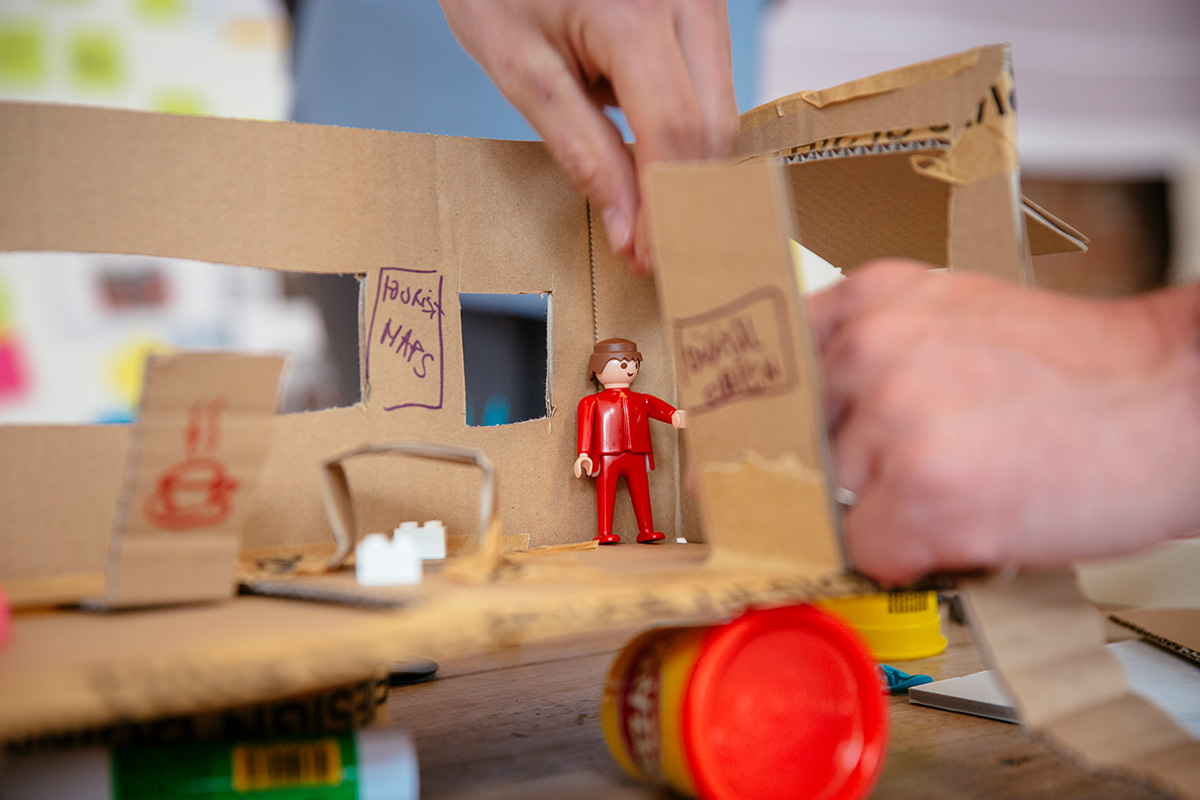

In the vast landscape of design and innovation, some ideas never make it off the drawing board—literally. They remain as sketches, paper mockups, or cardboard artifacts. At first glance, this seems odd: if a concept is promising, why doesn’t it evolve into polished CAD files, functional 3D prints, or fully engineered pre‑production models? The truth is, cardboard isn’t failure. It’s a design strategy—and in many cases, the best possible one at that moment.
This article explores the nuanced reasons why some prototypes live only on cardboard. We’ll dig into the philosophical, practical, psychological, and business realities behind fleeting prototypes, and show that cardboard isn’t just cheap material—it’s a powerful tool in the designer’s toolkit.
What Is a Prototype, Really?
Before we unpack cardboard prototypes, let’s define what a prototype is.
In design and engineering, a prototype is an early sample, model, or release of a product built to test a concept or process. Its purpose is to evaluate a design to enhance precision and reveal issues before full development begins. A prototype isn’t meant to be a finished product; it’s a learning tool.
Prototypes range across a spectrum:
- Low‑fidelity: sketches, paper models, cardboard assemblies
- Mid‑fidelity: foam, clay, or simple 3D prints
- High‑fidelity: functional hardware or software builds that resemble final form
- Physical vs. digital prototypes, each with their advantages and limitations
Cardboard prototypes generally fall on the low‑fidelity end—intentionally so.
Why Cardboard? The Power of Low‑Fidelity Prototyping
Cardboard and paper prototypes are often used in early design stages because they’re:
Fast
Drawing or cutting cardboard takes minutes, not days.
Cheap
Materials are ubiquitous and inexpensive. No CNC machines or 3D printers required.
Accessible
Anyone on the team can contribute—engineers, marketers, interns, and even clients.
Flexible
Quick to change and iterate. You can tape, unfold, cut, and reconfigure ideas in seconds.
Communicative
Physical form—even crude—helps stakeholders visualize spatial relationships that words can’t convey.
These traits make cardboard prototypes ideal for the exploration phase, where the goal isn’t polish, it’s understanding.
The Purpose of Prototypes Isn’t to Last
Here’s a foundational truth of prototyping: the value is in the questions they answer, not the artifact itself.
A prototype is a tool for reducing uncertainty. Before investing in manufacturing, tooling, or software development, designers want to validate core assumptions. Did we solve the right problem? Is this intuitive? Is the scale right?
Once those questions are answered, that cardboard model has served its purpose. It’s not meant to become a product.
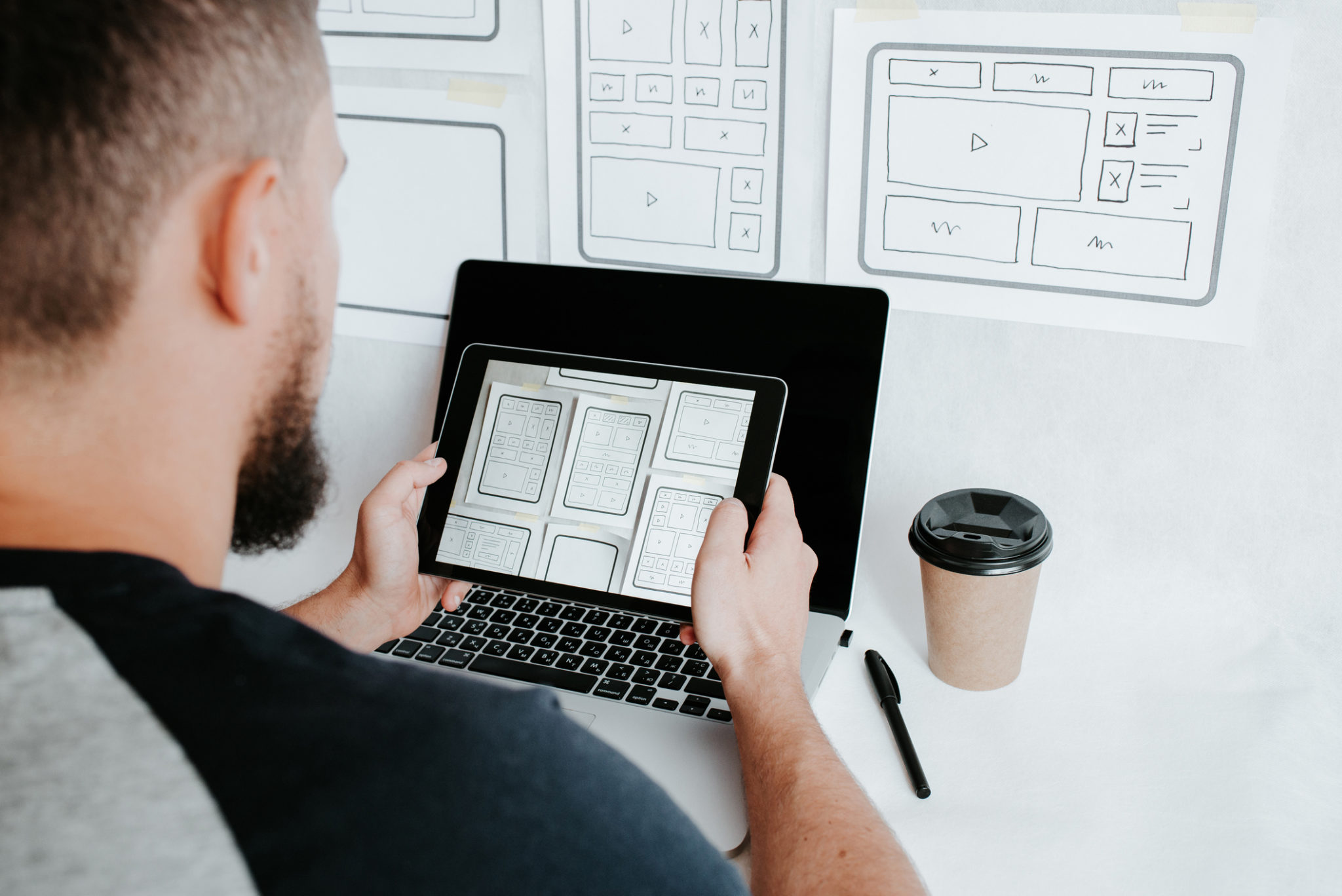
In many design schools and offices, teams will literally throw away paper prototypes after testing. They take photos for records and insight, but the physical object is deliberately ephemeral.
Cognitive Benefits: Knowing Through Making
Cardboard prototypes help designers think with their hands, not just their minds.
This is a cognitive benefit that digital tools can’t fully reproduce: when you physically manipulate materials, you engage spatial reasoning in ways that drawing on a screen doesn’t. Among design professionals, this is a known phenomenon: low‑fidelity materials help teams externalize ideas and spot issues early.
This isn’t about cute mockups. It’s about cognition—making the abstract concrete.
Saving Time and Resources
On paper, it might seem foolish to stop at cardboard. But moving too early into high‑fidelity prototypes can be costly and slow.
Consider these common realities:
- Uncertain features: If you don’t yet understand what needs to be built, why spend hours on detailed CAD models?
- Team bandwidth: Small teams often can’t afford to commit resources to polished prototypes.
- Early pivots: Many ideas pivot or change. Investing in a refined prototype before the concept stabilizes can waste time, money, and morale.
In this context, cardboard isn’t cheap—it’s efficient.
Organizational and Business Pressures
Sometimes prototypes stay on cardboard for reasons outside of design logic.
Risk Aversion
Organizations without a culture of experimentation may cling to proof‑of‑concept artifacts rather than committing to development.
Resource Constraints
Startups and nonprofits often can’t fund a full engineering prototype until they have validated demand and secured funding.
Politics and Priorities
Stakeholder misalignment can stall development. A prototype might satisfy one group while another wants different requirements.
These business realities mean that some prototypes don’t progress—not due to lack of merit, but due to environment.
Technical Barriers to Progress
A prototype can remain on cardboard because the leap to the next fidelity is technically difficult.
For instance:
- Materials behave differently than cardboard; what seems plausible at a low fidelity may not scale.
- Mechanical engineering problems (like tolerances and fit) aren’t visible until more accurate methods are used.
- Digital and physical development paths diverge—moving from physical cardboard to firmware, sensors, or logic can reveal incompatibilities.

In fact, many rapid prototypes don’t match the final production part due to process mismatches between the prototype method and manufacturing method.
Thus, some prototypes stay at cardboard because the next leap would be too risky with unknowns still unresolved.
The Psychological Comfort of Cardboard
Interestingly, many designers prefer low‑fidelity prototyping because it lowers emotional investment.
When a prototype is crude, people are more willing to critique it. When something looks polished, stakeholders can mistakenly assume it’s near finished, leading to unhelpful feedback or unrealistic expectations.
This phenomenon is so prevalent that design teams use intentionally “ugly” prototypes to foster honest critique.
How Cardboard Prototypes Fit Into Design Thinking
In design thinking frameworks, prototyping is a discrete stage—not the final stage. It is about testing ideas, not manifesting products.
Teams iterate through prototyping and testing loops:
- Define
- Ideate
- Prototype
- Test
- Iterate or select for development
Cardboard often sits naturally early in these cycles. As insights accumulate, teams may progress to higher fidelity—but only when needed.
When Cardboard Prototypes Do Move Forward
Not all cardboard prototypes die on the table.
Sometimes they evolve into:
- Digital user interface mockups
- 3D printed concepts
- Foam or clay models
- Functional engineering builds
But this progress typically only happens after key uncertainties are resolved. In other words, they graduate when there’s clarity and alignment.
If a prototype stays on cardboard, it often means it has answered what it needed to answer—and is now retired.
Cardboard as a Communication Medium
Cardboard prototypes aren’t just about internal design processes—they’re excellent tools for external communication.
Pitching a concept to potential users or investors often benefits from physical representation. A rough model communicates intent without overpromising.
This can help secure funding or buy‑in without misleading stakeholders about readiness.
In many innovation workshops, cardboard prototypes are the deliverable—not because they’re final, but because they crystallize critical thinking.
When a Prototype Should Stay on Cardboard
Here are clear, professional reasons a prototype may never leave its cardboard shell:
- It answered its core design questions.
- Moving to the next fidelity would be a waste of resources.
- The idea was invalidated or pivoted away from.
- Organizational constraints prevent further development.
- Technical unknowns remain too large.
In all these cases, the prototype did its job: it reduced risk. Cardboard may look simplistic, but its role is sophisticated.
What Designers Learn From Cardboard Prototypes
The lessons cardboard prototypes give designers are disproportionate to their simplicity:
- How people interact with an idea in real time
- What assumptions were wrong or incomplete
- What features truly matter
- Communication gaps within teams
- Misalignment between user needs and design intent
These insights drive better products—even if the cardboard model never becomes a metal mold.
Conclusion: Cardboard Is Not a Graveyard
The fact that some prototypes live only on cardboard isn’t a sign of failure—it’s a feature of effective design.
Cardboard prototypes are:
- Fast
- Cheap
- Flexible
- Insight‑rich
- Low risk
They help teams explore, test, communicate, and validate before committing resources to expensive development.
In the world of product design, not every idea deserves the next step. A prototype that answers its questions and then retires is not wasted effort—it’s good design practice.