







Imagine a wildly imaginative skyscraper that twists like a ribbon of steel and glass, drawn with meticulous lines and daring curves. On paper it looks perfect — majestic, streamlined, revolutionary. But when architects, engineers, and builders start turning that drawing into reality, the sculpture of dreams becomes a headache of physics, cost, and practicality. Why does this happen? Why do some concepts look undeniably better on paper than in the real world?
The short answer is that paper frees ideas from constraints — physical, economic, and cognitive. Drawing a concept removes friction. On paper, impossible curvatures, limitless materials, and flawless symmetry come alive without penalties. But once you leave the two‑dimensional realm, the laws of physics, budget constraints, human perception, manufacturing limits, and real‑world usability all force that idea to adapt, simplify, or sometimes collapse.
In this article, we’ll explore the why behind this discrepancy, weaving in insights from design psychology, cognitive science, engineering, and real‑world product development. By the end, you’ll see not only why some concepts look better on paper, but also how designers deliberately leverage that gap to create better products and experiences.
The Allure of the Abstract
At its core, a concept on paper is an abstraction — a distilled vision that captures essences without the messiness of reality. Abstract representations excel for one key reason:
1. Abstraction removes constraints.
In a drawing or conceptual sketch, you can ignore gravity, material limits, cost, and safety regulations. A line on a page doesn’t weigh anything, doesn’t require support beams, and has no deadlines.
Abstraction’s power stems from how the human mind processes simplified depictions. Psychological research shows that brains find simpler visual representations easier to process and more pleasing. This is known as processing fluency — the ease with which information is understood cognitively. When a design is easy to mentally process, our brains judge it as more attractive and desirable. This leads to positive affect and more favorable first impressions.
So on paper, we’re seeing the ideal of the idea rather than its implementation challenges.
Creativity Without Consequences
A concept sketch lets creativity run wild because it’s untethered from consequences. In the early stages of ideation, designers deliberately create ideas without worrying whether they are viable. This freedom is essential:
- You generate possibilities uninhibited by limitations.
- Rapid iteration fuels divergent thinking, where quantity and novelty matter.
- You explore directions you might otherwise dismiss.
Design thinking frameworks explicitly encourage this. Tools like “Dreamer, Realist, Critic” and six‑hat thinking help teams separate ideation (creative generation) from evaluation (practical feasibility). In the creative phase, designers embrace ideas that look beautiful on paper because novelty is prioritized over feasibility.
The result? Concepts that are visually striking, imaginatively rich, and emotionally engaging can dominate early narratives — even if they’re hard to build.
The Invisible Architecture of Perception
Even beyond constraints, our minds are wired to value beauty and simplicity, sometimes over function. A well‑composed sketch or visual concept feels elegant because it appeals to basic psychological tendencies.
Two key cognitive phenomena influence this effect:
1. Aesthetic–usability effect.
According to research, people often judge aesthetically pleasing designs as easier to use and more intuitive, even if that’s not the case in reality. Our brains favor beauty and then retrospectively assign competence and clarity to that idea.
2. Visual hierarchy.
Humans instinctively group visual elements into a perceived hierarchy — things that stand out more (through contrast or placement) feel more important and meaningful. Designers can exploit this to make concepts on paper look more “coherent” or powerful than they truly are in structural reality.
Both effects mean that a sketch or concept has psychological advantages that reality rarely fulfills.
![7-Step Perspective Drawing [Architecture Design Concept Development] — Sketch Like an Architect](https://images.squarespace-cdn.com/content/v1/67421ad46ee94460b0b67d2c/1732388822083-EVQTF4NEBQZD38E7UKVH/2-point-Perspective-Drawing.jpg)
From Two Dimensions to Reality: Where Things Break
Paper has no weight, no volume, no physical resistance. Reality, however, is stubbornly three‑dimensional and governed by physics. The transition from paper to reality forces several key challenges:
1. Material Limitations
On paper, infinite materials are possible — glowing metals, weightless stone, and crystal‑clear composites. But in reality, materials have finite properties. Weight, tensile strength, cost,-to-manufacture, and environmental impact all impose strict limits. In many cases, beautiful concepts become simplified or altered just to use off‑the‑shelf materials that are affordable and safe.
2. Manufacturing Constraints
A concept that looks elegant might require complex manufacturing techniques that don’t exist or are prohibitively expensive. Curved surfaces, organic shapes, and fine details often push the limits of fabrication tools. The result? Concepts get pared down, sanitized, or translated into simpler geometric forms during production. This is why many concept cars look unlike the final production vehicles.
3. Scalability and Human Factors
An object can look great when reduced to a small sketch, but when scaled into human size, proportions can feel awkward. People have ergonomic needs and expectations that sketches don’t account for — how a chair feels, how a button clicks, how a screen layout guides attention.
Such human factors require iterative refinements that often strip away visual flair for usability.
4. Budget and Time
No matter how brilliant a concept is on paper, projects live within budgets and deadlines. Cost pressures force tough decisions: better materials or additional features often get cut. These constraints are absent in the conceptual phase because the primary goal there is expression, not execution.
Why Concepts Look Better: A Psychological Lens
From cognitive psychology to aesthetic theory, several mechanisms explain our preference for paper concepts:
Processing Fluency and Aesthetics
As mentioned earlier, the brain likes patterns that are easy to decode. Clean lines, symmetry, and well‑organized layouts feel simpler to process — and that ease feels pleasurable. Thus even impractical designs can feel better on paper simply because they’re easier for the brain to digest.
Idealization and Selective Attention
When we look at a concept on paper, we focus on the idea, not the flaws. We don’t see how the roof might leak, how the joints might fail, or how the car might cost too much. Paper abstracts away risk and focuses attention on beauty.
This is similar to how artists idealize figures in a sketch — imperfection fades behind beauty and intention.
Creative Bias and Confirmation
When designers share concepts, they often highlight the best angles and features. We are drawn to intentional storytelling embedded in the concept: lines that hint at speed, shapes that evoke freedom, colors that signal mood. In psychological terms, this is akin to framing effects, where the presentation influences our judgment far more than the underlying reality.
A Case Study: Visionary Architecture
One dramatic example of better‑on‑paper concepts comes from visionary architecture — designs that exist only as drawings or models and are rarely built. These plans often feature sweeping forms, gravity‑defying geometries, and poetic simplicity. They captivate because they represent possibilities, not deliverables.
This is not just fantasy. Even mainstream architectures start with dreamlike sketches. But as technical work begins — structural engineering, wind load analysis, safety compliance — the design evolves.
The conceptual stage is a dialogue between possibility and constraint. That conversation reveals why paper ideas seem better: they represent pure possibility before reality imposes its logic.
Paper as a Prototyping Tool
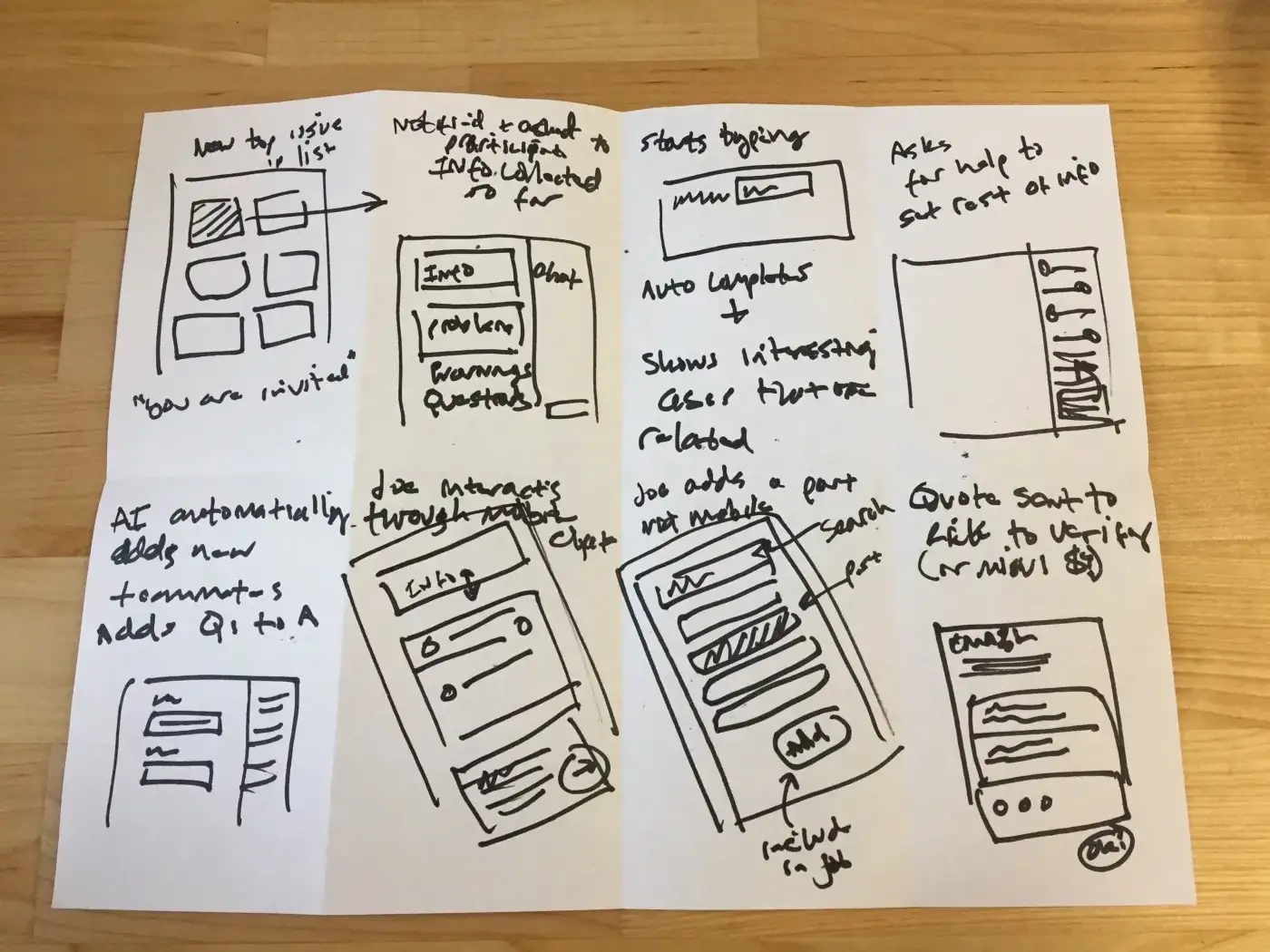
In fields like UX and software design, paper isn’t just an aesthetic tool — it’s a communication device. Paper prototypes are used precisely because they are rough, cheap, and easy to revise. They allow teams and stakeholders to experience an idea without investing in code or hardware.
Paper prototyping demonstrates two key points:
- Early visual representations clarify thinking.
- Concepts evolve — and often improve — with iteration and testing.
So in design, the fact that paper ideas look “better” is not a flaw — it’s a feature of ideation that accelerates refinement.
Bridging the Gap: From Concept to Reality
Great designers don’t just revel in the beauty of paper concepts; they translate them. They recognize early that:
- Paper concepts are starting points, not finished products.
- Visual excellence on paper must ultimately serve human needs and practical outcomes.
- The creative process requires iteration between abstract ideas and concrete constraints.
To bridge the gap effectively:
1. Rapid Prototyping
Quick physical prototypes help validate whether a concept holds up beyond the flat page. They reveal structural weaknesses and usability issues early.
2. Iterative Feedback Loops
Just as designers sketch many versions of an idea, they also test and refine real‑world prototypes to ensure fidelity to the original vision.
3. Cross‑disciplinary Communication
Engineers, material scientists, and fabricators need to participate early so that the concept remains achievable without losing its soul.
By balancing vision with reality, teams ensure concepts don’t just look better — they work better.
Why This Matters in the Real World
When you understand why concepts look better on paper, you see that it’s not a failure — it’s an opportunity. Successful innovators use the strength of paper concepts to inspire, rally stakeholders, and explore possibilities. But they also know that execution demands continuous adaptation.
Here’s what this means for various domains:
Product Design
A sleek sketch must eventually become a manufacturable object. Designers use paper early to define direction, then iterate toward real prototypes that account for human interaction, cost, and scalability.
Architecture and Urban Planning
Paper concepts communicate space and experience. They rally communities around possibilities, but must later accommodate infrastructure, safety, and environmental sustainability.
Software and UX
Wireframes are the paper of digital design — communicating flow and structure. But developers and UX researchers must refine them through testing and metrics.
Across disciplines, the dance between the ideal and the real is what produces meaningful outcomes. Paper captures what could be; reality shapes what will be.
Conclusion
So, why do some concepts look better on paper?
Because paper gives ideas freedom: freedom from physics, budget, materials, regulation, and practicality. Our brains enjoy simplified, elegant visuals — they reward fluency with aesthetic pleasure. And paper lets creativity flourish without constraint.
But the true art lies not in the paper concept itself — impressive as it may be — but in the journey from that paper to something real, usable, and lasting.
The next time you admire a stunning concept sketch, remember: you’re seeing a vision, not a blueprint. And great design is the bridge between what is imagined and what is possible.