










In an age where technology seems to outpace our imagination, the question “Can a prototype predict the future?” sounds like it belongs in science fiction. Yet, when we peel back layers of design theory, forecasting methodologies, and cutting‑edge artificial intelligence, we find that this provocative question sits at the crossroads of innovation, prediction science, and human creativity. This article explores the idea with precision, bringing in expert insights, scientific context, and practical frameworks that help us understand what prototypes can — and cannot — do when it comes to anticipating the future.
At its core, the idea of a prototype is deceptively simple: it is an early model of a product or system built to test ideas, assumptions, or usability before full scale production. But prototypes — whether physical, digital, or conceptual — carry implications far beyond testing hardware: they are tools that help shape our understanding of possibilities, risks, and opportunities. Viewed through this broader lens, prototypes become mechanisms for foresight rather than literal soothsaying.
In this article, we’ll unpack the underlying principles that make prototypes valuable predictors in certain contexts, place limits on their predictive powers grounded in science and logic, and arrive at a nuanced conclusion about what “prediction” really means in innovation.
1. The Essence of Prediction: What It Actually Means
Before asking whether a prototype can predict the future, we need to define what “prediction” means in this context.
At its simplest, a prediction is any statement about what might happen next based on available information. In science and engineering, prediction is grounded in models: rigorous frameworks that use data and assumptions to produce forecasts about outcomes. Forecasting is ubiquitous — from weather models predicting tomorrow’s temperature to economic models anticipating market shifts. But all predictions, even the best ones, are probabilistic; they express likelihoods, not certainties.
For prototypes, prediction often takes the form of:
- Trend projection: using early data to estimate the direction of growth or change.
- Scenario testing: using a prototype as a stand‑in for a future system to explore how it behaves under various conditions.
- Design validation: using prototypes to validate assumptions that influence future development strategies.
These kinds of prediction differ from “seeing the future” — they are analytical rather than prophetic. In other words, prototypes can help forecast possibilities and guide decision‑making, but they do not literally see the future in a mystical or omniscient sense.
2. Prototypes as Future Artifacts of Today
One influential idea borrowed from design theory is that prototypes are not just tests — they are material embodiments of potential futures. This concept comes out of design fiction and speculative design practices, where designers create artifacts that represent possible worlds and invite audiences to imagine what could be. These prototypes aren’t predictions per se; they are narratives about alternative futures meant to provoke reflection and insight, not crystal‑ball truths.
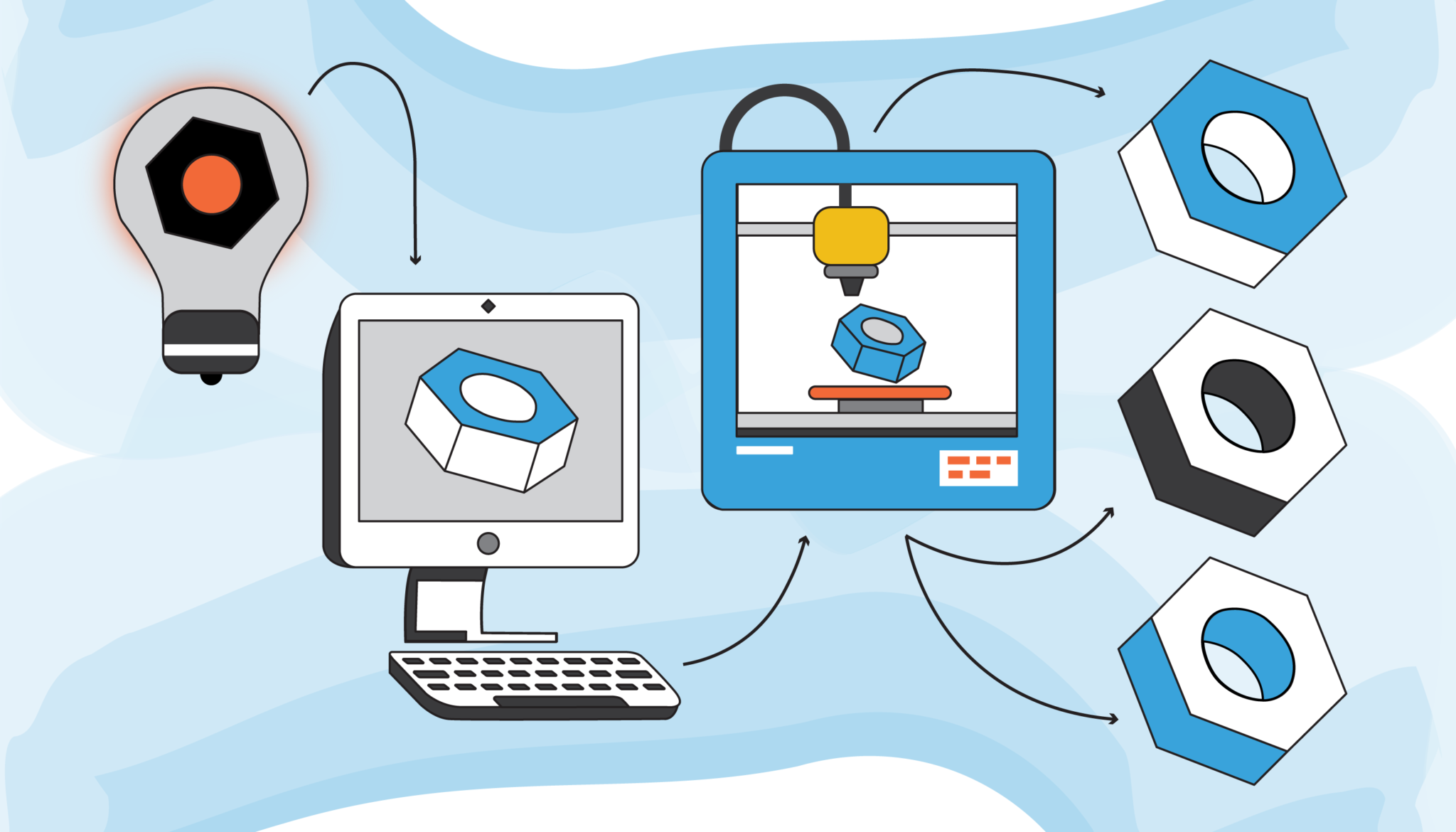
In this framing:
- A prototype reveals choices embedded in design.
- It highlights assumptions about how users behave or how systems interact.
- It gestures toward future possibilities, showing how current trajectories might play out.
For example, when automotive manufacturers produce digital twin prototypes of self‑driving vehicles to test safety systems, they’re not predicting exactly when autonomous cars will dominate the roads — they are exploring conditions under which that future might occur.
By inviting stakeholders to engage with speculation in tangible form, prototypes act as epistemic objects — objects that provoke learning, questioning, and refinement of what’s possible. They bring the future closer to the present in a way that supports strategic thinking and iterative improvement.
3. The Limitations of Prediction: Chaos, Complexity, and Uncertainty
Despite their power as tools for exploration and learning, prototypes cannot guarantee future outcomes. This limitation stems from fundamental principles of complexity and prediction:
3.1 The Chaos Problem
In complex systems — weather, ecosystems, financial markets — tiny differences in initial conditions can lead to wildly divergent outcomes. This phenomenon, known as chaos theory, explains why even the most advanced computational models cannot perfectly predict weather beyond a short horizon. A prototype cannot overcome this fundamental uncertainty inherent to many real‑world systems because it only represents a model of a slice of reality.
3.2 The Limits of Data
Prediction models rely on data. When data is limited, noisy, or biased, predictive accuracy suffers. A prototype might produce data about how a design performs today, but it cannot know future variables that do not yet exist — changing customer preferences, regulatory shifts, or disruptive breakthroughs. Models powered by AI might make probabilistic forecasts based on historical trends, but they cannot foresee truly novel events that have no precedent.
This is evident in forecasting research: advanced models combining machine learning with classical forecasting techniques can improve accuracy, but they still operate within the constraints of data and assumptions.
3.3 Cognitive Biases
Human beings are wired to see patterns, sometimes even when none exist. Cognitive biases like the planning fallacy — the tendency to underestimate time and resources required for future tasks — demonstrate that our own predictions are fallible, with or without prototypes.
Thus, any prediction — whether from a prototype or a model — must be treated as a probabilistic hypothesis, not a certain outcome.
4. AI, Prototypes, and the Future of Forecasting
With the rise of powerful artificial intelligence, the landscape of prediction has changed dramatically. Modern AI systems can process massive datasets, recognize patterns invisible to humans, and produce forecasts that rival expert human judgment in many domains. Recent research shows that combining multiple AI forecasts can match or even exceed human forecasters in tasks like economic or political prediction.
But even here, the role of prototypes is indirect:
- AI models may use synthetic prototypes of data, such as simulated future scenarios, to train forecasting algorithms.
- Prototype environments like digital twins are used to test AI predictions in controlled ways.
- Prototypical data structures serve as inputs to machine learning systems that generate probabilistic forecasts.

AI does not magically know the future; it extrapolates based on patterns in historical and real‑time data. It may predict trends with impressive accuracy, but it cannot account for every variable or unforeseen disruption.
Still, by combining AI forecasting with prototypes — whether physical or digital — organizations can generate richer insights that improve planning, reduce risk, and guide innovation strategy.
5. Practical Roles Prototypes Play in Predictive Practice
Rather than focusing on whether prototypes can “predict the future” in a mystical sense, it’s more useful to consider how prototypes support predictive activities in innovation ecosystems.
Here are some concrete roles that prototypes play:
5.1 Stress Testing Assumptions
Prototypes offer a means to test core assumptions about user behavior, system interactions, or environmental constraints. By making assumptions explicit, prototypes reveal where our understanding is strong — and where it is weak.
5.2 Scenario Exploration
Prototypes let teams experiment with multiple futures by altering parameters and observing outcomes. This helps planners think in scenarios rather than linear extrapolations.
5.3 Risk Reduction
By validating ideas early, prototypes reduce the risk of investing heavily in paths that are unlikely to succeed. This indirectly predicts which paths are more viable by eliminating less promising ones.
5.4 Vision Communication
Prototypes help align stakeholders around a shared future vision. They transform abstract ideas into something tangible that teams can discuss, critique, and refine.
Each of these roles enhances decision‑making in ways that are predictive in nature: they reduce uncertainty, illuminate possibilities, and guide choices based on evidence and exploration.
6. Theoretical Perspectives: From Forecasting to Foresight
In academic research, prediction is distinguished from foresight — a broader, strategic approach that blends forecasting with planning, creativity, and scenario analysis. Where forecasting focuses on specific outcomes based on trends, foresight encompasses multiple possible futures and is inherently about planning under uncertainty.
Foresight methodologies — such as backcasting — start with a desired future and work backwards to identify steps necessary to reach it, rather than predicting future outcomes from current trajectories.
Prototypes are much more naturally aligned with foresight than with strict prediction. They help learn, imagine, and iterate toward preferred futures, rather than tell us definitively what will happen. This shift from forecasting to foresight is one of the most powerful contributions prototypes make to future‑oriented thinking.
7. Ethical Considerations
As prototypes become more central to strategic planning and as AI models provide increasingly sophisticated forecasts, ethical questions emerge:
- Who gets to decide which future is desirable?
- What happens when prototypes lead organizations to ignore alternative futures?
- Can predictive prototypes reinforce existing power imbalances?
Ethical foresight requires transparency about assumptions, inclusiveness in envisioning futures, and humility about the limits of prediction.
Conclusion: Can a Prototype Predict the Future?
The straightforward answer is:
A prototype cannot predict the future in the sense of foretelling exact events or outcomes.
However, it can help shape our understanding of possibilities, test assumptions, and inform decisions that influence future outcomes.
Prototypes act as tools for exploration, learning, and scenario analysis. They bridge the known and the uncertain, helping innovators navigate complexity and make better choices. Combined with data‑driven forecasting and strategic foresight methodologies, prototypes become indispensable aids in future‑oriented thinking — not as crystal balls, but as instruments of intelligent anticipation.
In essence, the predictive power of prototypes lies not in mystical clairvoyance, but in their ability to make futures tangible, testable, and actionable.