








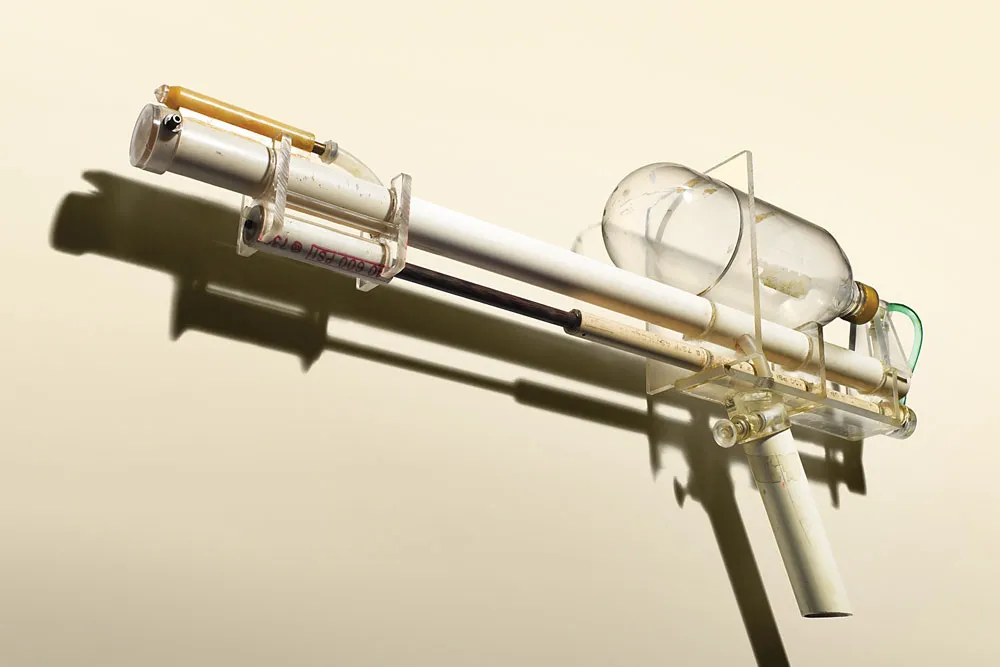

In the vast, roaring chronicle of human innovation, some inventions thunder into public consciousness, garner accolades, and become household names. The light bulb, the wheel, the printing press—each represents a seismic shift in how we live, work, and understand the world. Yet beneath the surface of these celebrated breakthroughs lies a quieter, subtler layer of innovation: prototypes that didn’t grab headlines but fundamentally reshaped the future. These silent architects of progress form the hidden scaffolding of modern civilization. They didn’t always win awards. They didn’t always see mass production. But their influence rippled outward, often altering entire industries and technologies in ways most people never fully appreciate.
This article explores those silent prototypes—the hidden seeds of transformation.
The Essence of Prototypes: Why the Unheralded Matter
At its core, a prototype is a preliminary model created to test an idea, refine function, and expose the logic (or flaws) before committing to full-scale production. In engineering, design, software, and even conceptual art, prototypes serve as the bridge between imagination and reality. They are the raw experiments that reveal whether a novel idea will work in the real world. In many cases, the prototype and its subsequent iterations shape the final product far more than the polished version does.
Despite this, prototypes often remain obscured—hidden under covers of patent filings, academic papers, or internal company archives. Yet the influence they carry is profound.
One historian of digital prototyping explains that even interactive software prototypes capture crucial aspects of user interaction that static documentation can’t, dramatically influencing design direction early in development.
Anatomy of a World‑Changing Prototype
To understand how a prototype can shape the world without fanfare, we must examine several foundational cases. These are examples where prototyping was not merely a step toward a product but the crucible in which future technological strands were forged.
1. The Atanasoff–Berry Computer: Quiet Catalyst of the Digital Age
In the 1930s, physicist John Atanasoff and graduate student Clifford Berry built what’s now known as the Atanasoff–Berry Computer (ABC). Designed to solve linear equations, the ABC was never programmable in the modern sense and did not enter commercial use. Yet it featured key elements—binary arithmetic and electronic switching—that later became foundational in computing. Its concepts surfaced in later legal decisions around computer patents and influenced designers of more famous machines like ENIAC.
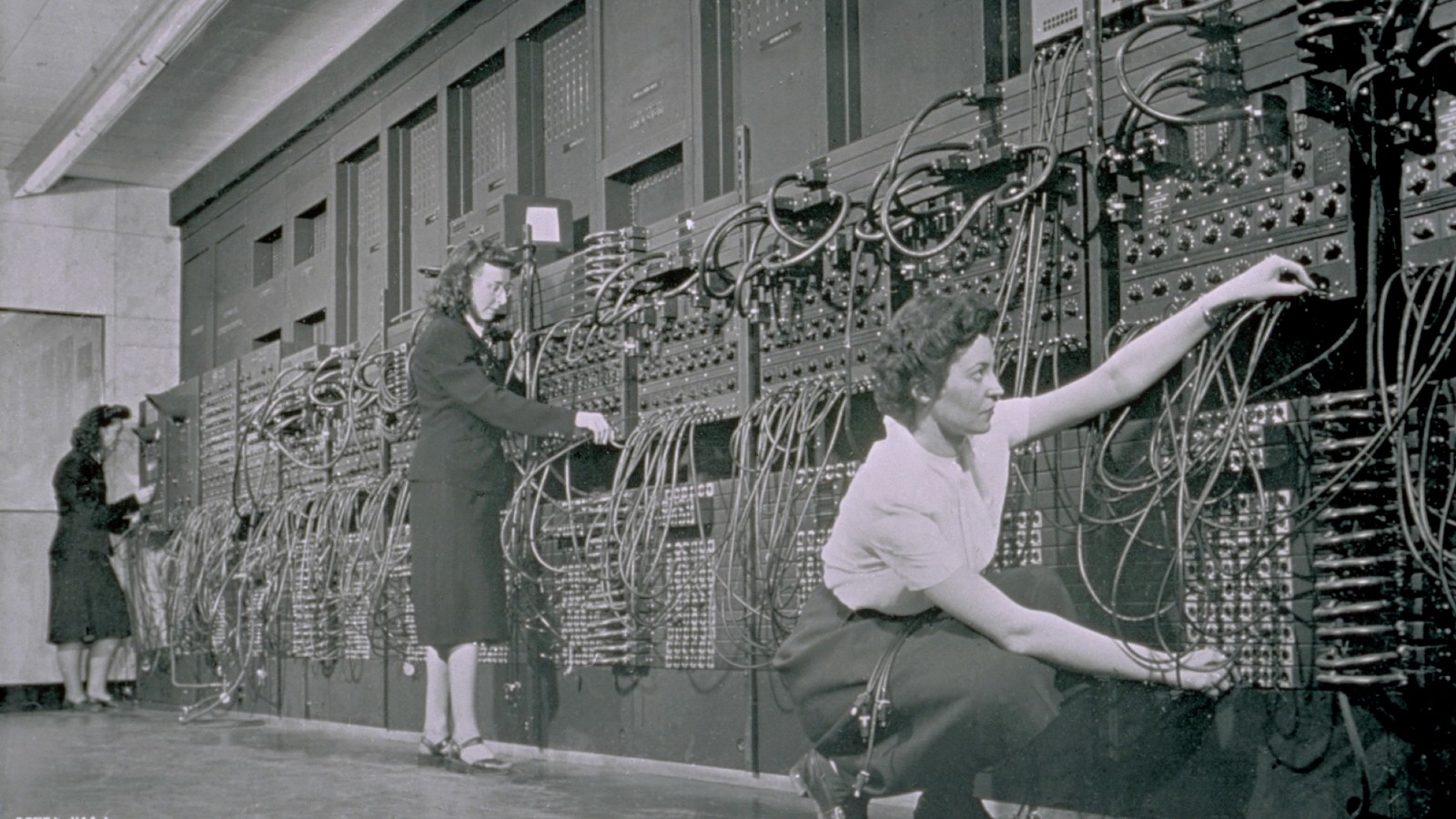
Though largely overlooked in mainstream histories of computing, the ABC quietly seeded the shift from mechanical calculators to electronic digital computers, proving that prototypes can shape intellectual foundations even when they don’t succeed commercially.
2. Manchester Mark 1: From Prototype to Blueprint for Modern Computers
Just after World War II, researchers at the University of Manchester created the Manchester Mark 1, one of the earliest stored‑program computers. It wasn’t a consumer product and faded from use after a few years—but its design innovations, including the use of an index register, propagated into commercial machines that followed.
The Mark 1’s influence can be seen not only in later hardware but also in the very concept of a computer as a general‑purpose machine. It quietly shaped the engineering decisions that made computing universal.
3. Wright Brothers’ Prototypes: Iterations That Launched Aviation
Even the celebrated story of the Wright brothers’ first flights hides the quiet work that made success possible. Their development of the Model A aircraft involved systematic testing, wind tunnel experiments, and iterative prototyping that refined control systems and aerodynamics. This careful prototyping—and the data it generated—was critical to the first commercially viable aircraft.
These prototypes didn’t just create an airplane; they established the methodology of aeronautical engineering as a discipline. Without the silent, iterative work behind the scenes, aviation may have unfolded very differently.
4. Prototype Concepts That Never Made It but Still Shaped Technology
Not all influential prototypes become part of mainstream history. Some never lead to finished products yet leave their ideas embedded in future work.
For instance, obscure aircraft prototypes like the Avro VZ‑9 Avrocar—an experimental vertical take‑off flying saucer—failed as a machine but advanced lift‑fan concepts now used in vertical‑lift fighters.
Similarly, many early computing prototypes didn’t survive, but the engineering ideas they embodied informed later designs that did change the world.
Why Some Prototypes Silence History
Why do some prototypes fade from public memory, even when they are so consequential?

1. Failure Is Not Irrelevance
A prototype might fail in its intended goal yet still produce valuable technical insights. Edison famously built over a thousand light‑bulb prototypes before finding a viable solution. While history remembers the final bulb, it is the countless early iterations that shaped material choices, filament science, and electrical engineering practices. The prototype failures taught more than the final success ever could.
2. Competition and Market Timing
Sometimes markets aren’t ready, or competitors eclipse early movers. Prototypes like the Mercedes‑Benz Bionic concept car demonstrated bio‑inspired design and ultralow drag coefficients long before the market or manufacturing ecosystem could adopt them. While the concept was eye‑catching and technically intriguing, it never led to mainstream production—yet designers today still reference its aerodynamic principles.
3. Intellectual Property and Obscured Origins
Many prototypes remain locked behind patents or corporate secrecy. The ideas they embody can diffuse into later products without credit. Patents that changed the world—from Bluetooth to the modern quadcopter drone—began as conceptual prototypes on paper long before iconic products existed.
Prototyping as a System: The Invisible Engine of Innovation
What emerges from these stories is that prototyping is not merely a step—it’s a system. It acts as a feedback loop that accelerates learning:
- Early prototype → test → refine → unexpected insight → re‑prototype.
This cycle is the engine of innovation, and it operates out of public view much of the time.
Importantly, the most impactful prototypes are not always the flashiest. They might have very limited physical presence, yet they alter how engineers, designers, and researchers think about problems. They seed entire fields. They crack open new design spaces.
The Silent Revolution Within Prototyping
When we look at major technological shifts—computing, aviation, digital communication, consumer electronics—we find that the prototypes behind these revolutions performed silent work. They didn’t always make headlines. They didn’t always sell. But they catalyzed insights that led to widespread transformations.
Prototypes are the hidden roots beneath the tree of innovation. They quietly absorb feedback, iterate, and ultimately nourish the breakthroughs that change the world. If we want to understand the evolution of technology, we must look not only at triumphant products but also at the prototypes that quietly shaped their design DNA.
Innovation is not a straight line from idea to product. It is a web of prototypes, failures, insights, and reinventions. And the most profound changes often come not from the finished product—but from the prototype that came before.