








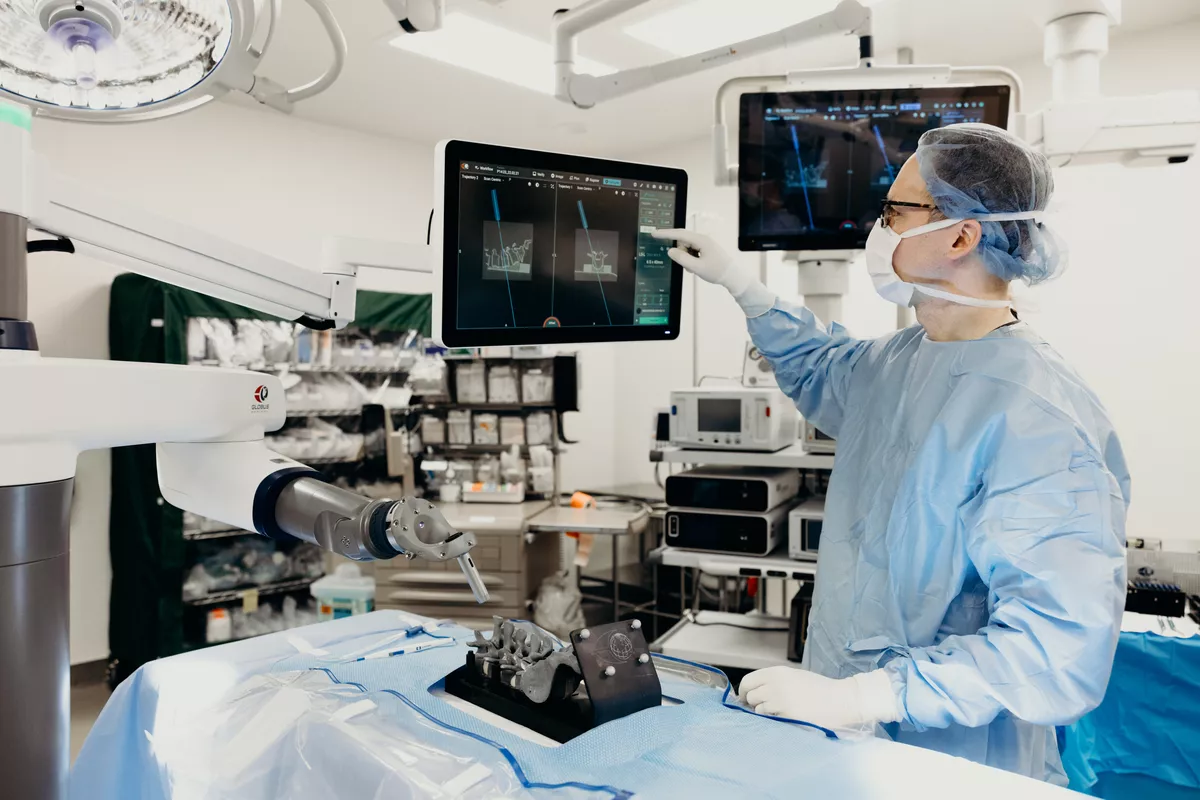

Introduction: A Brave New Frontier in Medicine
Imagine a surgical suite where the wonders of science fiction intersect with clinical reality: a surgeon doesn’t touch a scalpel, but instead thinks it into motion. Or a patient who has lost the use of limbs regains autonomy by commanding robotic tools with nothing more than neural intent. This isn’t futuristic hype — it’s the cutting edge of brain‑computer interface (BCI) and robotic surgical technologies. But with great innovation comes profound questions: Is mind‑controlled robotic surgery safe? What are the risks, rewards, and ethical considerations? This article dives deep into how mind‑controlled robotic surgery works, its current safety profile, the clinical evidence, technological obstacles, and what the future may hold.
1. What Is Mind‑Controlled Robotic Surgery?
At its core, mind‑controlled robotic surgery combines two powerful technologies:
- Brain‑Computer Interfaces (BCIs) — systems that detect and decode neural signals into digital commands, enabling direct communication between the brain and machines. These can be invasive (implanted electrodes) or non‑invasive (sensors on the scalp).
- Surgical Robotic Platforms — robotic arms and systems that translate commands into precise physical movements during surgical procedures. These range from teleoperated systems where surgeons still control every movement, to AI‑assisted or even semi‑autonomous modes.
In a mind‑controlled surgery scenario, neural signals could potentially bypass manual controls, allowing a surgeon — or even a patient in specific rehabilitative contexts — to steer tools or assistive robots using thought alone. Though fully autonomous mind‑controlled surgeries remain largely experimental, elements of this vision are already in clinical and research settings.
2. Why the Hype? Benefits and Promises
The medical and scientific promise of mind‑controlled robotic surgery is undeniable:
Precision Beyond Human Hands
Robotic systems have already revolutionized minimally invasive surgery by offering tremor‑free, highly stable manipulation of instruments. Even today’s robotic surgeries, like those assisted by console‑driven systems, show equal or lower complication rates compared to traditional approaches when performed by experienced teams.
Restoring Function for Patients
Mind‑controlled interfaces have enabled people with paralysis to control robotic arms and interact with their environment. For example, clinical efforts have shown long‑term neural control of robotic limbs, allowing users to perform daily tasks such as picking up a cup — a transformation in quality of life.
Reduced Surgeon Fatigue and Enhanced Ergonomics
Robotic assistance can also ease surgical fatigue and improve ergonomics, an important safety factor for surgeons during long or complex procedures.

Scalability and Accessibility
In the future, combining BCIs with advanced robotics and 5G infrastructure could make expertise accessible in geographically distant or underserved areas by enabling real‑time remote assistance.
3. What the Evidence Says About Safety
Clinical Trials and Comparative Studies
Systematic reviews and randomized trials of robotic surgery (not necessarily BCI‑controlled) show that robotic assistance can be safe and often advantageous: reduced estimated blood loss, shorter hospital stays, and similar or better oncological outcomes compared to traditional techniques.
Neuro‑Robotic Procedures
In specialized areas such as neuro‑oncology and cerebral angiography, studies indicate that robotic assistance achieves comparable technical success to manual approaches without increasing adverse events.
Limitations Still Exist
Despite these encouraging findings, it’s important to note that most current robotic surgery is not mind controlled. Implantable BCIs that would enable brain control remain investigational, and their safety profiles are still being evaluated in early trials. For example, invasive BCIs require surgery to place electrodes and carry inherent risks such as infection, inflammation, or neural damage.
4. Technical and Safety Challenges
Signal Accuracy and Interpretation
Decoding neural signals with high fidelity is incredibly complex. Poor signal quality or misinterpretation can lead to unintended commands — a serious concern in delicate surgical contexts. Advances in machine learning and real‑time decoding help, but challenges remain.
Reliability of Hardware and Software
Surgical robots are complex cyber‑physical systems. Failures in hardware, software, or sensor systems — even temporary interruptions — can pose risks during procedures. Real‑time safety monitoring systems help identify potential unsafe events quickly, but no system is infallible.

Latency and Stability in Remote or BCIs
For remote or mind‑controlled systems, latency in communication and unstable neural signals can impact precision. This makes rigorous testing and redundancy systems essential before broad clinical adoption.
5. Ethical, Legal, and Societal Implications
Informed Consent and Autonomy
When patients cannot communicate traditionally, obtaining informed consent for BCI‑enabled procedures becomes ethically complex. Ensuring patients understand risks, benefits, and alternatives is a heightened responsibility for clinicians.
Data Privacy and Neural Security
BCIs involve recording and interpreting neural data — potentially highly sensitive. Unauthorized access or misuse of neural signals raises unprecedented privacy concerns. Regulatory frameworks must evolve alongside technology.
Accountability and Responsibility
If a surgical robot operated (partially) through mind control makes a mistake, who bears responsibility — the surgeon, the machine learning model, the device manufacturer, or the medical institution? Clear legal and ethical guidelines are still emerging.
Societal Equity and Access
The high cost of sophisticated surgical robots and BCIs could widen disparities in healthcare access unless systems are designed with equity in mind.
6. Looking Ahead: The Future of Safety and Innovation
The trajectory of mind‑controlled robotic surgery is exciting, but incremental. Near‑term advancements will likely focus on improving surgeon‑robot interfaces, haptic feedback, and context‑aware safety monitoring.
In the longer term, as BCIs mature, we may see safer, more reliable mind‑controlled components — but widespread clinical adoption will hinge on robust evidence, ethical norms, and regulatory frameworks that protect patients without stifling innovation.
Conclusion: Balancing Hope with Caution
Mind‑controlled robotic surgery epitomizes the thrilling intersection of neuroscience, robotics, and medicine. Early clinical evidence supports the safety and efficacy of robotic assistance in surgery, and pioneering BCI studies show transformative potential in restoring function and control. But the dream of full mind‑control surgical systems still has hurdles — technical, ethical, and regulatory — that must be responsibly addressed. Safety is not guaranteed merely by innovation; it is earned through meticulous science, thoughtful policy, and unwavering commitment to patient trust.