









Introduction: The Promise of an Unhackable Future
What if the internet of tomorrow were fundamentally unhackable—not just resistant to cyberattacks, but secured by the very laws of physics? This is the bold promise of the quantum internet: a communications network rooted in quantum mechanics rather than classical bits, offering security we’ve only dreamed of in science fiction. It’s a vision that’s rapidly moving from theory to early real‑world trials, and it has technologists, security experts and governments around the world asking not just if such a network is possible, but when—and what it truly means for privacy and security.
Yet as with all revolutionary technologies, the reality is both more exciting and more nuanced than the headlines suggest. While quantum networks could be fundamentally more secure than today’s internet, calling them unequivocally unhackable overlooks practical challenges, implementation vulnerabilities, and deep questions about what “security” really means in an interconnected digital world.
In this article, we’ll explore the science of quantum internet security, the breakthroughs bringing it closer to reality, the limitations and threats that remain, and what truly lies ahead for a future that might just turn hacking on its head.
What “Quantum Internet” Really Means
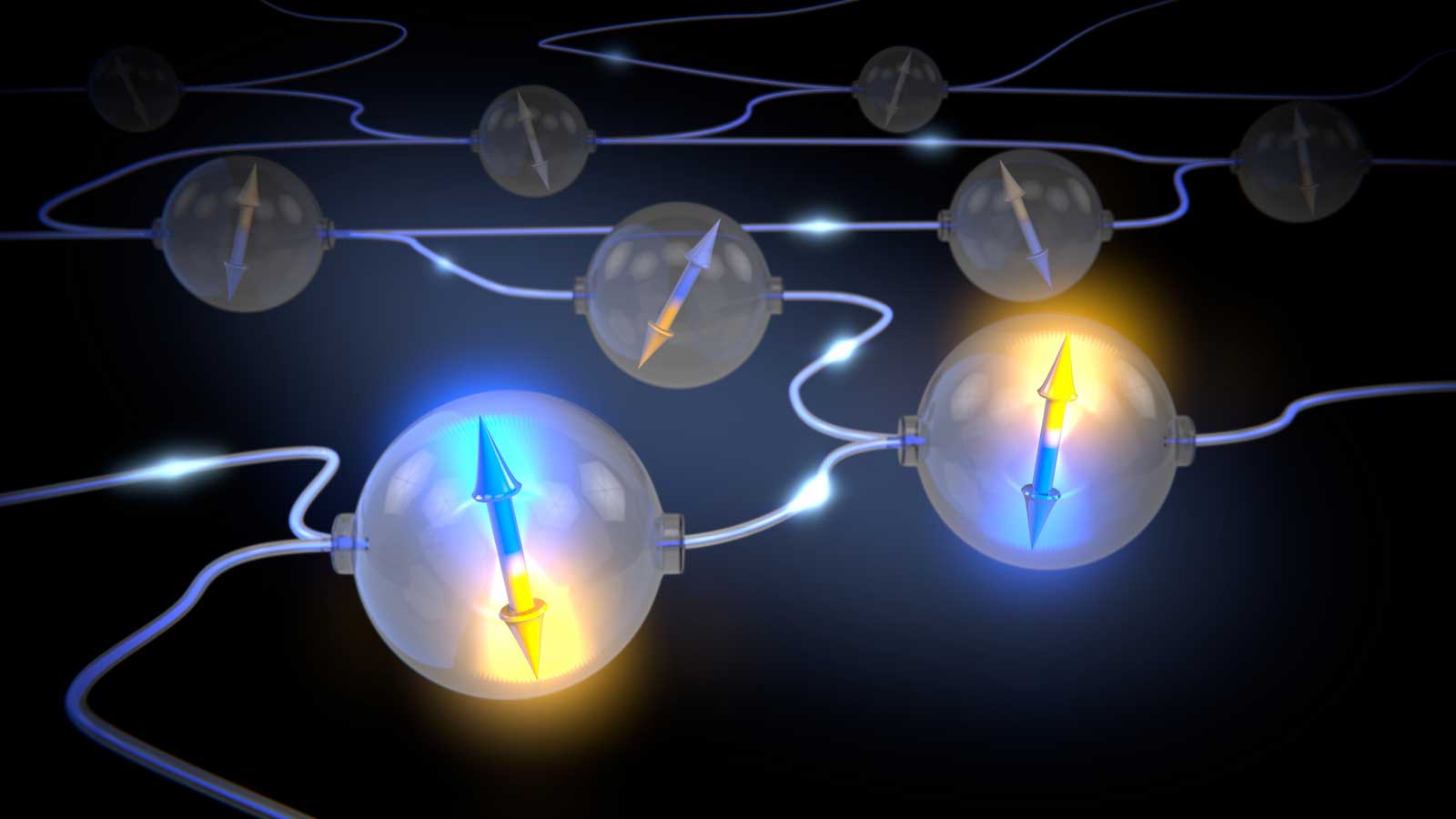
The quantum internet is not just faster data pipes or cooler hardware—it’s a fundamentally different way of encoding and transmitting information. Today, the internet relies on classical bits (0s and 1s) and cryptography based on hard mathematical problems, like factoring large numbers. But quantum information uses qubits, particles that can exist in multiple states simultaneously thanks to superposition and can be linked across space via entanglement.
This new paradigm opens the door to security models that don’t depend on computational complexity—that is, encryption systems that are not “hard to break,” but physically impossible to intercept without detection.
But before we get ahead of ourselves, let’s break down how this translates into real security.
The Quantum Advantage: Physics, Not Math
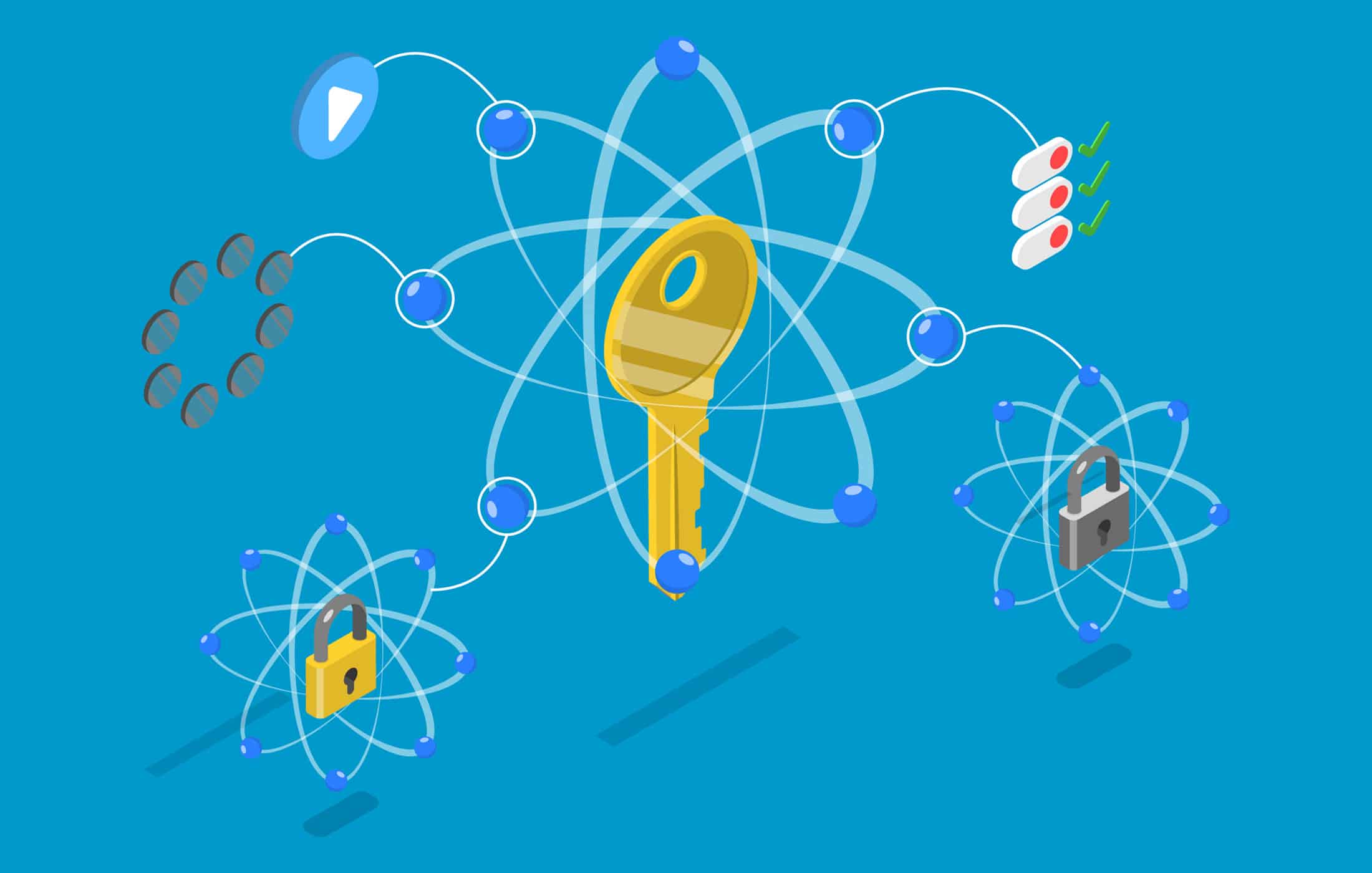
At the heart of quantum internet security is quantum key distribution (QKD)—a clever method of sharing encryption keys using quantum particles such as photons. The catch? Any attempt to measure or intercept these particles inevitably disturbs their quantum state. This disturbance isn’t subtle: it’s provable and detectable.
In other words, if an eavesdropper tries to spy on a quantum key exchange, the very act of listening alters the information and alerts the communicating parties. That’s because of quantum mechanics’ infamous no‑cloning theorem, which forbids perfect duplication of unknown quantum states.
This is not merely “very hard to break”—this is a fundamentally different kind of security. In theory, it could enable encryption keys that are secure not because they are difficult to brute‑force but because physics forbids undetected interception.
Researchers even envision combining QKD with one‑time pads—theoretically perfectly secure encryption if the key is truly random, used only once, and never leaked.
Real‑World Progress: Trials and Breakthroughs
Quantum communication isn’t purely theoretical. Actual networks and experiments already showcase the potential of quantum security:
- In Europe, researchers successfully transmitted quantum‑encrypted messages over 250 km of commercial optical fiber, demonstrating that quantum security isn’t limited to lab curiosities but can ride existing infrastructure.
- Other teams in the UK have tested quantum key schemes across hundreds of kilometers of fiber, combining multiple quantum technologies in operational settings.
- Academic prototypes, such as work at MIT and Harvard, aim to build scalable quantum repeater hardware that could extend secure links over larger distances and integrate them with classical internet layers.
These milestones signal that the quantum internet is not just an academic dream—it’s inching closer to practical deployment.
So Is It Unhackable? Physics vs. Practice
Here’s where nuance matters. In a controlled theoretical framework, QKD and quantum communications can be unhackable in transit because any eavesdropping attempt disrupts the quantum state and is detectable. That’s security rooted in information theory, not computational difficulty.
However, there’s a crucial gap between theory and the real world:
1. Implementation Vulnerabilities
Real systems aren’t ideal. Imperfections in hardware — from photon detectors to optical fibers — can introduce vulnerabilities that attackers might exploit, even if the underlying quantum principles are sound. Past research has shown that QKD systems can, in practice, be tricked by side‑channel attacks if the hardware isn’t robust.
2. Trust and Authentication
Quantum key distribution still requires classical channels and trusted verification methods. A malicious actor might not be able to break the quantum key, but if they can spoof credentials or compromise authentication infrastructure, they could still disrupt communications.
3. Limits of Distance and Scaling
Quantum signals degrade over long distances. While progress in quantum repeaters and satellite links shows promise, building a global network that covers cities and continents with the same security guarantees as short laboratory setups remains a formidable engineering challenge.
4. Classical Components Still Matter
For a fully functioning internet, quantum links need to interface with classical systems — servers, endpoints, routers and human users who ultimately encrypt, decrypt, and process data. Weaknesses in these classical layers are still hackable by conventional means, even if the quantum layer is secure.
In short: the quantum internet can make the communication channel between parties extremely secure, but it doesn’t automatically make the entire system impervious to all forms of attack.
Beyond QKD: Post‑Quantum Cryptography (PQC)
While quantum networks aim to secure future communication channels, another parallel front is already underway: post‑quantum cryptography. This area focuses on new classical cryptographic algorithms designed to resist attacks from future quantum computers. Many global standards bodies, including the U.S. National Institute of Standards and Technology (NIST), are already moving toward standardized post‑quantum algorithms.
This dual approach—quantum communication networks on one side and quantum‑resistant algorithms on the other—reflects a broader strategy for securing digital information in a world where quantum computing will soon render many current encryption schemes vulnerable.
Hype vs. Reality: A Balanced View
Media narratives sometimes paint the quantum internet as an inherently unhackable silver bullet. But that simplification misses important realities. The security quantum communication offers is based on physics, not math —a remarkable advantage. However, implementation challenges, classical systems integration, and practical attack surfaces remain very real.
Security experts emphasize that no system is absolutely secure in every conceivable dimension. Real‑world adversaries — from cybercriminal groups to state actors — will look for any avenue available, whether hardware flaws, compromised endpoints, or software bugs. Quantum protocols can eliminate certain categories of attack, but others will still exist elsewhere in the infrastructure.
In practical terms, quantum internet technologies will likely be orders of magnitude more secure than many current systems for specific communication pathways—but calling them totally hackproof oversimplifies the multidimensional nature of cybersecurity.
What the Future Holds
So will the quantum internet ever be absolutely unhackable? The honest answer is both yes and no, depending on how you define the terms:
- Unhackable in transit: Possibly—because quantum physics can make eavesdropping detectable and therefore prevent undetected interceptions.
- Unhackable end‑to‑end: Unlikely—because classical components, human factors, and systems integration create vulnerabilities beyond the quantum layer.
- Unhackable across an entire global network: Highly unlikely—because heterogeneous systems, legacy infrastructure, and software ecosystems will introduce attack vectors that physics alone cannot eliminate.
Nevertheless, the quantum internet represents a revolution in communication security. Even partial implementations could dramatically elevate protections for high‑value sectors like finance, national defense, healthcare, and critical infrastructure.
For forward‑thinking organizations, now is the time to prepare for quantum‑era cybersecurity by exploring both quantum network technologies and post‑quantum cryptographic standards. Together, these paths will define the next frontier of secure connectivity.