








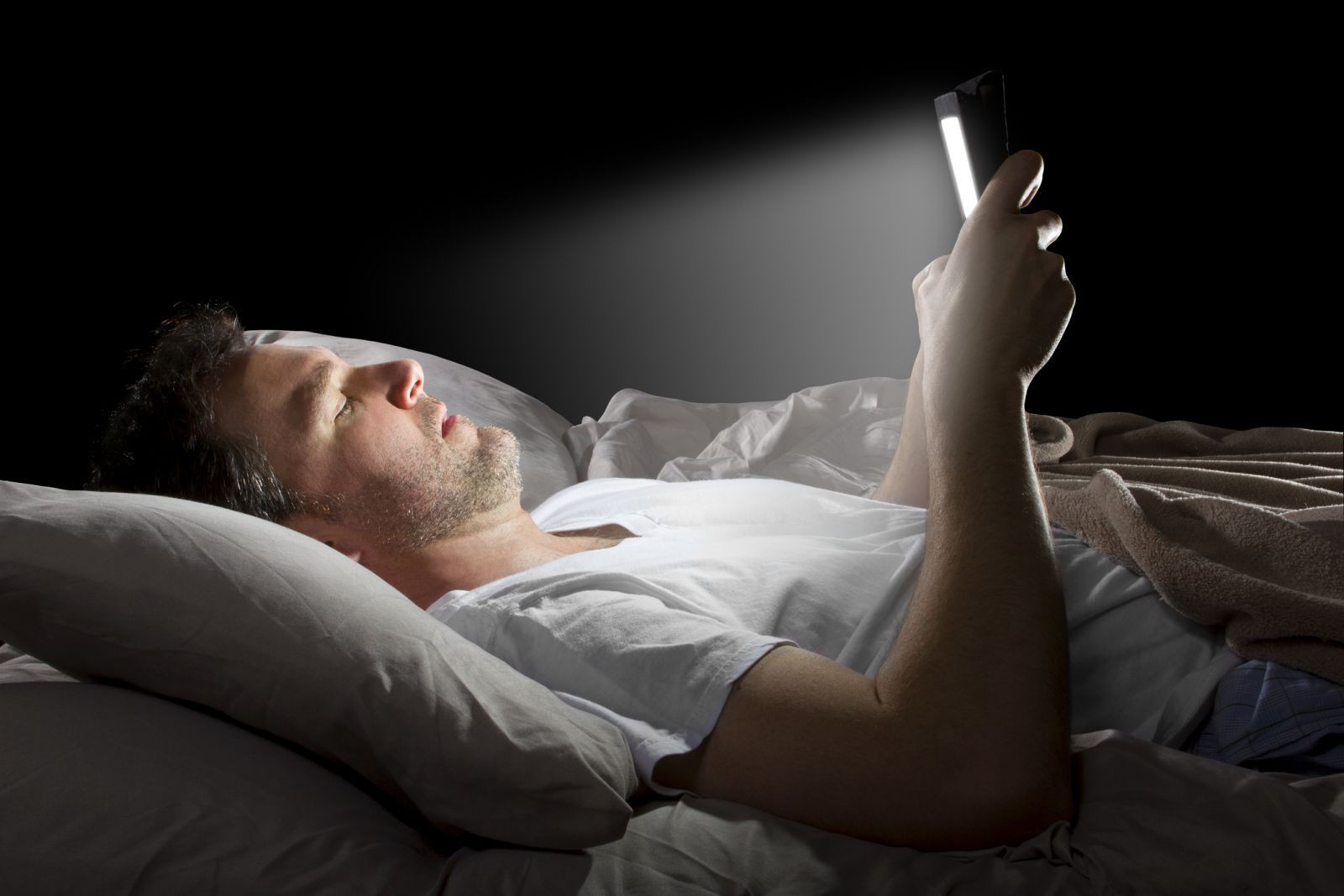

In recent years, blue light blocking has become one of the most talked‑about sleep biohacks — right alongside cold showers, meditation practices, and nootropic stacks. You’ve probably seen sleek glasses with amber or orange lenses, glowing testimonials from influencers, and pages of webpage ads claiming “better sleep guaranteed!” But beneath the marketing hype, what does science actually say? Are blue light blocking tools a genuinely effective sleep biohack, or are they mostly clever branding with minimal real benefit?
This long‑form article dives deep into the biology, the research, the psychology, and the practical considerations that surround blue light blocking. By the end, you’ll have a clear, evidence‑based answer — and actionable guidance on whether this trend belongs in your sleep optimization toolkit.
Understanding Blue Light: A Primer
To evaluate whether blue light blocking is real or gimmick, we need to first understand what blue light is and how it interacts with human physiology.
The term blue light refers to visible light wavelengths roughly between 400–500 nanometers. This range is more energetic than other visible wavelengths and is emitted not only by the sun but also by LED lighting, smartphones, laptops, and other modern screens.
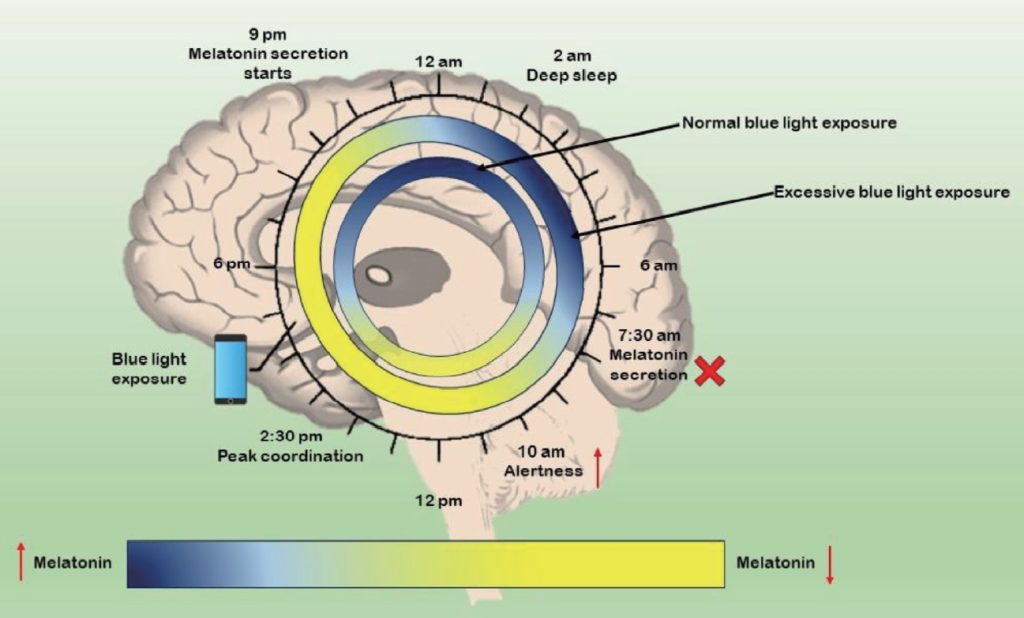
Importantly, a subset of retinal ganglion cells in the eye — called intrinsically photosensitive retinal ganglion cells (ipRGCs) — contain a photopigment called melanopsin, which is particularly sensitive to blue light. These cells send signals to the brain’s suprachiasmatic nucleus (SCN), which is the master circadian clock regulating sleep–wake cycles and melatonin production.
So yes, blue light does have a measurable influence on circadian biology — but biology isn’t the whole story. How that translates into real‑world effects like “falling asleep faster” or “improving sleep quality” is where science and marketing diverge.
The Biological Mechanism: Why Blue Light Might Affect Sleep
Virtually all scientific explanations of blue light’s effect on sleep revolve around its impact on melatonin suppression — and that’s an important clue.
Melatonin and Circadian Signaling
Melatonin, sometimes called the “sleep hormone,” isn’t a sleep switch but a signal your brain produces more at night when light disappears. When the ipRGCs detect blue light in the evening, they suppress melatonin production and signal your brain that “it’s still daytime.”
This makes intuitive sense. In our evolutionary past, the absence of sunlight triggered melatonin release; modern screens mimic daylight light well into the night.
Biological Plausibility vs. Real‑World Exposure
Here’s the first big nuance: while blue light can suppress melatonin, the intensity and duration matter. Modern screens emit relatively low intensity compared to sunlight or indoor LED lighting, and the actual melatonin suppression from typical device use may be small and transient.
In other words:
- The biological mechanism exists.
- But the real‑world effect size of typical evening screen exposure is often quite small.
This distinction is crucial when evaluating purported benefits of blocking blue light with glasses or filters.
What Scientific Studies Actually Show
Let’s turn to controlled research — the kind that gives us evidence rather than internet anecdotes:
Evidence Supporting Benefits
Some experimental studies have found positive effects:
- A two‑week randomized crossover study found that wearing blue light blocking glasses in the evening reduced subjective sleep onset latency (how long people feel it took to fall asleep) and reduced nocturnal awakenings, though objective sleep measurements didn’t significantly change.
- A systematic review identified trials showing benefits of these glasses in people with sleep disorders, shift work, and delayed sleep phase syndrome. That suggests there may be benefits for specific populations with circadian disruption.
Evidence Showing Mixed or No Effect
At the same time, several well‑designed studies and reviews find only limited or inconsistent effects:
- In a meta‑analysis of trials using actigraphy (objective sleep tracking), blue light blocking glasses did not significantly improve sleep onset latency, total sleep time, sleep efficiency, or wake after sleep onset.
- Some controlled trials — including one in people with bipolar disorder — found no significant differences between blue‑blocking and placebo lenses on sleep quality.
- Many sleep medicine experts note that the evidence remains mixed and inconclusive, with experts recommending proven sleep hygiene practices over reliance on special lenses.
Key Takeaways from the Research
The scientific consensus so far can be summarized as:
✔️ Blue light in the evening can suppress melatonin.
✔️ Blocking blue light may help some individuals, particularly those with circadian rhythm disorders or insomnia.
❌ The evidence for general population benefits is inconsistent or minimal.
❌ Some controlled trials show no meaningful benefit at all.
So, Is It a Biohack or a Gimmick?
With that evidence in mind, the honest answer is:
Blue light blocking can be part of a legitimate sleep biohack — for some people — but it’s not a universal sleep cure and is often overhyped.
Let’s break that down.
When It Might Be a Useful Biohack
- You have diagnosed insomnia or circadian rhythm issues — people with delayed sleep phase or irregular schedules may benefit more from controlled light exposure.
- You work night shifts or travel across time zones — shifting light exposure timing can help reset circadian cues.
- Your evening screen habits are extensive and unavoidable — in this case, blocking blue light could be one piece of a larger sleep hygiene plan.
In these situations, adding blue light blocking glasses to a broader strategy — involving consistent schedules, environment tweaks, and reduced evening light overall — could provide incremental benefit.
When It’s Likely More Gimmick than Biohack
- You have normal sleep and do minimal screen use before bedtime. Research suggests negligible benefit in these cases.
- You rely on glasses alone without improving other sleep habits. Isolating them as a magic bullet isn’t supported by strong evidence.
- You buy expensive brands with major marketing hype but no transparency on wavelength blocking. Effectiveness depends on what wavelengths are actually blocked, and many products aren’t standardized.
Why the Marketing Is So Strong
Blue light blocking became a megatrend because:
- It’s simple and tangible — people like a physical object they can wear.
- It’s easy to attribute benefits to something after sleep improves (placebo effect).
- Tech and eyewear brands have invested heavily in positioning it as wellness must‑have.
The average consumer sees messaging like “protect your sleep!” and assumes it’s backed by definitive science — but that’s not yet the case. The marketing often takes a biological signal and removes nuances that matter clinically.
A Balanced Perspective: Practical Sleep Optimization
If your goal is better sleep, here’s a science‑informed toolkit that goes beyond blue light blocking:
1. Get Bright Light in the Morning
Exposure to natural sunlight early in the day helps reset your internal clock and supports melatonin production in the evening.
2. Set a Consistent Sleep Schedule
Going to bed and waking up at the same time every day is one of the strongest predictors of good sleep quality.
3. Reduce Light, Not Just Blue Light, in the Evening
Lowering overall light levels in your environment in the 2–3 hours before sleep can help signal to your circadian system that night is approaching.
4. Limit Engaging Content Before Bed
The cognitive stimulation of social feeds, emails, or games often delays sleep more powerfully than light alone.
5. Consider Software Filters
Built‑in screen modes like Night Shift or third‑party apps like f.lux can reduce blue light exposure without requiring glasses.
6. Use Blue Light Blocking Strategically
If you use them, apply them consistently at least 2–3 hours before bedtime, and pair them with other hygiene practices.
The Verdict
Blue light blocking is not purely a gimmick — but it’s also not a universal sleep biohack that works for everyone.
It’s grounded in real circadian biology, and some individuals may derive benefits, especially in the context of broader sleep optimization strategies. However, the scientific evidence remains mixed, and many marketed claims overstate the magnitude of effect. For most people, focusing on sleep hygiene fundamentals and overall light exposure patterns will have a bigger impact than a pair of orange lenses alone.