









Breathing — it’s automatic, unconscious, essential — yet rarely questioned. We’re all doing it each moment of every day, but how we breathe can profoundly affect our health, sleep quality, stress response, and even our facial structure. In recent years, a quirky sleep and wellness trend has taken social media and biohacking circles by storm: mouth taping. Promoters claim it’s a simple way to improve breathing, enhance sleep, and even unlock health gains once thought confined to complex medical interventions. But does the science back it? Or is mouth taping just another biohack myth that’s all buzz and no benefit?
This article explores the science, the hype, the risks, and the real potential behind mouth taping — and it does so in a way that’s informative, engaging, and grounded in the most credible evidence available.
What Is Mouth Taping?
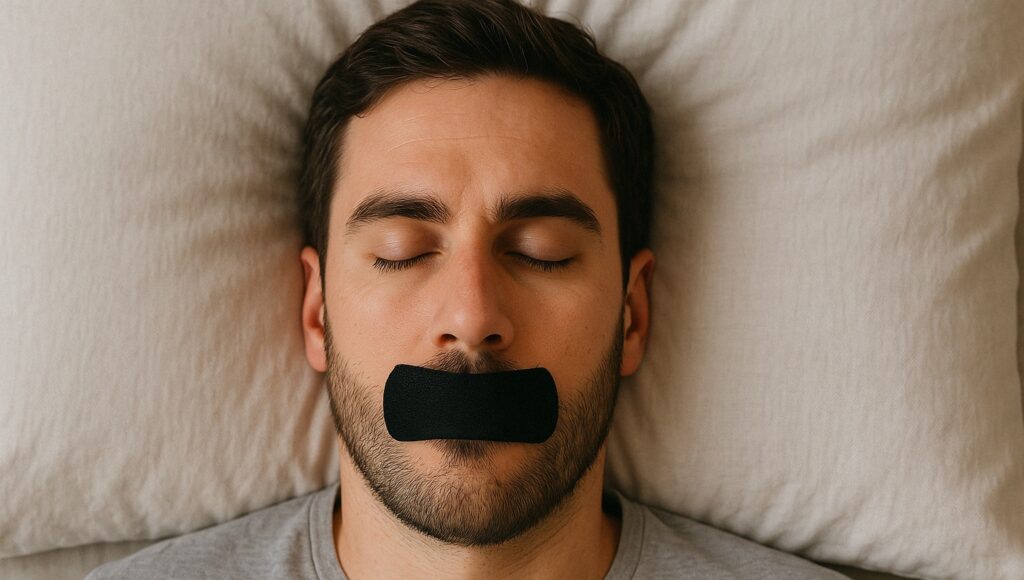
At its core, mouth taping is exactly what it sounds like: placing a piece of adhesive tape across the lips before sleep to keep the mouth closed during the night, thereby forcing nasal breathing. The intent isn’t to gag or obstruct airflow — quite the opposite, it’s to redirect airflow through the nose instead of the mouth.
Practitioners typically use medical-grade, skin-safe tape — or even specially designed “mouth tape” products — that are porous enough to minimize discomfort but strong enough to keep lips sealed. The goal is simple: eliminate mouth breathing during sleep, which is associated with a number of unwanted effects.
Why Do People Mouth Breathe?
Before we dive into tape, let’s address why mouth breathing happens in the first place.
Mouth breathing during sleep can stem from many causes:
- Nasal congestion due to allergies or a cold
- Anatomical features like a deviated septum or enlarged tonsils
- Habitual breathing patterns developed over years
- Sleep-disordered breathing such as snoring or sleep apnea
- Sleeping position (especially on the back) facilitating mouth opening
When the nose isn’t ideal for breathing — due to blockage, irritation, or structural issues — the body switches downstream to the mouth, because breathing takes priority over anything else.
The Case for Nasal Breathing
Nasal breathing isn’t just tradition or a fad — it has physiological advantages over mouth breathing:
- Filtration and humidification: The nose filters allergens, warms inhaled air, and adds moisture before it reaches the lungs, protecting delicate respiratory tissues.
- Nitric oxide production: The nasal passages produce nitric oxide, a molecule that helps widen blood vessels and support efficient oxygen uptake.
- Lower airway resistance: Breathing through the nose creates a more stable airway, reducing the likelihood of snoring and promoting calmer, deeper respiration.
- Oral health: Mouth breathing dries the mouth, which promotes dental issues like cavities, gum disease, bad breath, and chronic inflammation of oral tissues.
Most sleep medicine and respiratory health texts reaffirm that nasal breathing is generally preferable to mouth breathing for these reasons.

What Mouth Taping Claims to Do
Proponents of mouth taping — ranging from wellness influencers to biohackers — suggest a wide range of potential benefits, including:
- Improved breathing efficiency through enhanced nasal airflow
- Reduced snoring and nighttime breathing disturbances
- Better sleep quality and more restorative rest
- Less dry mouth, bad breath, and oral health issues
- Heightened oxygenation and daytime energy levels
- Enhanced athletic recovery and performance (by virtue of better sleep)
But here’s the key: many of these claims are hypothesized based on the benefits of nasal breathing itself — not specifically mouth taping.
What the Science Actually Says
This is where we pivot from anecdote to evidence.
Limited but Not Zero Evidence
Some small studies have investigated mouth taping in clinical contexts:
- A preliminary study found that in mouth-breathers with mild obstructive sleep apnea (OSA), mouth taping significantly reduced snoring and apnea-hypopnea indices — essentially improving breathing stability during sleep.
- A systematic review examining various studies suggests that mouth taping might offer benefits in certain controlled populations, but it also highlighted risks and the need for more research.
Evidence Still Sparse
The reality in mainstream clinical practice is this:
- Most studies on mouth taping are small and limited in scope.
- Many reported benefits come from anecdotal reports or wellness articles without strong experimental controls.
- There isn’t enough robust research to say that mouth taping is universally effective for breathing, snoring, or overall health.
Thus, while promising signals exist, especially for some people with mild sleep apnea, mouth taping is not (yet) validated as a proven medical treatment like CPAP therapy or surgical interventions.
Risks and Safety Concerns
One of the biggest misconceptions about mouth taping is that it’s harmless because it’s simple. But that’s not necessarily true.
Potential Problems
Medical professionals and reviews have consistently warned that mouth taping can:
- Cause breathing difficulty or distress, particularly if nasal airways aren’t clear.
- Exacerbate sleep apnea if used inappropriately, potentially leading to oxygen drops or breathing pauses.
- Trigger anxiety or panic in people who feel discomfort with tape over their lips.
- Cause skin irritation or allergic reactions from adhesive tape.
- Mask underlying health issues that require medical diagnosis and treatment rather than DIY hacks.
Indeed, a systematic review noted that indiscriminate use of mouth taping could pose serious risk if applied without proper screening.
Who Might Benefit — and Who Should Avoid It
Because the evidence is nuanced, mouth taping may be appropriate for a limited subset of individuals — but only with caution:
You Might Consider It If:
- You are an otherwise healthy adult who predominantly breathes through the mouth during sleep
- You’ve ruled out serious nasal obstruction or respiratory conditions
- You want to experiment gently with nasal breathing support
- You’re doing it as part of broader sleep hygiene practices
You Should Avoid It If:
- You have nasal congestion, chronic allergies, sinus issues, or structural blockage
- You suspect or have moderate to severe sleep apnea
- You experience anxiety or panic when your mouth is physically restrained
- You’re a child or adolescent, as safety studies in these groups are lacking
Whenever in doubt, consult a healthcare provider before trying mouth taping.
Practical Tips for Safe Experimentation
If you do want to explore mouth taping — not as a miracle cure, but as a tool to support nasal breathing — here are some sensible precautions:
- Use skin-friendly, hypoallergenic tape designed for the lips.
- Test it during daytime or short naps first before using it overnight.
- Make sure nasal passages are clear — consider saline rinses or nasal strips if congestion is present.
- Stop immediately if you feel short of breath or anxious.
- Treat underlying conditions first — for example, manage allergies or seek treatment for deviated septum before experimenting with mouth taping.
This isn’t just good advice — it’s responsible self-care grounded in clinical caution and current evidence.
Mouth Taping: Biohack or Bust?
So where does that leave us? Is mouth taping a breakthrough for breathing, or just another wellness fad?
📌 The Bottom Line
✔ Nasal breathing is objectively beneficial.
✔ Mouth taping can promote nasal breathing.
✔ Limited evidence suggests potential benefits for some individuals, especially mild OSA sufferers.
✖ Strong, large-scale clinical evidence is lacking.
✖ There are real safety concerns if misused or applied without proper screening.
In other words: mouth taping is neither a guaranteed health upgrade nor an outright hoax — but it’s definitely not a universal solution.
For people intrigued by better sleep and improved breathing, it might be an interesting experiment — but one that should be approached with caution, awareness, and professional guidance. And for those seeking transformative health solutions, it’s a starting point not an endpoint.