









Introduction — A Revolutionary Toolbox for Life
CRISPR‑Cas systems, often simply referred to as CRISPR, represent one of the most disruptive breakthroughs in biology of the 21st century. Originally adapted from bacterial immune systems, CRISPR enables scientists to program molecular machines to cut, edit, and modify DNA with unprecedented ease, precision, and flexibility. What was once a painstaking series of genetic tweaks now resembles a biological text editor — able to rewrite the narrative of life at its most fundamental level.
In its current clinical applications, CRISPR is revolutionizing medicine: correcting disease‑causing mutations, curing genetic blood disorders, and pushing into therapies for cancer and blindness. But the conversation is rapidly expanding beyond disease to a more provocative frontier — human enhancement. What if we could enhance physical strength, elevate cognitive capabilities, extend healthy lifespan, confer resistance to extreme environments, or even design traits previously relegated to science fiction? Can CRISPR go beyond medicine to human enhancement? And if so, should we — ethically, socially, and technically?
This article explores that horizon, unpacking what is scientifically plausible today, what may be possible tomorrow, and what stands for deep moral reflection. Whether you are a scientist, a futurist, or someone curious about the future of humanity, this comprehensive guide will ground you in the facts, debates, and possibilities around CRISPR and human enhancement.
Section I — What CRISPR Is and What It Can Do
CRISPR Basics
CRISPR stands for Clustered Regularly Interspaced Short Palindromic Repeats — a family of DNA sequences in microbes that, together with the Cas (CRISPR‑associated) proteins, allows bacteria to “remember” and defend against viruses. In laboratory settings, scientists harness this system to target and alter precise locations in an organism’s genome. Variations such as Cas9, base editors, and prime editors expand the CRISPR toolkit for more refined or sophisticated editing strategies.
From Somatic to Germline Editing
There are two broad classes of editing possible with CRISPR:
- Somatic editing, which alters cells in a living person and doesn’t affect their offspring.
- Germline editing, which changes eggs, sperm, or embryos. These edits become heritable and would pass on to future generations.
Somatic editing is already in clinical trials for diseases like sickle cell and leukaemia, while germline editing remains highly controversial — technically challenging and largely prohibited for clinical use by regulatory bodies worldwide.
Section II — Beyond Treatment: The Idea of Enhancement
What Does Human Enhancement Mean?
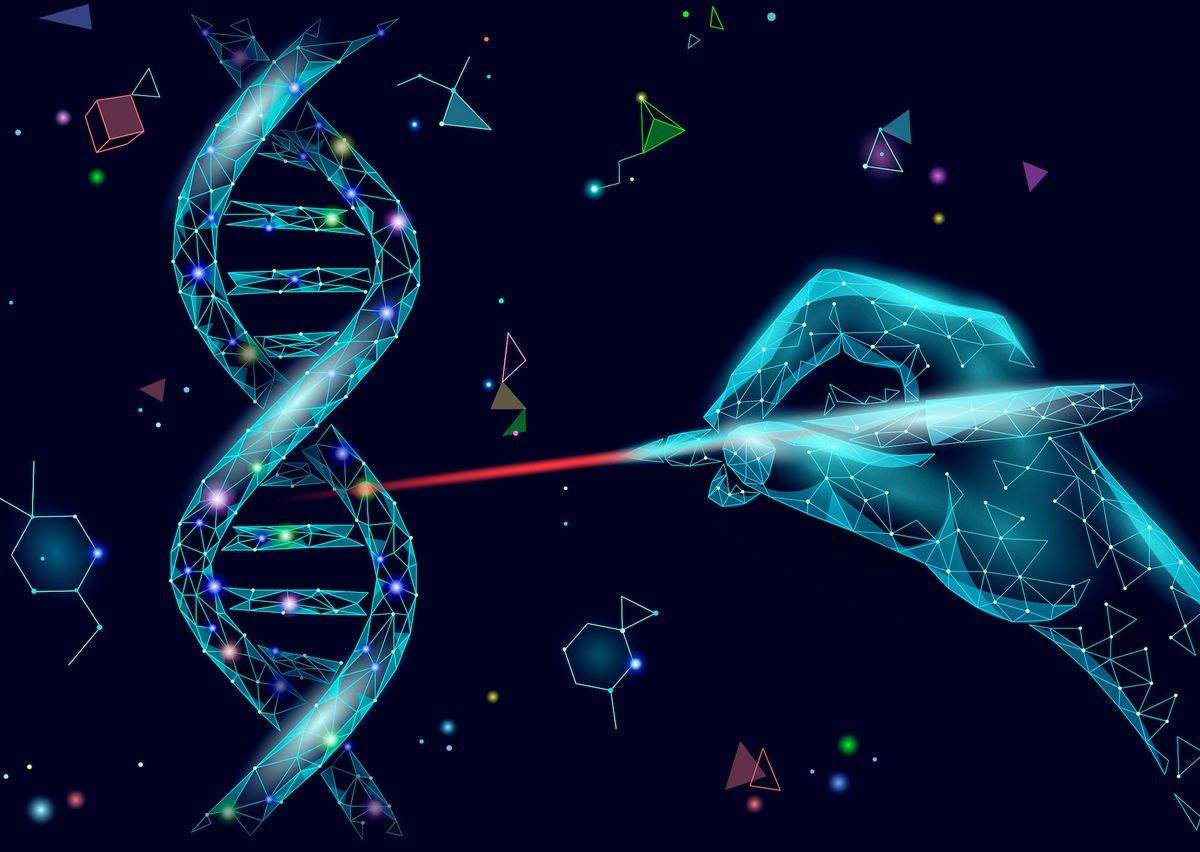
In the context of CRISPR, enhancement refers to genetic modifications aiming not at restoring normal health but improving or augmenting human traits beyond typical human baselines. Examples might include:
- Increased cognitive performance
- Heightened resistance to stress or disease
- Enhanced athletic performance
- Improved sensory perception
- Altered physical traits such as appearance
Unlike therapeutic uses that aim to remove suffering and restore health, enhancement ventures into transforming what it means to be human — opening a philosophical as well as a technical debate.
Why Enhancement Captures the Imagination
Enhancement resonates with deep human aspirations: to be stronger, smarter, healthier, and more capable. From Plato’s Republic to modern science fiction like Gattaca, the idea of deliberately engineering our children or ourselves has long fascinated — and worried — thinkers and storytellers.
CRISPR sharpens this conversation because it suggests a practical path toward such changes, not just speculative fiction. But scientific feasibility remains distant for most complex traits.
Section III — The Science: What’s Technically Possible?
Editing Single Genes vs Complex Traits
CRISPR excels at modifying single genes or limited genomic regions. This is why it has early success in treating monogenic disorders (diseases caused by one defective gene). However, most traits associated with enhancement — such as intelligence, agility, or even height — are polygenic: influenced by many genes interacting with environment and epigenetics. There is currently no reliable blueprint for editing those complex networks in a predictable, safe way.
Off‑Target Effects and Mosaicism
Two major obstacles in precision editing are:
- Off‑target effects — unintended genetic changes that could cause harm.
- Mosaicism — when only some cells carry the edited sequence, leading to inconsistent effects.
Both issues become particularly acute when editing embryos or germline cells — where unpredictable consequences could be passed to descendants.
Emerging Techniques
Beyond classic CRISPR‑Cas9, techniques such as prime editing and RNA‑based editing offer more refined, potentially safer ways to modify genetic information. These tools may reduce unintended side effects but are still in early development and far from enabling complex trait enhancements.
At present, human enhancement via CRISPR remains largely theoretical rather than an imminent reality.
Section IV — Ethical and Social Considerations
Ethical Debates: Beyond the Laboratory

The questions around CRISPR and enhancement are not just biological but deeply philosophical and ethical. At their core, they deal with what it means to value human life and how society should deploy powerful technologies.
- Naturalness and “Playing God.” Some critics argue that altering human biology at the germline level crosses a moral boundary by assuming control over natural life processes.
- Consent of Future Generations. A child born with edited genes cannot consent to those changes. This raises questions about autonomy and rights.
- Social Equity and Access. If enhancement technologies were ever developed, would they be accessible to all? Or would they widen inequality, creating biological ‘haves’ and ‘have‑nots’?
- Loss of Diversity. Enhancing certain traits could unintentionally diminish genetic variation, weakening resilience to disease or environmental change.
These discussions extend beyond the lab to policy, law, and global governance — requiring an inclusive approach involving scientists, ethicists, policymakers, and the broader public.
The Case of the First CRISPR Babies
In 2018, Chinese researcher He Jiankui announced he had edited human embryos that resulted in live births — intended to confer resistance to HIV. The worldwide scientific community condemned the experiment as unsafe, unethical, and premature. He was later prosecuted. This incident demonstrated both the allure of enhancement and the global imperative for clear governance.
Section V — Possible Paths Forward
Responsible Innovation and Governance
Most experts agree that CRISPR’s transformative potential — including any prospects for human enhancement — must be coupled with robust ethics and governance frameworks that balance innovation, safety, and justice. This includes:
- Regulatory oversight that distinguishes therapeutic vs enhancement uses
- Public engagement and democratic discourse on acceptable applications
- International cooperation to prevent harmful or irresponsible experiments
Scenario planning and foresight exercises from multidisciplinary research communities highlight the importance of transparent, equitable policy structures for genome editing technologies.
Narrowing the Gap Between Science and Speculation
Getting from potential to practical enhancement will require breakthroughs in genomics, systems biology, and our understanding of complex traits. Even then, enhancement raises risks far beyond therapeutic interventions. The technical hurdles are not merely scientific, but deeply embedded in how societies value equity, autonomy, and human diversity.
Section VI — Where Does This Leave Us?
CRISPR’s journey from a bacterial defense mechanism to a world‑changing biomolecular tool has been nothing short of spectacular. In medicine, it already promises cures and unprecedented treatments. In terms of enhancement, the path is far more contentious, speculative, and ethically fraught.
At this point, the scientific community broadly agrees that the technology is not yet ready for safe, heritable enhancement and that such a shift would require not just advances in precision and predictability, but also broad consensus on ethical boundaries and governance.
Whether or not CRISPR will ever lead to human enhancement in the familiar sense — smarter, stronger, or fundamentally different humans — depends on breakthroughs in science and societal choices about which futures are worth pursuing.
In navigating this frontier, humanity must balance curiosity with caution, ambition with humility, and innovation with inclusion. CRISPR might be the biological revolution of our age — but how we use it will define our legacy.