








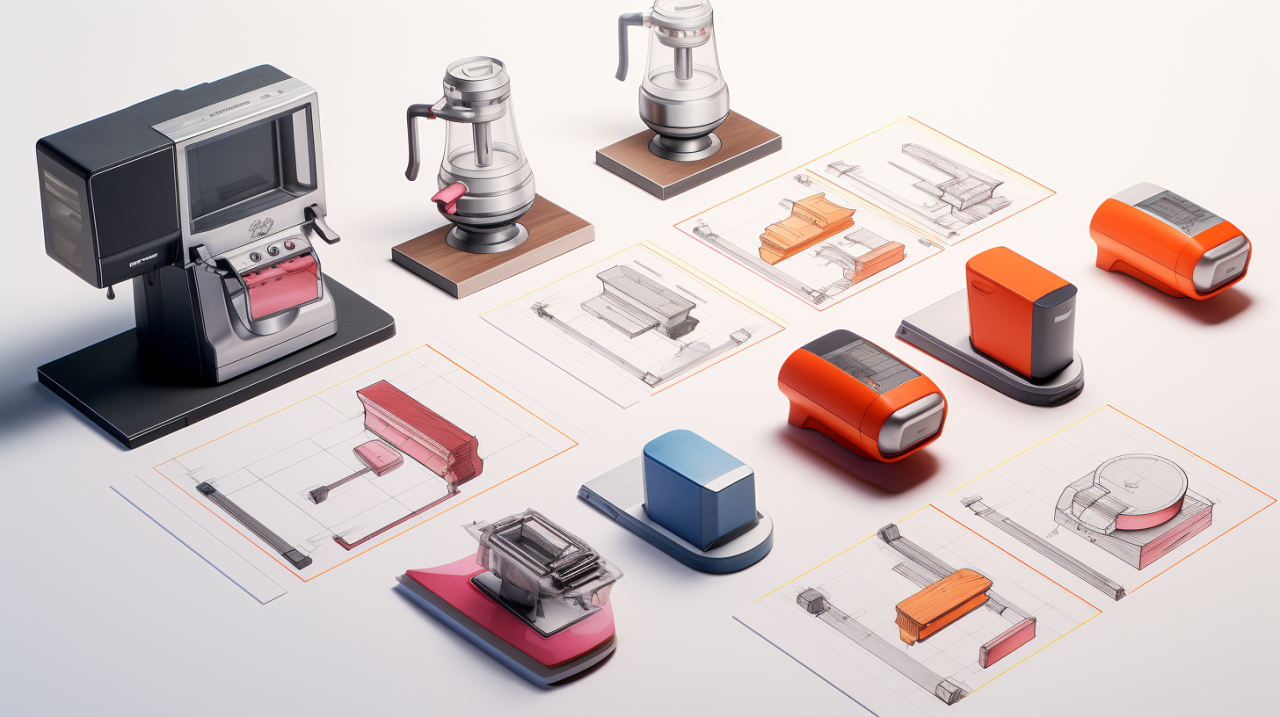

In today’s world of rapid innovation, agile workflows, and user-centric design, the question “Does the prototype reveal the soul of a product?” is far from rhetorical — it lies at the heart of how modern products are conceived, shaped, validated, and ultimately brought to life.
To most people outside of design and engineering circles, “prototype” might evoke images of rough mockups or half-finished gadgets. Yet in reality, prototypes are not just raw iterations: they are embodied investigations — distilled reflections of ideas, hypotheses, aspirations, and limitations. Good prototypes are windows into what a product aspires to be. They illuminate core values, hidden assumptions, and even the emotional DNA of a product itself.
In this article, we will unpack the nature of prototypes, explore how and why they reveal — or sometimes obscure — a product’s essence, and ultimately examine the profound relationship between prototyping and product identity.
What Is a Prototype — Beyond the Surface
At its most fundamental level, a prototype is an early model of a product designed to test concepts, evaluate form and function, and learn before committing to expensive development processes. It can range from a crudely sketched paper interface to a functional hardware model built with care. In design thinking and product development, a prototype is defined as an early sample, model, or release of a product built specifically to evaluate a concept or process. It allows teams to test ideas and uncover usability insights before investing heavily in full realization.
This definition makes it clear that the purpose of prototyping is learning, not perfection.
However, a prototype is much more than a test tool. In the creation process, it becomes a mirror that reflects decisions, constraints, intentions, and — crucially — the philosophy behind the product.
The Multiple Facets of Prototypes
Prototypes come in many forms, and each reveals a different layer of what the product might become:
1. Conceptual Prototypes
These are high-level sketches or conceptual models that capture the broad idea. They seldom resemble the finished product in detail, but they carry the aspirational intent — the team’s initial vision of what the product should address or enable.
2. Functional Prototypes
Here, the prototype contains working parts and partial systems. While not full products, these prototypes communicate how users might interact with the product and whether those interactions fulfill core needs. They shine a light on usability, performance, and experience.
3. Visual or UX Prototypes
Often used in software and interface design, these models emphasize layout, visual hierarchy, and interaction flow. They reveal how designers think users should feel when navigating a product, prioritizing aesthetics and emotional responses.
Each prototype type selects a different lens for understanding the product. A visual prototype reveals how the product looks and feels. A functional prototype reveals how it behaves. Conceptual prototypes expose the why behind the idea.
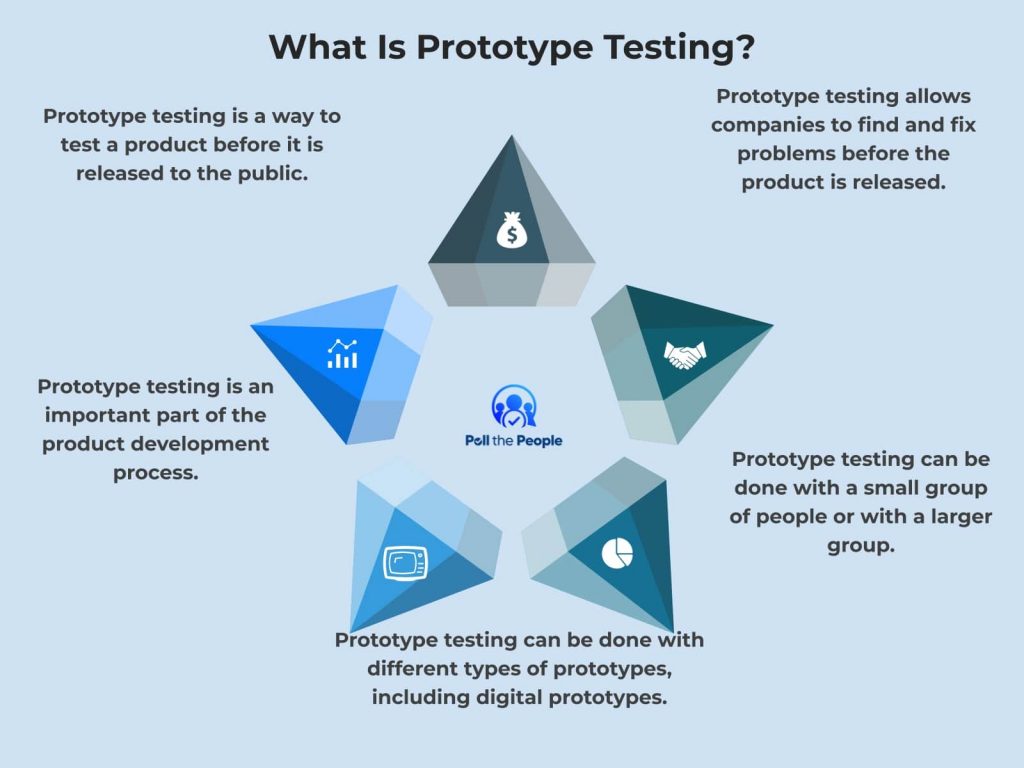
Together, these layered models offer a more complete understanding of what the product is — before it is fully built.
But do they reveal the soul?
What Do We Mean by “Soul” of a Product?
When we talk about a product’s “soul,” we mean something intangible — the core purpose, values, and emotional resonance embedded within the product. It’s not merely about utility or functionality, but the deeper connection that a product seeks to establish with its users.
A product’s soul can manifest as:
- A commitment to simplicity in user experience
- A philosophical stance on sustainability
- A deliberate focus on accessibility
- A desire to redefine social behavior
This soul isn’t always explicit. Sometimes it lurks beneath interface mockups, code, mechanics, or physical aesthetics. The question becomes: Can a prototype capture those deeper truths?
Prototyping as an Act of Discovery
Prototyping is not just about validating assumptions — it is discovering what you don’t yet know. In the design sprint process, teams create prototypes early and quickly to test hypotheses and refine their understanding of both problem and solution.
Because prototypes are built to fail fast and learn fast, they force designers and engineers to articulate assumptions that might otherwise stay buried. This exercise has a profound psychological and practical effect:
- Clarifies Intentions: In sketching, wireframing, or coding a prototype, creators must express and confront their ideas concretely. Ambiguity dissolves.
- Surfaces Priorities: What gets prototyped first — a feature? an interaction? an emotional moment? — signals what the team values most.
- Exposes Tensions: Prototyping reveals trade-offs between ambition and reality, between aesthetics and function.
In other words, prototyping is not just a mirror but a microscope — focusing the product team’s attention on choices that reveal the essence of what they are building.
The Prototype as a Communication Tool
Prototypes are, by necessity, collaborative. They communicate ideas internally among designers, engineers, and stakeholders, and externally to users and customers. They are artifacts that carry meaning, not just mechanics.
A prototype is a story. It tells users where the product wants to go and why it matters. It invites feedback and dialogue. And that interaction itself becomes part of the product’s identity.
Great prototypes speak loudly:
- They evoke emotion — users smile, frown, or hesitate as they explore.
- They spark questions — users inquire why something works (or doesn’t).
- They generate insights that reshape the product trajectory.
In this way, prototypes are not just evaluations of form and function — they are narrative tools that reveal purpose and priorities. They begin to expose the soul of the product in a tangible form.
Pitfalls: When Prototypes Mislead
Despite their power, prototypes can also misrepresent a product’s soul if misused or misinterpreted. Pitfalls include:
Over-Engineering Early Prototypes
When prototypes are too polished too soon, stakeholders may mistake refinement for completeness. This can mask deeper flaws or assumptions and create false confidence.

Focusing on the Wrong Metrics
Prototypes should test learning goals, not superficial aesthetics alone. If teams only look at superficial reactions rather than deeper behavior and motivation, the prototype will reveal noise rather than signal.
Ignoring Context of Use
A prototype tested without real users or realistic contexts may tell designers what they want to hear rather than what the product actually reveals about user needs.
These pitfalls highlight that while prototypes can reveal deep truths, they must be used with discipline and a clear understanding of what they are designed to answer.
Bridging the Prototype and the Finished Product
One of the most revealing aspects of prototypes lies in how they evolve into end products — not in terms of incremental features, but in how they preserve or transform the product’s core intent.
A prototype that successfully preserves the values of simplicity, delight, and accessibility in the final product demonstrates that those values were deeply understood and reinforced throughout development.
A prototype that loses its identity in the race to production may reveal a lack of conviction or a shift in priorities.
In this sense, the prototype is a compass: not just guiding the product’s direction, but also revealing whether the original vision endures or erodes.
The Human Element: Prototypes as Emotional Echoes
It is easy to view prototypes as cold artifacts — models on a table. But in truth, they are human constructs filled with hopes, fears, constraints, and compromises. They hold the emotional labor of creators: passion, frustration, satisfaction, uncertainty, and aspiration. A prototype with rough edges may reveal a team’s daring optimism; a prototype that over-engineers details may reflect perfectionism or fear of failure. The proto-object becomes a psychological footprint of its creators.
This underscores that the “soul” revealed by a prototype is not just the product’s soul — it is also the soul of the team behind it. In innovative cultures, teams often place prototypes at the center of reflection and iteration precisely because they want to interrogate not just what they are building, but why.
Does the Prototype Truly Reveal the Soul?
After exploring the multifaceted nature of prototyping, the answer becomes clearer: yes — but not inevitably. A prototype reveals the soul of a product when:
- It is built with intentionality and reflective practice
- It is used to learn deeply rather than to impress superficially
- It is tested with real users in real contexts
- It stays connected to the founding vision and values of the product
In other words, a prototype is not a magical talisman that automatically reveals product truth. It becomes revelatory only when used as a disciplined tool for inquiry and reflection.
Conclusion
Prototyping is more than a technical step in product development. It is a philosophical act — a bridge between abstract vision and implemented reality. When approached with clarity, experimentation, and empathy, prototypes can reveal not only the structure of a product, but its heart, intentions, and soul.
What a prototype reveals depends on how and why it is built. In many ways, a prototype is like a conversation — between creators and users, between ideas and experience, between ambition and feasibility. The richer and more honest that conversation, the closer the prototype gets to revealing the true essence of the product.
So, does a prototype reveal the soul of a product? It can — and when it does, it becomes one of the most profound tools in the creator’s kit: a moment of truth, discovery, and transformation.