










Prototyping is where imagination confronts reality. It’s the magic moment in product development when a concept leaps off a sketch or screen and becomes something you can touch, test, crash, tweak, and improve. Engineers, designers, and entrepreneurs all know it well: build a prototype, test it, refine it — and eventually ship a finished product. But, after all that passion and ingenuity, many prototypes never make it past the garage door. They instead collect dust, get stranded in a corner of the workshop, or vanish into digital archives. Why? What forces conspire to consign so many innovations to permanent prototype purgatory?
The answers span technical, economic, strategic, and human factors. In this article, we’ll dive deep into why some prototypes remain forever in the garage — whether that garage is literal or figurative — and what that reveals about innovation itself.
1. Prototypes Are Not Products
Purely by definition, a prototype is not the final product. Engineers create prototypes to test ideas, validate assumptions, uncover flaws, and explore design boundaries. They are experimental by nature — rough drafts, proof-of-concept devices, or even digital mockups that simulate how something might behave in the real world.
Different types of prototypes exist:
- Proof-of-Concept prototypes — demonstrate feasibility of a core idea.
- Functional prototypes — mimic how the product works, often using non-production materials or techniques.
- Visual prototypes — look like the end product but may lack function.
- User-experience prototypes — interactive models for testing usability.
These are tools for learning, not blueprints for mass production. As a result, many are never intended to become products. Once they fulfill their role as learning artifacts, they might be retired, archived, or replaced with a new iteration — but not scaled into marketable products.
This practical difference is often misunderstood outside engineering circles, leading outsiders to wonder why promising prototypes don’t “go to market.” The reality is simple: prototypes are meant to be tested and improved, not shipped as-is.
2. Technical Challenges and Design Flaws
When the prototype reveals serious engineering issues, it stops its journey. Prototyping is designed for exactly this purpose: to uncover weaknesses before wasting vast resources on full manufacturing.
Some prototypes never evolve because:
- They fail stress tests.
- Materials behave unpredictably at scale.
- Tolerances don’t translate to production environments.
- Safety or compliance issues emerge.
Even a brilliantly engineered concept can stumble on the gap between one-off performance and scalable reliability. For example, rapid prototyping techniques like 3D printing often use materials that perform well in a prototype but aren’t suitable for mass production, leading to fundamental redesigns or abandonment.
In hardware development, prototypes can be exquisitely specific to one use case or environment. When real-world conditions change — temperature, humidity, vibration, regulatory constraints, manufacturing variability — prototypes can fail spectacularly. These failures reveal the prototype’s purpose: they prevent flawed designs from reaching the public.
When the cost of fixing a design outweighs its perceived value, a prototype might be shelved indefinitely.
3. Cost and Manufacturing Constraints
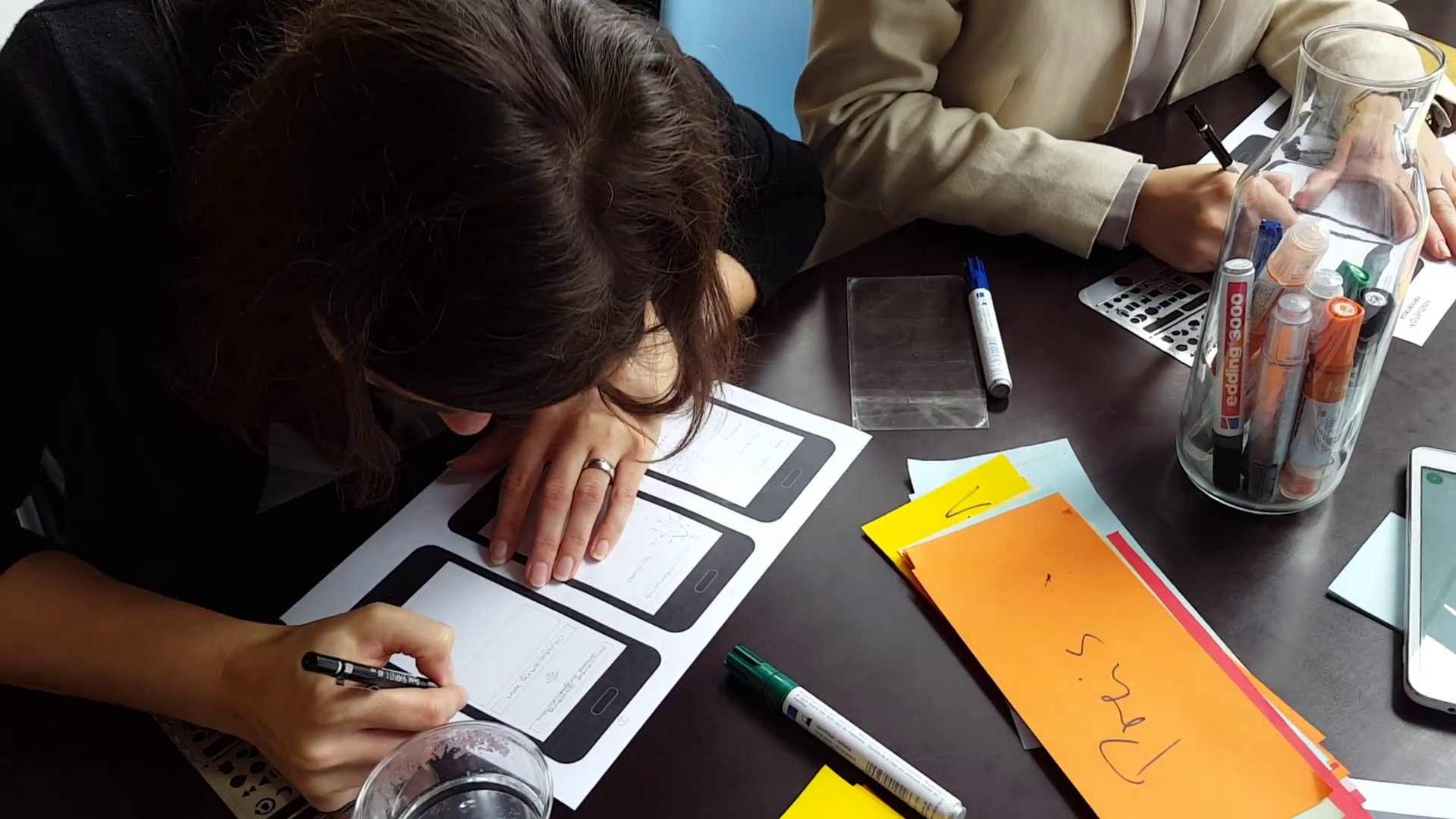
Prototoypes sometimes show promise — but the transition from prototype to production is not automatic. The economics of manufacturing are unforgiving. Makers and companies must consider:
- Cost of tooling and molds
- Supply chain limitations
- Part availability
- Labor costs
- Quality control and compliance testing
A prototype might be clever and functional, but when manufacturing it at scale becomes prohibitively expensive, plans stall or cancel. A part that works beautifully in a prototype environment may require custom tooling that costs tens of thousands of dollars — a price tag that can defeat the business case entirely.
Manufacturing readiness — ensuring that designs can be produced efficiently with available processes — is often a stumbling block. Prototypes are hand-built; production demands consistency, durability, and low unit cost.
Without the economics supporting large-scale production, many prototypes remain one-offs.
4. Market Demand and Commercial Viability
Even if a prototype works technically and can be manufactured, it might never leave the garage because the market doesn’t want it. Prototypes often serve exploratory purposes; they may look cool or intriguing to engineers but lack a clear customer need.
Market research often reveals that:
- Customers don’t value the product as expected.
- Consumers prefer other solutions.
- Adoption curves would be too slow.
- Target markets are too small to justify investment.
The gap between engineering excitement and real commercial demand can be wide. Startups and innovation labs sometimes fall into the trap of building a product for a market that doesn’t exist yet, only to find that consumers aren’t ready or willing to buy.
This disconnect between technical promise and commercial appetite is why so many technically brilliant prototypes never enter production.
5. Organizational Priorities and Strategic Shifts
Prototypes often die not because they lack potential, but because companies shift strategies. Business priorities evolve rapidly — investments change, leadership refocuses, and once-promising projects may be trampled by new trends or financial pressures.
For large companies:
- Budgets can be reallocated
- Leadership changes direction
- Innovation labs lose support
- New strategic initiatives eclipse old ones
Startups face similar challenges: a pivot, a funding shortfall, a change in investor priorities — all can consign prototypes to the shelf. Even with promising user feedback, projects can stall if the broader organization no longer believes they align with goals.
In other words, prototypes sometimes die for business reasons unrelated to their technical merits.
6. Prototypes as Learning Artifacts
One of the most important reasons some prototypes never leave the garage is that they fulfilled their purpose already. A prototype is a learning artifact — its role is to help teams learn about design constraints, validate hypotheses, and refine assumptions.
In best practices:
- Prototypes are built to answer specific questions.
- They are used to refine requirements.
- They inform future design choices.
Once that knowledge has been gained, a prototype is no longer needed and often replaced by a better version. Sometimes earlier iterations are discarded entirely, even if they are interesting or impressive.

Ironically, a prototype can be a success precisely because it never becomes a product — it serves its purpose and informs the next generation of design.
7. Human Psychology and the Prototype Trap
People matter in product development, and human psychology can influence what happens to a prototype.
Two cognitive biases are especially relevant:
- Sunk cost fallacy — teams keep refining a prototype long after it has ceased to add value.
- Over-attachment to cool tech — developers defend prototypes beyond their practical usefulness.
The sunk cost fallacy can cause teams to pour more time and money into prototyping instead of evaluating whether the concept should be abandoned or pivoted.
Attachment can cause teams to treat prototypes as precious instead of practical — leading to misallocation of resources and delayed decisions.
In both cases, psychological factors can prevent a prototype from either being improved into a product or decisively sunsetted.
8. Prototyping Pitfalls and Missteps
Not all prototypes fail for high-level reasons. Some never leave the garage due to common mistakes in the prototyping process itself:
- Undefined test criteria
- Vague success metrics
- No alignment between prototype goals and business goals
- Poor integration with manufacturing realities
For instance, teams may build prototypes without defining what success looks like, leading to months of refinement without clear direction. Or they may assume that a working prototype is automatically ready for production — overlooking manufacturability and scalability.
These mistakes create inertia: projects become hard to evaluate, prioritise, or transition into development pipelines.
9. Cultural and Organizational Bias Against Prototyping
In some companies, prototyping is undervalued. Teams may see prototyping as “extra work” or a luxury that slows down delivery. When deadlines loom, prototyping gets cut, rushed, or merged into other stages without proper testing — producing weak prototypes that don’t justify further investment.
Meanwhile, organizations with low UX maturity may treat prototypes merely as artifacts to please leadership rather than tools to drive rigorous testing and learning. This devalues the entire process and makes it harder to transition prototypes into real products.
In these cultures, prototypes end up as decorations — not engines of innovation.
10. The Business of Experimental Innovation
Finally, many prototypes are part of experimental innovation efforts — moonshots and blue-sky projects designed to explore future possibilities rather than produce immediate products.
Companies like Google, Tesla, aerospace labs, and research divisions often produce prototypes that are intentionally exploratory. They might:
- Test emerging technologies
- Explore futurist concepts
- Evaluate long-term feasibility rather than immediate ROI
Some of these prototypes are not intended to become products for decades, if ever. Their value lies in what they teach rather than what they ship.
This is why so many striking prototypes — flying cars, conceptual vehicles, speculative robots — remain locked away in labs or garages while their ideas influence other projects, patents, or future roadmaps.
Final Thoughts: A Garage Full of Value
The reasons some prototypes never leave the garage are varied but interconnected. They range from practical engineering limitations to market realities, economics, organizational politics, and even psychology.
But not shipping does not mean failure. Prototypes are part of the innovation lifecycle — learning tools, experiments, and risk-mitigation instruments. Some pave the way for breakthrough products. Others warn us of impractical paths. All contribute to deeper understanding.
In the end, a garage full of prototypes is not a graveyard of failures — it’s a library of insights that pushes technology forward.