








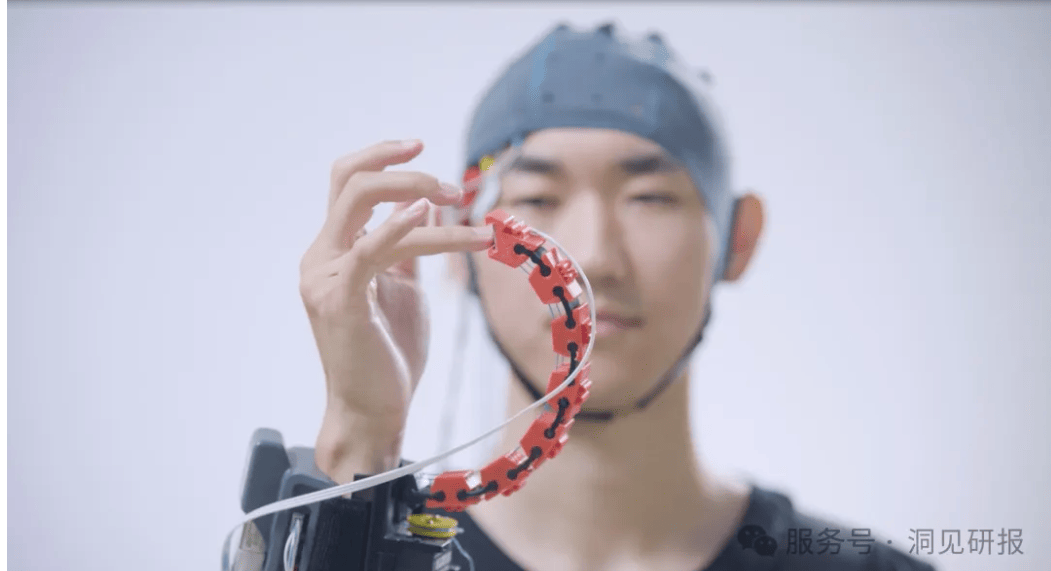

At this very moment scientists and tech enthusiasts alike are asking one of the most fascinating questions at the intersection of neuroscience and consumer technology: Can wearable EEG headsets decode your focus patterns? The short answer is: yes — but with important caveats. Wearable EEG (electroencephalography) devices have evolved dramatically over the past decade, and they can measure and interpret brain electrical activity in ways that give insight into cognitive states such as attention and focus. But decoding focus patterns is not as straightforward as reading a thought — it’s about interpreting subtle brainwave patterns associated with mental states rather than accessing specific internal content.
This deep-dive article explores how wearables can sense focus, the science behind the technology, what current research supports, where the limitations lie, and why this matters for productivity, health, and the broader future of brain-computer interfaces (BCIs).
From Labs to Headsets: The Rise of Wearable EEG
EEG has been a foundational tool in neuroscience for nearly a century. Traditional EEG systems involve multiple electrodes placed across the scalp, bulky machines, and trained technicians to interpret complex signals. That era largely confined EEG to clinical and research settings.
Enter wearable EEG: consumer-friendly devices like headsets, headbands, and even ear-worn sensors today put a form of brainwave monitoring on your head without clinical constraints. These devices detect tiny electrical signals emanating from synchronized firing of neurons near the skull — patterns we call brainwaves. Different wave frequencies (e.g., alpha, beta, theta) have been correlated with mental states like relaxation, alertness, and attention.
Instead of relying on in-lab systems, wearable EEG uses dry or semi-dry electrodes that make gentle contact with the scalp, amplifies weak signals, and processes them using onboard electronics and advanced software. The result: continuous, wireless streaming of brainwave data to apps that attempt to interpret mental states in real time.
What It Means to “Decode Focus”
When we talk about “decoding focus,” we’re not talking about reading minds or seeing specific thoughts. Instead, it’s about detecting patterns in brain activity that statistically correlate with states of concentration, engagement, or distraction.
In EEG research, focus and attention tend to be associated with changes in specific frequency bands. For example:
- Beta waves (around 13–30 Hz): often linked to active thinking and concentration.
- Alpha waves (around 8–12 Hz): associated with relaxed, reflective states.
- Theta waves (around 4–7 Hz): often seen during drowsiness or low engagement.
By analyzing how power in these bands fluctuates over time, algorithms can infer when someone is more or less focused.
Several academic studies confirm that wearable EEG systems can assess mental states such as focus or relaxation in real time. One study showed that a consumer-grade EEG headband could distinguish focus from relaxed states. Other research exploring EEG-based focus estimation models shows that these devices can quantify and interpret attention with statistical models that analyze brainwave features.
While these approaches are far from perfect, they represent meaningful progress beyond what most consumer wearables offered even a few years ago.
The Technology Under the Hood
To understand how wearable EEG decodes focus, let’s break down the components involved:
Sensors and Electrodes
Wearable EEG headsets use arrays of electrodes placed strategically over the scalp. These sensors capture electrical signals from the brain’s surface. The number and placement of electrodes vary widely:
- Consumer devices: typically 1–8 channels focused on frontal regions.
- Research devices: 14–32 channels or more, offering richer spatial information.

The electrodes are often dry or semi-dry — a comfort and convenience improvement over traditional gel-based clinical sensors.
Signal Processing
Raw EEG signals are incredibly weak and noisy. They must be cleaned and amplified before interpretation:
- Filtering removes unwanted noise (e.g., muscle activity).
- Artifact removal (e.g., eye blinks) isolates neural signals.
- Feature extraction measures power in relevant frequency bands.
These preprocessing steps are similar in both wearable and clinical setups but are adapted for mobile use.
Machine Learning & Interpretation
Once cleaned, algorithms — often using machine learning — extract patterns from the EEG data that correlate with cognitive states. These models are trained on large datasets that map specific EEG features (like beta power) to labels like “focused” or “distracted.” Based on these patterns, the system estimates cognitive states in real time.
It’s this combination of hardware and intelligent software that allows devices to attempt decoding of focus.
What Research Tells Us
Let’s look at representative evidence from academic research and industry analysis:
Evidence Supporting Focus Assessment
- A real-time study found that consumer wearable EEG headbands can classify focus vs. relaxation states with measurable accuracy.
- Focus estimation models based on EEG patterns (especially frequency features) offer a promising approach to continuous cognitive tracking in wearables.
- EEG combined with other data streams (e.g., physiological signals) can improve cognitive and stress classification, suggesting multimodal approaches may be the next step.
Limitations and Challenges
Despite progress, wearable EEG is not yet equivalent to lab-grade systems:
- Consumer headsets usually have fewer electrodes and lower spatial resolution, which limits what can be detected.
- Signal quality outside controlled environments (movement, sweat, ambient artifacts) remains a significant challenge.
- Interpretation depends heavily on algorithms — and those must generalize across individuals with different brain patterns.
In other words: wearable EEG can detect broad cognitive states like relaxed vs. attentive, but cannot read specific thoughts or intentions with high precision.
Real-World Applications: What Wearable EEG Can Do Today
So if wearable EEG headsets can decode focus, what can they be used for?
Personal Productivity and Biofeedback
One of the most popular consumer drivers is focus training and productivity support. Wearable EEG devices with apps provide users with real-time feedback about their attention state. These systems can cue users when they drift, helping improve self-awareness and concentration habits.
Meditation and Mindfulness
Brainwave feedback adds objective insight to meditation practices. By showing users when they enter calm, focused states, wearables help accelerate learning and mindfulness training.
Sleep and Wellness Tracking
Wearable EEG also extends into wellness and sleep tracking, where it provides objective insights into sleep stages and brain activity patterns across nights.
Education and Learning
In research, continuous EEG measurements have been used to track attention and workload in learning environments, with potential applications in adaptive educational systems.
Stress and Cognitive Health
EEG-based systems have also shown promise in decoding stress and cognitive load, offering potential tools in high-pressure workplaces.
The Future: Where This Technology Is Headed
Looking ahead, wearable EEG technology is advancing on multiple fronts:
Multimodal Sensors
Next-generation systems are combining EEG with other modalities (e.g., fNIRS, eye tracking) to improve decoding accuracy.
AI-Enhanced Interpretation
Machine learning models trained on large datasets will continue improving detection of mental states like attention, engagement, and fatigue.
Integration With Everyday Devices
Imagine wearables that seamlessly integrate into earbuds, glasses, or even car headrests, providing continuous cognitive insights without bulk. Research on unconventional EEG placements (e.g., ear EEG) is already exploring this.
Ethical and Privacy Considerations
As with all brain data, ethical frameworks must evolve. Who owns your cognitive data? How is it secured? These questions are central as EEG wearables scale. These considerations fall into a broader chorus of ethics discussions involving neurotechnology and personal data rights — crucial for responsible innovation.
What Wearable EEG Can and Cannot Decode
To summarize clearly:
Wearable EEG can:
- Detect brainwave patterns correlated with attention, relaxation, and cognitive states.
- Provide real-time feedback on mental engagement.
- Support wellness, biofeedback, and productivity applications.
Wearable EEG cannot (yet):
- Read detailed thoughts or specific internal content.
- Replace clinical EEG systems for precise neurological diagnosis.
- Decode focus with perfect accuracy across all individuals.
Conclusion
Wearable EEG headsets are unlocking new frontiers in how we understand and interact with our own minds. By decoding patterns of brain activity associated with focus, attention, and engagement, these devices are helping users gain insights into cognitive states that were once invisible outside a laboratory. While the technology still has limitations, research and development continue advancing rapidly — promising a future where neural insights help guide productivity, wellness, learning, and much more. The future of understanding focus, in fact, may lie on our heads, informed by the electrical rhythms of our minds.